Dinwiddie supervisors deny Lou Jones Solar rezoning after hours-long public hearing

Dinwiddie County Board of Supervisors · December 16, 2025

Loading...

AI-Generated Content: All content on this page was generated by AI to highlight key points from the meeting. For complete details and context, we recommend watching the full video. so we can fix them.

Summary

After a lengthy public hearing with dozens of speakers, the Dinwiddie County Board of Supervisors voted unanimously to disapprove rezoning P25-12, a proposed 20-megawatt Lou Jones Solar project. Supporters cited jobs and long-term revenue; nearby residents raised runoff, decommissioning and rural-character concerns.

The Dinwiddie County Board of Supervisors voted 5–0 on Dec. 16 to disapprove rezoning case P25-12, a request by Ampliform (DW Lou Jones LLC) to rezone roughly 308 acres from A2 (Agricultural General) to the Utility Scale Solar Energy District to build a 20-megawatt solar facility.

Planning staff opened the evening hearing with a summary of the application, noting the project footprint of 308 acres within an overall 890-acre tract, 246.9 acres of proposed limits of disturbance and 184 acres that would contain panel arrays. The application proposed a 105-foot panel setback from property lines with a 75-foot wide buffer and no on-site substation; interconnection was proposed to an existing transmission line on Lou Jones Road.

In a presentation and Q&A, Ampliform and its consultants described project changes made after two community meetings, said panels would be placed to avoid wetlands and sensitive slopes, and outlined mitigation measures: a five‑year groundwater‑monitoring plan, landscaping and a decommissioning bond. Ampliform representatives also described pollinator plantings and grazing plans intended to maintain agricultural activity under and around the arrays.

That technical presentation drew a long public-comment period with sharply divided views. Supporters included members of the Gilman family (the landowner), local contractors and representatives from beekeeping and grazing businesses who said the project would bring local contracting work, construction payroll and ongoing pollinator and grazing opportunities. "This is an American‑owned investment that keeps land productive," Ampliform representative Bobby Rodriguez said during the applicant presentation.

Opponents included many residents living within a mile of the site. They raised concerns about increased stormwater runoff following recent timber harvests, potential groundwater impacts, property‑value effects and uncertainty around decommissioning. Environmental, drainage and erosion questions were repeatedly raised; several residents said they did not receive notice of developer town‑hall meetings. "Farm and timberland once lost cannot be reclaimed," one resident said. A speaker for a neighboring landowner described repeated flooding and erosion incidents on local roads.

Planning Commission members had previously voted to recommend disapproval after reviewing the same materials in October. Several supervisors cited the county comprehensive plan’s emphasis on protecting rural character and the Planning Commission’s recommendation during their deliberations.

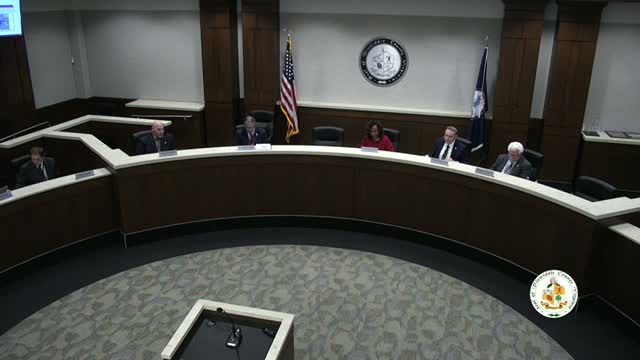
After the public hearing and applicant rebuttal, a supervisor moved to disapprove the rezoning. The board adopted that motion on roll call: Mister Chavis — aye; Miss Eberron Bonner — aye; Mister Dooley — aye; Doctor Moore — aye; Mister Lee — aye.

Because the rezoning was denied, the planned conditional‑use permit and siting‑agreement hearings for the project were not held. Ampliform said it had included a detailed set of proposed conditions and a decommissioning plan in its application.

What’s next: The applicant may choose to revise the proposal and resubmit or pursue other sites. County staff said further state-level permit processes (the Department of Environmental Quality’s permit‑by‑rule for projects above 5 MW) would only proceed after local land‑use approvals.

Sources: Planning staff presentation and public hearing testimony at the Dec. 16 Dinwiddie County Board of Supervisors meeting.