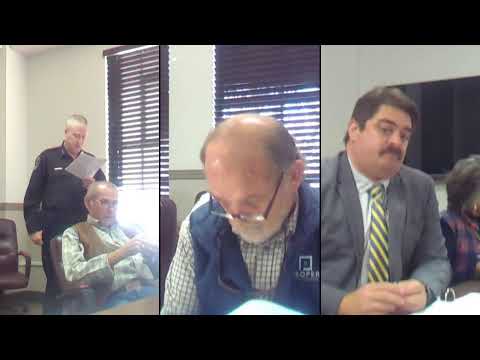
Roswell council adopts updated rules of order after extended debate
Loading...
Summary
After a lengthy organizational meeting and legal briefing, the Roswell City Council voted to adopt updated rules of order required by recent state-law changes, clarifying quorum, agenda deadlines, public-comment limits and recusal procedures.
The Roswell City Council voted to adopt an updated set of rules of order intended to align the city’s meeting procedures with recent changes in state law.
The resolution, described in the meeting record as Resolution 2601, was moved and seconded after an extended review by the city attorney and roughly two hours of council discussion about quorum, agenda deadlines and public-participation procedures. The council conducted a roll-call vote and recorded its decision on the resolution.
The city attorney told councilors the organizational meeting and the rules are mandated by state law and noted specific statutory citations while explaining how the new rules interact with Robert’s Rules of Order. “State law provides for roll calls for resolutions,” the attorney said while walking the council through the document and the mechanics of adoption.
Major points of debate included an 8-day posting cutoff for new agenda items (with exceptions for committee referrals and emergencies), whether the council should formalize a 3-minute per-speaker limit during the 30-minute public-participation block, and how to handle recusal and conflicts of interest. Counsel advised that recent state-law changes remove a councilor’s ability to abstain “without cause,” and that members should recuse themselves where a true or reasonably perceived conflict exists.
Councilors pressed for clarity on several technical points—the definition of a quorum in council practice, how committee referrals fit the 8‑day rule, and whether the mayor may be counted toward quorum while remaining limited to tie-breaking votes. The attorney recommended using the Open Meetings Act as a separate, controlling reference and tightening language to avoid conflicts with state law.
The resolution’s adoption formalizes procedures for organizing agendas, handling consent items, conducting quasi-judicial hearings, and recording votes. The record shows the council accepted the draft as amended and completed the required roll call to adopt the rules.
What’s next: The council will receive a clean, signed copy of the adopted resolution and the updated rules of order for staff distribution.