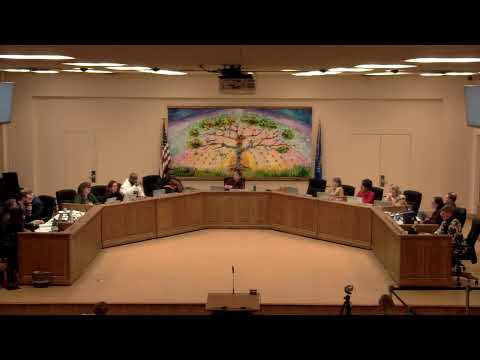
MPS committee reviews Perkins Eastman facilities plan, administration proposes $22 million first-year investments and warns of future closures
Loading...
Summary
Perkins Eastman presented a 10‑year facilities master plan to the Milwaukee School District committee focused on equity, program access and options for closures or mergers. Administration proposed a $22 million first‑year 'Invest and Grow' package for historically disinvested schools and pledged robust community engagement before any closure decisions.
Perkins Eastman presented its long‑range facilities master plan to the Committee on Strategic Planning and Budget, outlining a 10‑year vision that prioritizes student success, equity and program access while noting Wisconsin provides no direct capital funding for K–12 schools. The consultant emphasized data plus community context and described four implementation levers: building investments, aligning buildings with enrollment, program access and grade‑configuration options.
Administration said the district is proposing a first‑year package of investments — roughly $22,000,000 drawn from capital funds — to begin work in neighborhoods that have seen historic disinvestment. Superintendent Cassellius framed the approach as “invest first” and told the board, “We are not proposing any school closures for the fall at this time,” while also warning that the plan contemplates recommending closures in future years as part of a long‑term strategy.
The consultant walked directors through policy initiatives and two broad scenarios for handling underutilized buildings: Scenario A (closing and identifying receiving schools to receive students and investment) and Scenario B (a closure‑focused approach). Representative cost illustrations were presented as rough estimates: three transformational projects per year over years 3–10 could total about $2,000,000,000; modernization projects roughly $1,400,000,000; and targeted projects about $633,000,000. The presentation also showed projected operational savings of about $4,000,000 and capital savings just under $14,000,000 for consolidation scenarios; consultants stressed these are preliminary figures that require more detailed analysis.
Public comment was extensive and largely critical of any near‑term closures. More than two dozen speakers, including educators, parents and union representatives from north‑side neighborhoods, urged the board to front‑load investments, restore community schools and center resident‑led engagement. “Data alone cannot make the decisions,” educator Angela Harris told the committee, urging the board to adopt equity guardrails and ‘‘commit to front‑loaded investments.’’ Several speakers raised specific concerns about proposed grade reconfigurations for the Wisconsin Conservatory of Lifelong Learning (WCLL) and Barack Obama School of Career and Technical Education, and about lead‑abatement work that temporarily removed rooms from service at some schools.
Directors probed the presentation’s data and the method for identifying underutilized schools (slide 32 was repeatedly cited in discussion). Several directors stressed the value of small, community schools and asked administration to pursue enrollment campaigns and deeper resident‑led engagement before moving toward closures. Administration said it has contracted CMR Ignite, a minority‑owned engagement firm, to lead community outreach and will coordinate enrollment efforts with Milwaukee County Transit and other partners.
Next steps: administration said the plan presented is the starting point and that more detailed policy work and community engagement will follow. Any closure or reconfiguration recommended by administration would still require board approval and further public process.