Get Full Government Meeting Transcripts, Videos, & Alerts Forever!
Get email alerts on the Budget Forecast topic
No spam. Unsubscribe anytime.
Fairfax joint fiscal forecast projects $131.5 million shortfall; officials propose shared cuts, state advocacy
Summary
Fairfax County and Fairfax County Public Schools presented an early FY27 fiscal forecast Dec. 2 estimating a combined net projected shortfall of $131,500,000, with officials pointing to federal policy shifts, collective bargaining costs and enrollment declines as principal drivers and urging coordinated state advocacy.
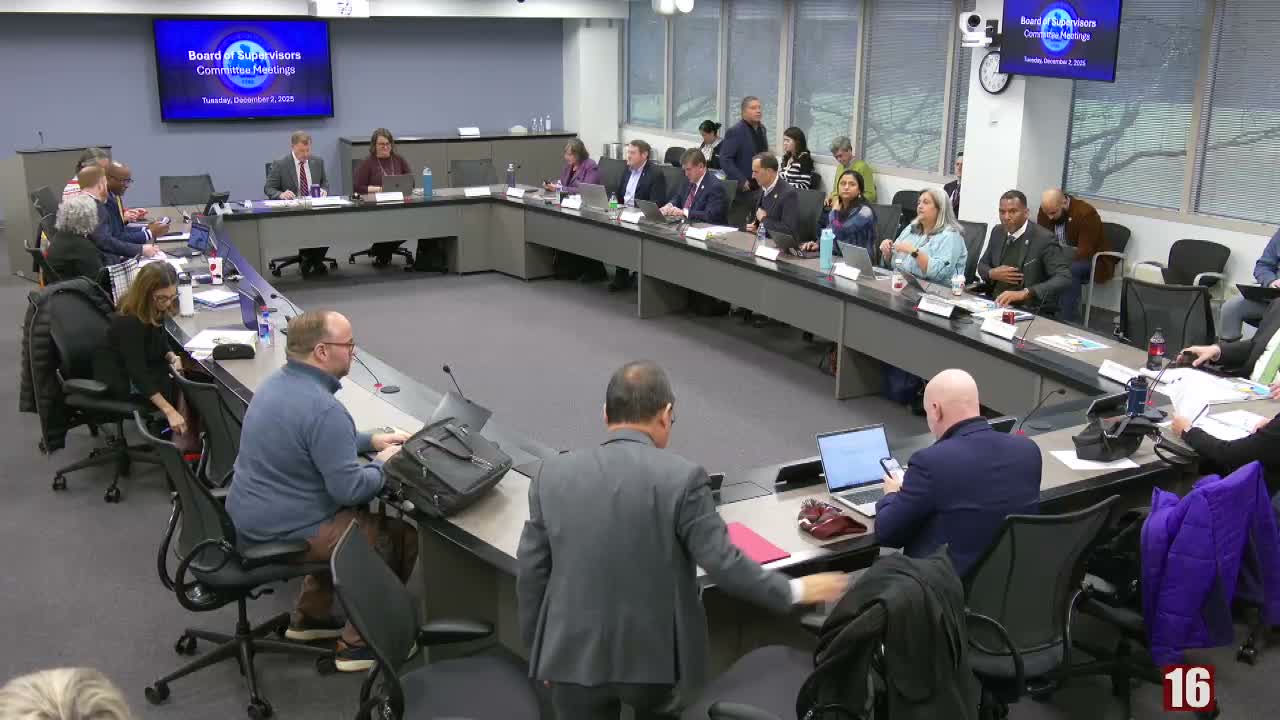
Fairfax County and Fairfax County Public Schools on Dec. 2 presented an early fiscal forecast that projects a combined net budgetary shortfall of $131,500,000 for fiscal 2027, and the two boards opened a joint effort to close the gap through agency reductions, contract negotiations and coordinated state advocacy.
County Chief Financial Officer Christina Jackson led the presentation and emphasized the forecast is an early estimate—not an adopted budget. Jackson said the county’s FY27 revenue projection assumes current tax rates and would produce about $225,500,000 in additional revenue at the current real-estate rate of $1.125. "This is a fiscal forecast," Jackson said, adding that the county will adopt a balanced budget and is not permitted to run a deficit.
School finance lead Lee Burden said schools project a $13,200,000 increase in revenue at this stage but cautioned the division’s baseline forecast is nearly $90,000,000 lower than the prior year’s forecast, driven in part by enrollment declines. "At this stage of the fiscal forecast, it's very early for us," Burden said, noting the superintendent’s proposed budget will be released Jan. 22 and will contain more detail.
Officials identified several key drivers of the projected shortfall. Jackson highlighted federal-level changes that could reduce local revenue or increase local costs, including a recent federal workforce reduction and risks stemming from federal shifts in SNAP and Medicaid administrative responsibilities. She told the joint panel the county currently estimates an FY27 SNAP-related revenue loss of about $6,700,000 and warned that figure could rise.
Collective bargaining costs are another material factor. County staff described tentative and upcoming agreements that together account for tens of millions of dollars in FY27 compensation increases, including a tentative SEIU general-government agreement and planned negotiations for public-safety bargaining units. Jackson summarized the county-side cost estimates as roughly $51,600,000 in total general fund costs tied to bargaining-unit pay changes and related impacts across represented and non‑represented employees.
Board members pressed staff for the projected impact on homeowners and for explanatory detail on the composition of the forecast. Jackson answered that a 3.2% residential assessment change would translate to about $285 on an average homeowner’s tax bill and that each penny on the tax rate generates roughly $35,000,000 in revenue countywide. Members also asked for trend tables (FY25–FY27) and per‑pupil cost figures; staff agreed to supply those data in follow-up budget questions.
On savings and reductions, staff said agencies were directed to develop reduction options equal to 5% of general‑fund support (approximately $85,000,000 if fully realized), but the forecast conservatively assumes about $30,000,000 of realizable reductions (≈1.8% of general fund). The county also launched an employee ideas portal that produced more than 850 suggestions for efficiencies; staff are reviewing those proposals for possible inclusion in the advertised budget.
The boards discussed transportation funding uncertainty: the forecast includes a $24,000,000 placeholder tied roughly half to contract-rate adjustments and half as a preliminary estimate for Metro support. Several members noted the ongoing state-level debates over transit funding and cautioned that state action could change county obligations.
Members of both bodies called for joint, coordinated advocacy to pursue more state funding and to press for policy changes. The chair directed staff to circulate the Weldon Cooper Center analysis, which members said shows Fairfax receives a smaller return from state income tax revenues than the county contributes in collections. School Board Chair Sandy Anderson urged a unified legislative approach, saying the new state leadership presents an opportunity to press for modernized funding formulas and more flexibility.
The joint committee set a series of next steps: the superintendent will release a proposed schools budget on Jan. 22, the county executive will present his proposed budget on Feb. 17, and the two boards will reconvene as a joint budget committee on Feb. 24 to review both proposals and coordinate responses. The county chair said all recommendations will be public when the county executive’s proposal is released and that the budget adoption schedule remains May 5.
The meeting ended with a call for continued cross‑agency collaboration—on procurement, facilities, IT and joint task forces—to seek efficiencies and protect core services while closing the FY27 gap. The joint committee adjourned after the chairs agreed to circulate requested data and to continue working on a shared legislative package.