
Seaside told it faces $145 million pavement backlog; staff recommends slurry and targeted heavy rehab
Get AI-powered insights, summaries, and transcripts
Subscribe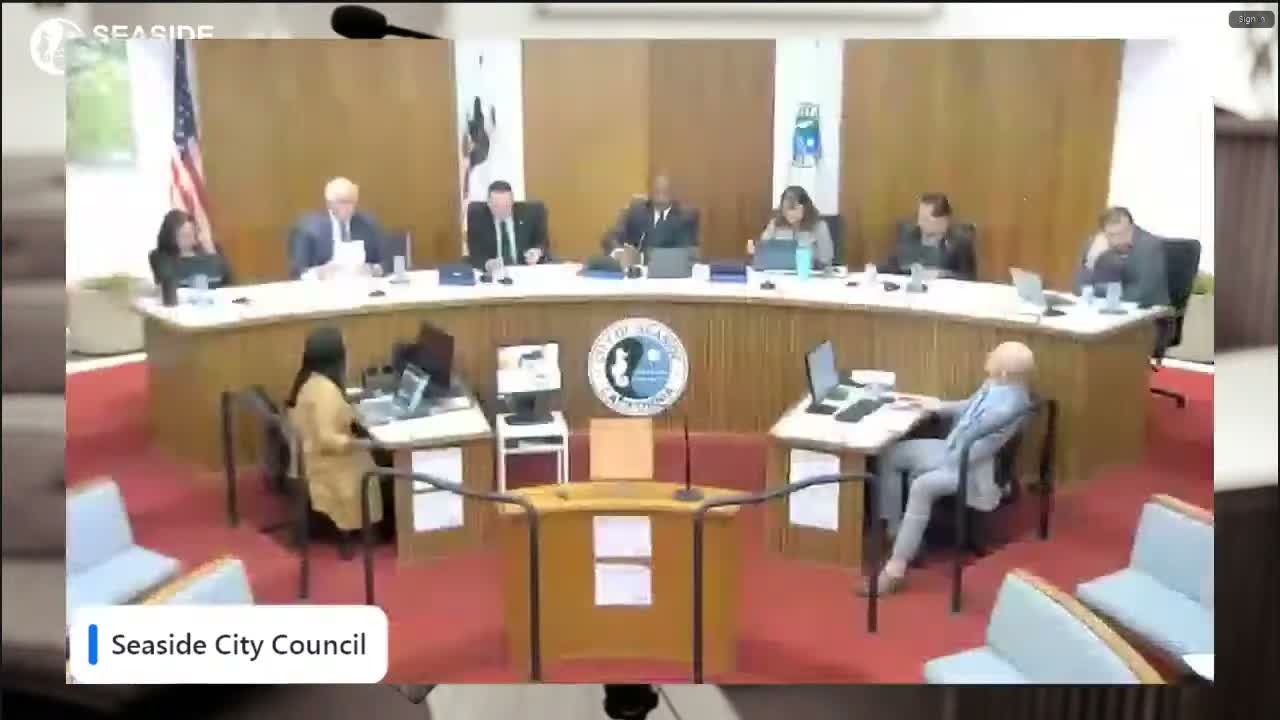
Summary
Consultants and public works staff told the council the city's system‑wide pavement condition index is 54 and estimated a current backlog near $145 million; staff proposed a two‑project approach (spring slurry seal and a heavy rehab bid) plus a modest equipment purchase to enable more in‑house hot‑spot repairs.
City public works officials and pavement consultants presented a stark picture of Seaside's street network at the Jan. 15 council meeting, saying the system‑wide pavement condition index (PCI) averages about 54 and that the backlog of pavement work is approximately $145 million.
Joe Ryrie of Pavement Engineering explained the PCI framework and the ‘‘deterioration curve’’ that underpins pavement management: preventive maintenance is much cheaper than late‑stage reconstruction. He said reconstruction costs run 30–45 dollars per square foot in current market conditions and that the city's entire pavement replacement (pavement only, excluding curbs/sidewalks) would be on the order of $520 million.
Thomas Korman, public works director and city engineer, outlined staff's constrained budget picture and a pragmatic near‑term program. He said the city's current annual budget for streets is roughly $1 million and that maintaining a PCI of 54 would cost about $7.5 million per year; increasing the PCI by five points would require about $11.4 million per year. Korman described a two‑track strategy for the coming season: a spring slurry‑seal project to preserve higher‑condition streets and a competitive bid (heavy rehab) that will roll over fiscal years to address lower‑condition corridors.
To stretch limited dollars, staff recommended purchasing targeted equipment so city crews can expand hot‑spot repairs in‑house. Korman described proposed purchases (a compact track loader, a small planer/grinder, and an 8‑foot asphalt spreader box) and said that equipment would allow crews to replace temporary cold‑mix patches with permanent hot‑mix repairs, increasing efficiency and reducing contractor costs.
Councilmembers raised street‑specific concerns (for example, Yosemite Avenue between Broadway and Sonoma has a PCI reported at about 35) and asked for five‑year cost escalations for deferred repairs; staff estimated a 15–20% cost increase over five years but said precise dollar estimates require square‑foot calculations.
What happens next: staff will present proposed slurry‑seal streets and the heavy‑rehab bid package for future council action and said it will return with procurement details for the equipment and a plan to sequence repairs to maximize ADA and CDBG leverages.
Sources: Joe Ryrie, Pavement Engineering; Thomas Korman, Public Works Director/City Engineer; council Q&A, Seaside City Council meeting, Jan. 15, 2026.