Get Full Government Meeting Transcripts, Videos, & Alerts Forever!
Get email alerts on the Superintendent Evaluation topic
No spam. Unsubscribe anytime.
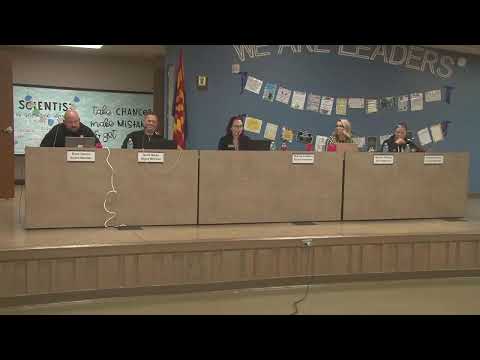
Board Debates New Superintendent-Evaluation Tool; Member Urges Explicit Ethics Metric
Summary
Board members reviewed a proposed 4-point superintendent-evaluation rubric and discussed cascading indicators to principal/leader evaluations; one member asked the committee to add an explicit measure for ethical and personal integrity, which staff agreed to consider.
Board members spent the bulk of the Jan. 14 meeting discussing a draft superintendent-evaluation tool developed by a small committee and district staff. Committee members described a 4-point rubric — highly effective, effective, developing and ineffective — and said many domains mirror leader and principal instruments so evaluation language cascades across roles.
Committee members described efforts to streamline the instrument by combining related domains (notably teamwork and continuous learning) and by embedding rubrics and descriptor examples to create a clearer rating process. Staff said some superintendent indicators were reduced where they did not align to leader-level work and that the tool can be delivered in different formats (Google Forms or the district’s digital platforms) to avoid a 30-page spreadsheet.
Board member Moran pressed staff to clarify how the tool would practically cascade: whether superintendent-level evaluations would roll up direct reports’ results and how specific metrics (for example, growth coefficients associated with student achievement measures) will be stabilized across benchmark and state assessments. Staff responded that domains are cascading and that the growth coefficients are being calibrated against multiple data points (benchmarks, Acadience, i-Ready and state assessments) to ensure consistency.
Moran also recommended adding an explicit indicator for ‘‘ethical and personal integrity’’ within the ethical leadership domain so the board could record evidence of trustworthiness, not only procedural compliance. Miss Benjamin and other committee members said they would consider returning with language that either embeds the wording in descriptors or adds a discrete line item, as Moran requested. The board discussed whether to implement the tool this year or formally agendize and vote on a final version; several members said they were comfortable using it now with edits to be returned for final approval.
Staff said the tool would be refined after implementation and that they would bring suggested edits and artifacts for the board’s midyear and end-of-year reviews so evidence and key performance indicators can be adjusted in a transparent manner.