Residents press Cheektowaga board to end police cooperation with ICE; board promises review
Loading...
Summary
Dozens of residents urged the town board to stop local police from assisting Immigration and Customs Enforcement, citing local cases, a UB Human Rights Center report and concerns about public safety and civil rights. The board said it will review policies and hold follow-up discussions and possible resolutions.
A steady stream of residents used the Jan. 13 public-comment period to call on the Town of Cheektowaga to end or limit local police cooperation with U.S. Immigration and Customs Enforcement (ICE), pressing the town board to adopt a resolution or local policy changes.
Speakers across the political spectrum described specific cases in which local interactions with federal immigration authorities led to detention or deportation after traffic stops or shoplifting allegations, and several cited a December 2025 report from the University at Buffalo Human Rights Center that the speakers said names Cheektowaga. Rachel Martinez called for immediate steps: changes to CPD policy 414 to require judicial warrants for nonpublic-area entry, routine notice of rights for persons in custody, prohibition on funneling people into ICE custody for civil immigration matters, and requiring ICE agents to show identification and not wear masks when on town property. "Do not allow Cheektowaga and this board to be complicit in the violence and human rights violations occurring at the hands of ICE," Martinez told the board.
Other speakers requested an explicit town resolution in support of the New York for All Act (S2235A/S3506) to limit use of local resources for federal immigration enforcement. Academics and community leaders presented research and testimonials about the economic contributions of immigrant residents and concerns about family separations and health impacts.
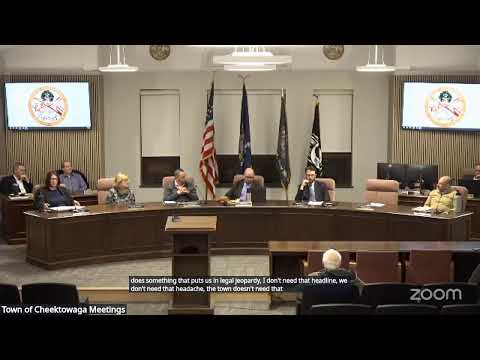
Board members said they heard the concerns and would consider policy options. Supervisor Brian Nowak acknowledged the strongly held views in the room and said the board would review the matter in further meetings and that policy changes and resolutions would be considered. Several council members noted legal limits on local authority and asked staff to compile information on what local policy changes would be lawful and how the changes would affect police operations and interagency agreements.
The public comments formed the dominant portion of the evening’s testimony and set the stage for follow-up work by staff and possible board action, including drafting a town resolution or policy clarifications for subsequent meetings.