Prince Edward County approves 150 MW Tobacco Trail Solar with conditions and siting agreement
Loading...
Summary
After a lengthy public hearing and hours of testimony, the Prince Edward County Board of Supervisors approved a special‑use permit and separate siting agreement for the 150 MW Tobacco Trail Solar project, including multiple conditions on setbacks, stormwater, decommissioning surety and community payments totaling upfront and recurring sums.
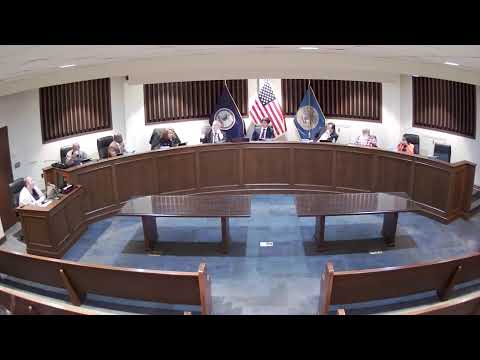
The Prince Edward County Board of Supervisors voted to approve a special‑use permit for the Tobacco Trail Solar project, a proposed 150‑megawatt solar facility sited across roughly 2,324 acres, and later approved a siting agreement spelling out payments to the county.
Developer representatives said the project would place panels on about 610 acres, conserve roughly 1,100 acres as open space, and bring what they described as substantial local investment. "This is a $317,000,000 capital investment in Prince Edward County," Whitney Saint Charles, the project's development manager, told the board. She said the company is committing $4,000,000 in direct community payments before the project begins producing electricity and a revenue‑share schedule that totals about $11,600,000 over the project's life.
Third‑party reviewers and county staff told supervisors the application complies with the county's zoning ordinance and the 2045 comprehensive plan when paired with the recommended conditions. Michael Zayner of the Berkeley Group, the county's outside planning reviewer, said his firm "recommended approval, with the 44 conditions that are included in your packages." The conditions address setbacks, stormwater and environmental protections, traffic routing during construction, and public‑safety access.
Opponents and interested residents raised concerns during a multi‑hour public hearing. Speakers cited potential impacts on waterways and floodplains, loss of forest and agricultural land, threats to wildlife including birds and bats, potential heavy‑metal leaching from panels, and reduced property values. "Will you require annual full metal and chemical spectrum testings of waterway, soil and silt ponds in this complex and publish those results so we can read them?" asked Denise Mayberry, who cited studies she said showed leaching risks.
The applicant and county staff responded by describing technical plans and permit conditions. Tiffany Seavers, director of permitting for the developer, said the project will avoid floodplains and wetlands, will use phased construction and redundant erosion‑and‑sediment controls, and will not deploy panels containing lead or cadmium. She said the county will review and must approve decommissioning plans and the surety amount; that surety is scheduled for periodic five‑year reviews so estimates can be adjusted.
Supporters emphasized local economic benefits and jobs tied to construction and ongoing agrivoltaic operations. "We estimate the project will employ over 275 folks to get it finished," David Peterson of SHINE (the Solar Hands‑on Instructional Network of Excellence) said, and several grazing and pollinator entrepreneurs described opportunities for local businesses and shepherding jobs.
Board members debated the tradeoffs between long‑term economic revenue and residents' environmental and property‑value concerns. In the end, supervisors approved the special‑use permit with amended conditions and a proffer addressing disposal of decommissioning waste; the board then held a separate public hearing and approved a siting agreement that includes upfront and milestone payments and community proffers, including a $100,000 payment to the Mahurin Fire Department. The board recorded the final vote on the SUP as 5–3 in favor.
Next steps include final technical plan submissions for erosion‑and‑sediment control, county review of the decommissioning surety and a sequence of permitting milestones the developer must meet before full construction and operation.
The board's action does not change state or federal permitting or Dominion Energy interconnection reviews that will also be required before the project can operate.