Get Full Government Meeting Transcripts, Videos, & Alerts Forever!
Get email alerts on the Family Survey topic
No spam. Unsubscribe anytime.
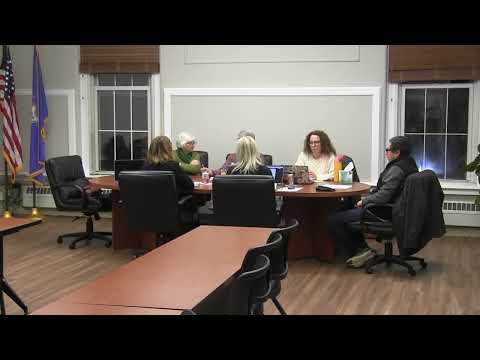
Parents, board members question tone, privacy of State family survey proposed for K'3
Summary
Board raised privacy, translation and phrasing concerns after district staff introduced a State Department voluntary family survey for K'3 families, noting responses would be stored in students' confidential files and that some questions ask parents about their own childhood reading difficulties.
Speaker 3 introduced a State Department'provided voluntary family survey that will be offered to newly registered K'3 families and stored in the student's confidential file. "Every question on the survey comes with a Q and A for families in a family friendly" format, Speaker 3 said, and added the instrument is available in English, Spanish and Portuguese with the option to translate into other languages if needed.
Board members immediately raised concerns about anonymity and wording. "Is this anonymous yet?" asked Speaker 4; the transcript shows the board clarified it is not anonymous and that responses would be linked to the student's record. Speaker 1 read a sample question aloud and criticized its tone: "How many difficulties did you have learning to read in elementary school?" Several members said phrasing that asks parents about past reading difficulties could be stigmatizing and suggested the district reframe questions in a more positive manner.
District staff framed the survey as a tool to "triangulate data" and give school psychologists background they might otherwise collect in interviews, and emphasized the survey is not intended to create legal obligations for identification. "It is solely intended as a tool to triangulate data," Speaker 3 said. Staff also discussed technical options to reduce manual scoring work, including integrating results into PowerSchool so parents can opt in during registration.
Board members pressed implementation questions: who would score responses, whether both parents would be asked or only the registering adult, and whether funding or training accompanies the new requirement. Concerns were raised that the activity could be an unfunded mandate that adds substantial staff time; Speaker 7 noted it "could end up taking, like, half of, like, 1000 hours a year," emphasizing potential operational burdens.
What happens next: district staff said they will provide more details on participation rates, scoring logistics and language access. The transcript shows no formal vote or decision to adopt changes to the survey during this meeting.