Lifetime Citizen Portal Access — AI Briefings, Alerts & Unlimited Follows
Department of Education opens negotiated rulemaking for Workforce Pell with July 1 deadline
Loading...
Summary
Department officials convened a negotiated rulemaking committee to write regulations for a new Workforce Pell Grant program and urged negotiators to meet a statutory July 1 implementation date. The session covered committee process, committee membership, and the weeklong agenda including student eligibility and program approval.
The U.S. Department of Education convened its negotiated rulemaking committee on accountability and the new Workforce Pell Grant program, opening a week of discussions aimed at writing regulatory text to meet a statutory July 1 implementation deadline.
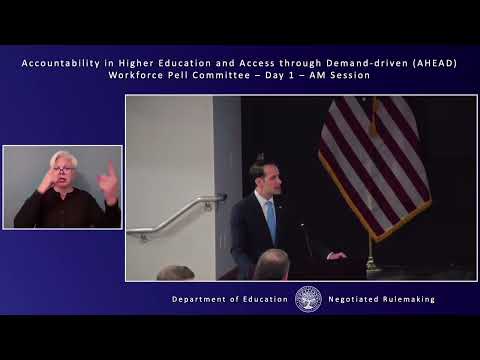
Undersecretary Nicholas Kent, who addressed negotiators on behalf of the Department, framed the session as a top priority and urged consensus-based work. "We, the Trump administration, are fully committed to publishing the final regulations for the workforce Pell program to be implemented by the July 1 deadline that Congress has set," Kent said, framing the effort as part of a broader push for accountability in higher education.
Facilitators Kayla Mac and Mike Fransac outlined procedural ground rules for the negotiated-rulemaking process: primaries and alternates will speak for constituencies, comments should introduce new evidence, and the committee will use pulse checks and a three-thumb consensus method to gauge agreement. The facilitation team also distributed drafting materials and asked negotiators to submit suggested language in writing.
Committee composition was a substantive early issue. Eric Atchison (students constituency) proposed adding Magnus Noble as a student alternate; the Department supported the addition and Noble was added to the committee roster. A separate motion to add a dedicated civil-rights seat (proposed by Andrea DeSantis) went to a consensus thumb check and did not pass when at least one primary dissented.
Department staff and negotiators used the opening session to lay out the agenda for the week: Topic 1 (ineligibility rules when students receive nonfederal grant aid), Topic 2 (institutional and programmatic eligibility and technical edits), Topic 3 (definitions and eligible workforce program requirements), Topic 4 (state governor approval), Topic 5 (Secretary approval), Topic 6 (value‑added earnings calculations), and Topic 7 (losing and regaining eligibility). The meeting recessed for lunch with plans to resume substantive drafting and pulse checks in the afternoon and subsequent sessions.