Get Full Government Meeting Transcripts, Videos, & Alerts Forever!
Get email alerts on the Literacy Intervention topic
No spam. Unsubscribe anytime.
Pasco officials highlight Reading Recovery intervention; district reports majority of completers reach or near grade level
Summary
Assistant Superintendent Lobos and Reading Recovery teacher leader Marissa Morales described the districts short-term one-on-one Reading Recovery and Spanish-language DLL interventions for struggling first-grade readers; district data for 2024–25 show 64% of Reading Recovery completers and 68% of DLL completers reached or were near grade level after a full program.
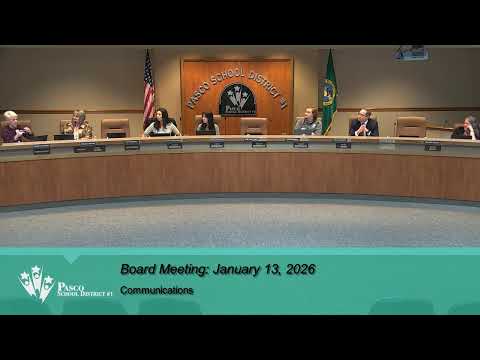
Assistant Superintendent Carla Lobos and Reading Recovery teacher leader Marissa Morales presented the Pasco School Districts Reading Recovery and Discubriendo la Lectura (Spanish-language DLL) programs at the board meeting on Jan. 13.
Marissa Morales described Reading Recovery as a 30-minute, one-on-one short-term intensive literacy intervention for the most struggling first-grade readers and writers. Lessons are individualized each day, guided by diagnostic data and literacy-processing theory; teachers receive graduate-level training and monthly professional development, including "behind-the-glass" peer observation sessions. Morales emphasized that teacher-leaders continue to work with students daily as part of the model.
Program results presented for the 2024–25 school year showed that of 120 Reading Recovery students who received a full program, 64% reached or were near grade level within 20 weeks; of 113 DLL students who completed a full program, 68% reached or were near grade level in the same timeframe. Morales noted these figures reflect students who completed a full program and do not include students whose programs were cut short because of moves or school-year timing.
Board members praised the programs alignment with the science of reading (including phonics and phonemic-awareness instruction) and the way Reading Recovery teachers extend their training to build capacity districtwide through structured-literacy training for K–2 teachers.
Marissa Morales invited board members to observe a behind-the-glass teaching session to see the professional-development model in action.
The district described Reading Recovery funding sources as state categorical funds (LAP and state bilingual funds) and referenced state legislation requiring structured literacy training for K–2 teachers.