
Residents press council on housing needs and homelessness during long public hearing; state senator updates on grant clawback
Get AI-powered insights, summaries, and transcripts
Subscribe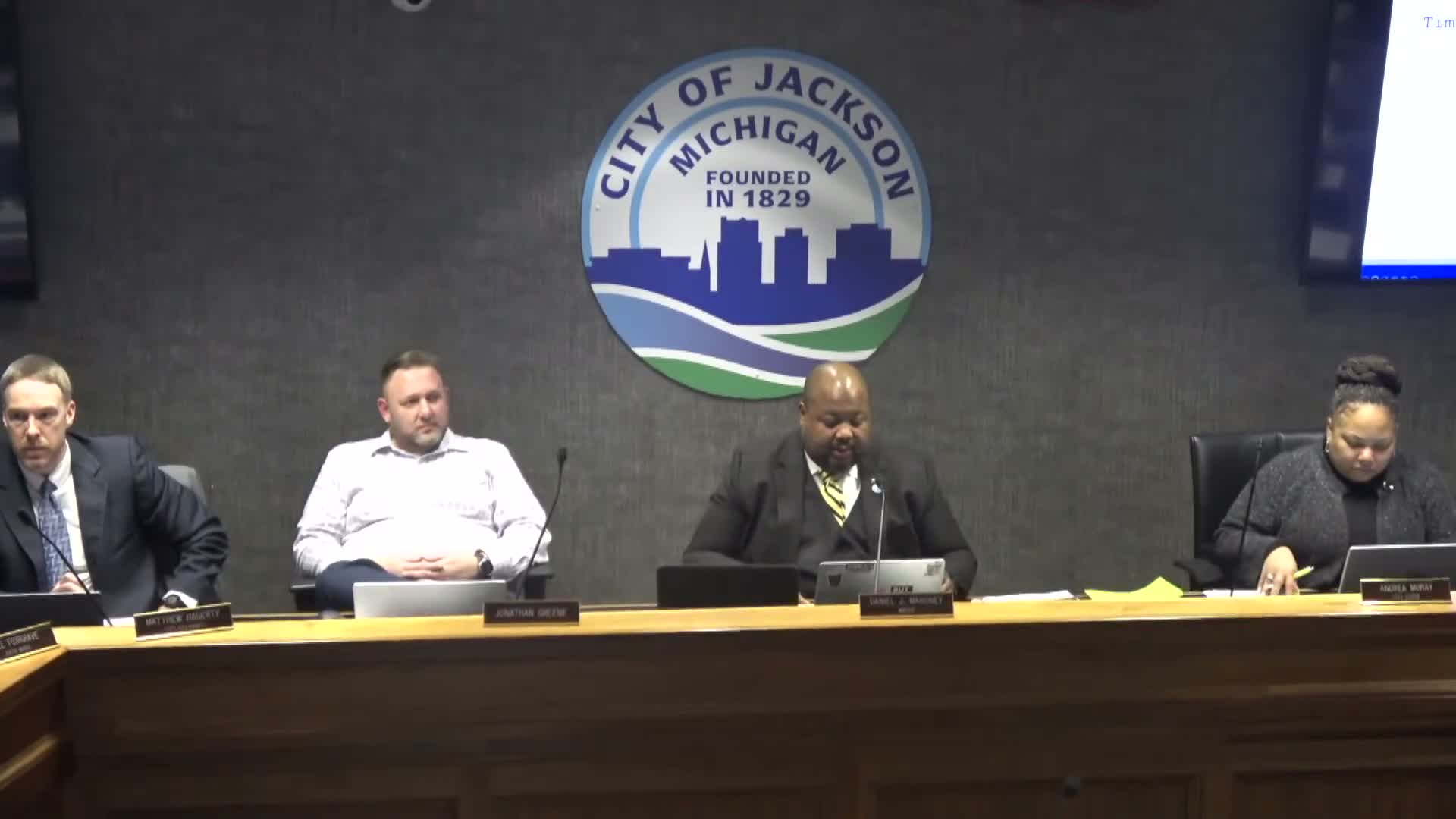
Summary
At a public hearing and citizen comment session, residents offered conflicting views about whether Jackson faces a housing shortage, questioned nonprofit practices and DEI policies, urged cooperative and transitional housing models, and heard a state senator explain an attorney general opinion and legislative actions affecting Hayes Hotel funding.
The Jackson City Council opened a public hearing on Jan. 13 to gather citizen input on housing and community development needs. Speakers presented sharply divergent views about the scale and causes of housing instability in the city.
Nicholas Thurston (Ward 5) told the council that Jackson has many vacant units and argued there is not a housing shortage; he accused some nonprofit actors and housing officials of misrepresenting vacancy data to secure grants and described pallet shelters as temporary tents rather than permanent housing. "The whole thing was a hoax," Thurston said, asserting nonprofits and some case managers had withheld information about empty units.
Other residents described different gaps. Victoria Jefferson, representing grassroots nonprofit partners, urged the council to consider cooperative living or shared transitional housing models for people who lack credit or immediate rental resources: "There is a gap of cooperative living spaces," she said, arguing such arrangements could help people with limited credit or neurodiverse needs.
John C. King raised specific questions about the Hayes Hotel project and shelter operations, including occupancy reporting and the role of pallet shelters on city property. Several commenters criticized and questioned the costs and transparency of the city’s 'extreme ownership' training program for staff and board members; some speakers said FOIA requests indicated hundreds of thousands of dollars in travel and registration costs.
State Senator Sue Schenck addressed the council and described recent state funding disruptions: she said the House Appropriations Committee’s cuts removed roughly $642 million in ongoing state funding, that she had worked to restore money for the Hayes Hotel restoration, and that Attorney General Dana Nessel issued an opinion stating unilateral cuts violated the constitution. Schenck said the matter remained in litigation in the House and urged grantees to proceed with spending where possible to keep projects moving.
Council members and city staff responded by explaining program structures (for example, that many of the 100 Homes units are sold prior to construction), defending some partnerships, acknowledging community concerns about transparency, and noting staff would continue working on outreach and program reporting. Council closed the public hearing after public testimony and proceeded with the remainder of its agenda.