Get email alerts on the Open Data Transparency topic
No spam. Unsubscribe anytime.
Committee keeps open‑checkbook transparency bill alive; administration and data officer offer phased approach
Summary
Bill 70‑620 to require a public, searchable online checkbook was reported out for second reading after BFS urged an IT‑project approach to protect confidential fields and the chief data officer said the city now has a data platform capable of producing dashboards and read‑only datamarts.
Council Chair Waters introduced Bill 70‑620 on Jan. 13, seeking a searchable public portal of city revenues and expenditures updated at least monthly. The measure aims to increase transparency, oversight and public engagement by mandating an "open checkbook" web tool by Jan. 1, 2027.
Andy Kawano, director of Budget and Fiscal Services, said BFS supports transparency in principle but urged the committee to treat the requirement as a major IT project that must balance public access with personal/confidential data redaction. "We're going to have to mask some of the data that provides personal information on people," Kawano said, and he asked the council to work with BFS, the Department of Information Technology and the chief data officer to scope requirements rather than legislate prescriptive technical details.
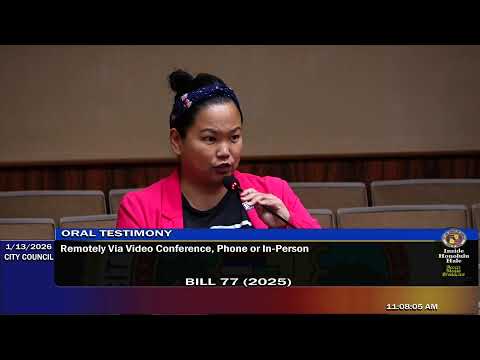
Kira Shushom, chief data officer, told the committee the city has a data platform and can build dashboards and datamarts to satisfy transparency aims while protecting sensitive fields; she recommended requirements discussions first so staff can set milestones and timelines. Supporters and community testifiers, including Unite Here Local 5, urged passage to improve public accountability.
The committee voted to report the bill out for second reading and to schedule a public hearing, while directing administration and the data office to continue collaborative scoping and technical planning.
AI generated
The text on this page is AI generated. Summaries, highlights, analysis, and video transcripts are all produced from the original source material.
AI can make mistakes, so if you spot one, and we will fix it for everyone.
Note: the source content is unaltered by us. Any content source we link to, be it a video, an audio recording, or a document, is presented exactly as its publisher released it. That publisher is usually a government body, sometimes an individual official or another organisation.