Get Full Government Meeting Transcripts, Videos, & Alerts Forever!
Get email alerts on the School Improvement topic
No spam. Unsubscribe anytime.
Eatonville students and administrators highlight high graduation rate, push on attendance and career pathways
Summary
Student leaders spoke to the Eatonville School District board and administrators presented a school improvement overview that highlighted a 97.4% four‑year graduation rate, concerns about attendance, and expanded career/dual‑credit pathways for students.
Eatonville students addressed the school board on student-led projects and administrators used a January work‑study session to link the district’s school improvement plan to career and life preparation.
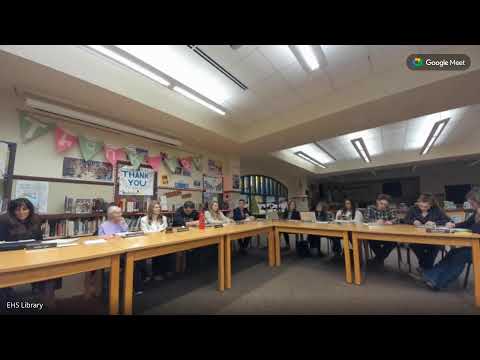
During the opening board appreciation segment, freshman Evelyn Halberston said she organized a card-writing project through Miss Hancock’s leadership class to thank the board. “I’m a freshman here at EHS, and I’m part of Miss Hancock’s leadership second period,” Halberston said, explaining the outreach that brought students to the meeting.
Amy Drew, who presented the work‑study overview virtually, said the district’s four‑year graduation rate is 97.4% and noted subgroup differences. “Well, our overall 4 year graduation rate is 97.4 percent,” Drew said, and she added that students with disabilities had a lower reported rate of 72.7% and that some students remain in the district up to age 21 under individualized education program timelines.
Drew emphasized early intervention for ninth graders: the district’s ninth‑grade on‑track rate was presented at 85.3%, an increase from a cited prior figure of 79.3%. She said improving freshman‑year course completion is a priority because falling behind as a ninth grader raises the risk of dropout.
Attendance was raised as a continuing challenge. Drew explained the state’s 90% attendance metric counts excused and unexcused absences the same way and gave a practical threshold for families: “So they can miss 18 days in a school year,” she said, describing the roughly two‑days‑per‑month limit to remain above the 90% threshold. Drew reported a current district figure of about 66.8% of students present more than 90% of school days and cited a prior figure of 63.1%.
The presentation described four school‑improvement focus areas: academic success and graduation (including ninth‑grade monitoring, credit recovery and lunchtime tutoring supported by foundation funds); career and pathway exploration (expanded college‑in‑the‑high‑school and dual‑credit offerings through partner colleges and pilot work‑based internships); student life and social‑emotional learning (including eighth/ninth‑grade SEL lessons and a foundation‑funded fitness/mental‑health program); and equity and access, with partnerships (for example, in‑school therapists and outside behavioral‑health providers) to address barriers such as housing and substance‑use needs.
Students also outlined extracurricular and fundraising efforts — including a Mary Bridge purple recycling bin fundraiser that donates proceeds to pediatric cancer care — and asked for more outreach so younger students understand the board’s role.
The counselor’s report that followed described guidance‑office priorities: individual counseling, crisis response and classroom lessons for ninth graders covering stress management, refusal skills and confidence building. The counselor noted ongoing administrative work such as credit evaluations and college‑application support.
The board and administrators closed the session with thanks to students and staff and invited student representatives to a legislator outreach event on Jan. 29. The meeting adjourned at 8:40 p.m.