Get Full Government Meeting Transcripts, Videos, & Alerts Forever!
Get email alerts on the Trees And Forest Management topic
No spam. Unsubscribe anytime.
Carmel-by-the-Sea committee weighs tree safety, PG&E coordination and forest management plan after storm
Summary
After storms that 'totally failed' 16 trees, the Forest and Beach Committee discussed a city-led risk assessment, coordination with PG&E, and finalizing a forest management plan that will enter CEQA and Coastal Commission review; residents and Friends of Carmel Forest praised staff storm response.
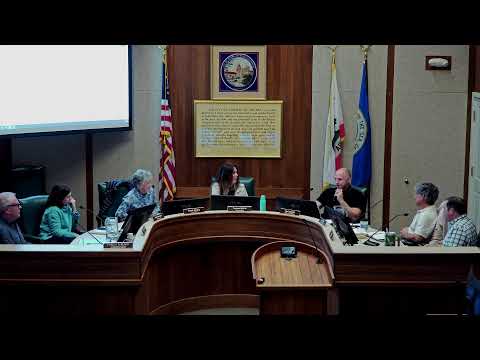
The Forest and Beach Committee of Carmel-by-the-Sea spent much of its Jan. 15 meeting reviewing storm damage and debating how to reduce future risks while preserving the town’s tree canopy.
Justin, the city forester, told the commission that the recent storms caused widespread damage: "Sixteen trees totally failed," he said, adding that "four were on private property though, so 12 city trees," including several mid-to-large trees that took down power lines and one instance where a tree landed on a house. He and other staff described a rapid response with contractors and city crews working through the holidays to clear roads and remove hazardous trees.
Committee members pressed staff on how much the city should proactively seek tree removals near power lines and whether the city could or should budget for a comprehensive risk assessment. Several members noted that while utility line clearance is PG&E’s statutory responsibility, the city will nevertheless seek stronger coordination. "Myself, Brandon, and a few of the council members will be meeting with PG&E executives," the director said, describing a request that PG&E conduct a prioritized risk assessment and improve communications.
Public commenters and commissioners praised city foresters and crews for the response. Maria of Friends of Carmel Forest thanked staff for clearing lanes and helping neighbors during outages, and urged the committee to preserve the town’s trees while addressing safety: "The trees are the view. It's one of the reasons people come here," she said.
Committee members also discussed next steps for the forest management document. Justin said steering committee comments remain open for one week; staff expect to submit the management plan into CEQA review, then to the Planning Commission and City Council, and finally to the California Coastal Commission as an amendment to the city’s Local Coastal Program. Justin described the plan as an operational management plan focused on stewardship, maintenance and adaptive implementation rather than a purely strategic "master plan."
Members flagged key operational constraints: staffing limits for inspections and post-planting follow-up, the cost and scope of a citywide tree inventory or assessment, and potential liability if the city expands line-clearance activity currently handled by PG&E. Several commissioners recommended creating a prioritized list of high-risk trees to share with PG&E, and exploring grant opportunities to fund assessment and replacement work.
The committee did not make a formal decision about an expanded tree-removal program; instead members directed staff to continue gathering comments on the plan, pursue a meeting with PG&E to request an assessment, and return with a clearer timeline for CEQA and subsequent hearings.
The committee moved on after receiving the forester’s operational statistics (permits processed, trees pruned and removed) and public thanks to staff; the management-plan timeline and PG&E coordination were described as the next procedural steps.