Get Full Government Meeting Transcripts, Videos, & Alerts Forever!
Get email alerts on the Pensions topic
No spam. Unsubscribe anytime.
Consultant urges formal pension volatility reserve as CalPERS costs remain volatile
Summary
A senior consultant told the Carmel-by-the-Sea City Council that CalPERS investment returns and actuarial assumptions drive much of the city’s pension costs and recommended a Section 115 ‘pension volatility reserve’ to buffer spikes in unfunded liability payments.
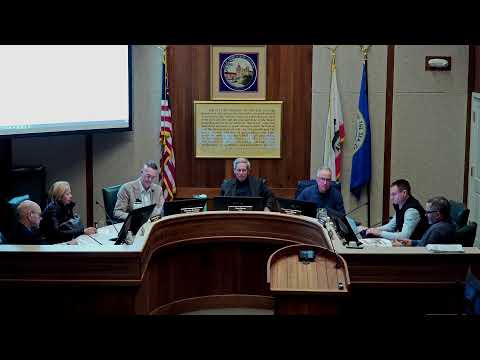
Dan Matusiewicz, a senior municipal finance consultant engaged for the meeting, told the council on Jan. 12 that the city’s defined‑benefit pension obligation depends heavily on CalPERS investment returns and actuarial assumptions and that volatility in returns can produce steep unfunded actuarial liability (UAL) invoices for local governments.
“Investment earnings really make up 50 to 60% of that promised benefit,” Matusiewicz said. He noted CalPERS’ assumed rate of return has declined over decades and is currently about 6.8 percent, and that in years when CalPERS falls short the city receives an unfunded liability bill that can materially raise annual payments.
Matusiewicz walked the council through scenarios showing a single bad market year could cost the city several million dollars in additional UAL amortization. He said the city’s Section 115 trust — a tax‑code mechanism often used as a pension volatility reserve — now holds roughly $4.4 million in contributions plus earnings and that including that reserve puts the city’s modeled funded status in the mid‑70 percent range through 2025, subject to CalPERS’ lagged valuations.
The consultant recommended defining a target buffer (he discussed a planning target in the neighborhood of $8–$10 million at an 80 percent confidence level for a once‑in‑ten‑year stress) and then codifying how the finance director is allowed to use the reserve for liquidity versus opportunistic repayment of slow‑amortizing UAL layers. “If we made steps towards quantifying this into a policy, based on events of a $10,000,000 loss, how much would we have to pay in the first 3 to 5 to 7 years? That might be our liquidity buffer,” he said.
Councilmembers asked for clearer historical detail and requested bank statements and annual trust performance by fiscal year so they can better compare realized returns on the 115 trust with CalPERS performance. Staff said they would provide additional transaction details and incorporate pension policy options into upcoming budget discussions.
What’s next: Staff and the financial stewardship ad hoc will return the council a proposal with concrete policy options and a recommended target range for the Section 115 reserve during the budget cycle, with follow‑up work incorporated into the city’s long‑term fiscal planning.