Get Full Government Meeting Transcripts, Videos, & Alerts Forever!
Get email alerts on the Tanisha Law Crisis Response topic
No spam. Unsubscribe anytime.
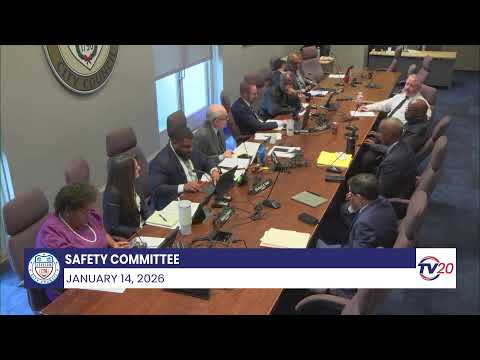
Safety Committee approves emergency ordinance to create community crisis response bureau
Summary
The Cleveland City Council Safety Committee approved, as amended, an emergency ordinance to create a Bureau of Community Crisis Response inside EMS (known as 'Tanisha’s Law'), including a deputy commissioner post, unarmed response teams and public reporting requirements; administration said it will post the deputy-commissioner job and begin implementation steps.
The Cleveland City Council Safety Committee voted to approve an emergency ordinance to establish a Bureau of Community Crisis Response within the Division of Emergency Medical Services, a measure sponsors said aims to route nonviolent behavioral-health calls away from police and into unarmed crisis-response teams.
The ordinance, read into the record by Assistant Director Jason Schachner, creates a deputy commissioner position to lead the bureau, authorizes unarmed response teams to be dispatched through 911 crisis-call diversion, requires publicly available policies and an annual program report, and sets minimum crisis-intervention training standards for police staff. Councilwoman House Jones, one of the ordinance sponsors, said the changes were developed in collaboration with the administration and community stakeholders.
“An unarmed crisis response team shall be dispatched through crisis call diversion, offering alternatives to policing in the criminal legal system while responding to nonviolent behavioral-health and quality-of-life calls for service,” Councilman Charles Sleiff said while reading the approved amendment language.
Supporters at the meeting framed the measure as a public-health approach. Faten Oda, identified as executive director of CARE Ohio/CAIR Northern Ohio chapter, told the committee her organization receives calls from incarcerated people and said the program could “get to the root cause instead of criminalizing people in crisis.”
Director of Public Safety Wayne Drummond said the mayor has committed initial funding for the deputy-commissioner position and related equipment. He told the committee the administration is preparing to post the job opening and that the bureau will be administered through EMS, with the commissioner of EMS hiring staff with the director of public safety’s consent.
Drummond described vehicles for the program as non-ambulance, unmarked units (similar to RAV4s used in co-responder models), without lights or sirens. Commissioners said responders likely will consist of EMS personnel paired with behavioral-health clinicians, peers with lived experience or mental-health clinicians; the exact staffing model will be developed after the deputy commissioner is hired.
The ordinance requires program data collection and a public-facing dashboard with incident counts, neighborhood disaggregation, and estimates of police hours saved. Sponsors also agreed to add definitions of “compassionate” and “appropriate care” and to clarify periodic review and public input in the ordinance’s rulemaking language.
Committee members asked the administration to provide a detailed implementation timeline and budget estimate; sponsors told the committee an initial organizing investment had been discussed at roughly $700,000 with potential growth in subsequent years, and Drummond said a full budget will be determined after staffing and program design. The committee recorded a voice vote—“Aye”—and the chair announced the legislation passed at the committee level.
Next steps, per comments at the meeting, include posting the deputy-commissioner position and coordinating with finance on a line-item estimate; administration officials said they will return with detailed staffing, procurement and timeline information for council review.