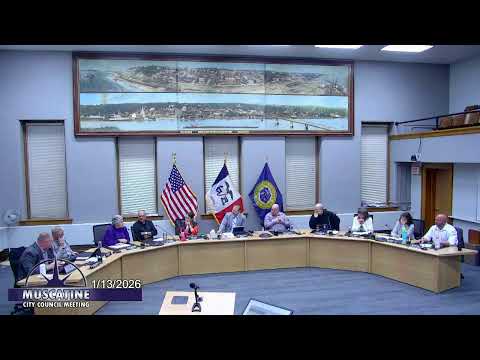
Muscatine council gives consensus to pursue new Papoose Pump Station design and funding
Loading...
Summary
After a consultant presentation on a failing 1963 pump station and interceptor deterioration, Muscatine City Council gave staff consensus to begin design and pursue funding for a new Papoose Pump Station (recommended over rehabilitation), flow monitoring and smaller stormwater pumping measures.
A consultant and city staff told the Muscatine City Council that the Papoose Pump Station, built in 1963 and sited within the floodway, is deteriorated and should be replaced rather than repeatedly rehabilitated. After questions about costs, operations and funding, the council gave staff verbal consensus to begin design work, install flow meters and pursue funding options.
The recommendation comes as part of the West Hills Sewer Separation project, which separates stormwater from sanitary flow in a watershed that serves about a third of the city. Consultant Candace told the council the station's precast concrete panel walls are bowing, exterior stairs and doors are deteriorated, the dry well piping and supports are failing and the wet well is undersized. "We propose that the city budget about $13,700,000 for this project," she said, describing that figure as construction plus engineering, administration and contingency with an allowance for decommissioning the existing facility.
Why it matters: the West Hills Sewer Separation reduces the likelihood of sanitary overflows to the Mississippi River, but it increases reliance on the downstream pump station to handle sanitary flow. City staff and the consultant said a new station outside the floodway would be safer for crews, use modern submersible pumps, conform to hydraulic standards and likely have a life expectancy of 50-plus years compared with roughly 30 years of additional service if the city invested only in the existing structure.
Key details and timing: the consultant presented two main sanitary options (rehabilitate or build new), recommended new construction across the railroad in the city parking lot, and proposed a phased approach: 4'6 months of spring flow metering to size pumps accurately, start design with the new fiscal year in July, bid in 2027 and a two-year construction period targeting completion in 2029. Cost comparisons given during the presentation included roughly $6,500,000 to rehabilitate the old station versus about $9,000,000 for a new sanitary station; combined project and interceptor work led the consultant to recommend budgeting roughly $13.7 million, with stormwater infrastructure adding further cost if a permanent storm pump were chosen.
Funding and alternatives: staff said the project is a strong candidate for State Revolving Fund (SRF) loans and other federal or emergency funding, and that the city could use sewer reserve funds and local option sales tax to manage loan repayment. Brian Steinman told the council, "This is a prime project for SRF funding," and staff said they would pursue grants, SRF, and other options before placing significant financial burden on the city.
Stormwater options: the consultant also proposed a permanent stormwater pump station sized for about a 10-year storm (estimated ~$7.3 million) and a lower-cost portable stormwater pumping approach using permanent sumps and portable pumps (estimated ~$750,000). Staff and the consultant said the portable pumping infrastructure is an effective near-term option that would be simpler and safer to implement.
Council direction and next steps: the council verbally indicated consensus to proceed with staff's recommendation to begin design, install flow monitoring, and pursue funding for both the sanitary pump-station project and the recommended stormwater infrastructure. Staff said they will return with reports as design and funding searches progress.
What was not decided: council provided consensus to move forward with design and funding searches; no formal ordinance, bond authorization or final funding decision was made at the meeting.