Get Full Government Meeting Transcripts, Videos, & Alerts Forever!
Get email alerts on the Utilities topic
No spam. Unsubscribe anytime.
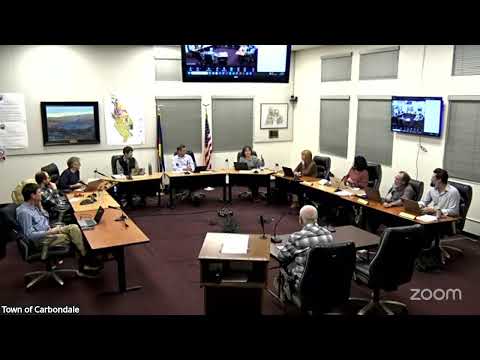
Carbondale trustees approve opt-out policy for new AMI water meters after residents raise health and cost concerns
Summary
After public comment raising radio-frequency and cost concerns, Carbondale trustees approved an opt-out policy for the town’s new Advanced Metering Infrastructure (AMI). Staff described operational savings and said opt-outs carry costs to avoid shifting expenses to other customers.
Carbondale trustees voted to adopt a water AMI (Advanced Metering Infrastructure) opt-out policy after hearing resident concerns about in-home smart meters and staff explanation of costs and operational impacts.
Resident Anne O’Brien told trustees she was surprised to learn the town plans to install cellular-enabled meters inside homes and said she did not consider those devices safe to have inside her house. “The amount of radiation they give off is way more than a cell phone,” O’Brien said during public comment and asked the board to adopt an opt-out policy and to consider affordability for residents who choose not to accept a cellular endpoint.
Town staff explained the current system uses a radio-frequency remote-register drive-by system and that the approved AMI meters will send readings by cellular messages rather than requiring town staff to physically drive to and record each meter. Staff said the opt-out policy was designed to balance customer choice and the town’s operational costs: manual meter-reading requires personnel time and would shift recurring costs to the utility if many customers opted out.
Another resident, Richard Votero, asked for better public information about what the technology means for people’s homes and suggested a short tutorial. Arthur Franklin, who said he has experience with ‘subtle energy’ fields and people sensitive to technology, suggested Faraday-cage style mesh as a mitigation option.
Trustee Erica moved to approve the opt-out policy; Trustee Jess seconded. The motion passed unanimously.
Staff said existing outdoor remote registers that remain readable by drive-by collection will not require the cellular endpoint, and replacements or incompatible meters in the future may require additional discussion about equipment needed to preserve functionality. The board directed staff to finalize implementation details and maintain transparency about opt-out fees and technical options.