Get Full Government Meeting Transcripts, Videos, & Alerts Forever!
Get email alerts on the Reparations Commission topic
No spam. Unsubscribe anytime.
Senator urges Senate to override veto of Maryland Reparations Commission bill
Summary
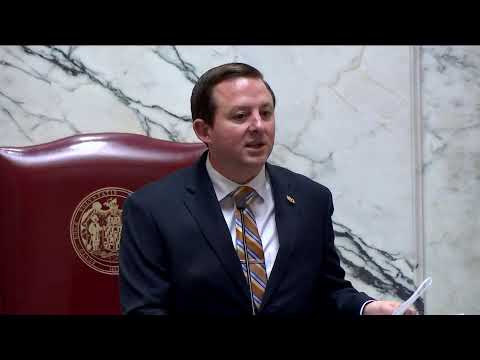
An unidentified senator delivered an extended, research-based floor speech urging colleagues to override the governor's veto of Senate Bill 587, arguing a Maryland-specific commission is needed to document state actions and make legally defensible reparations recommendations.
An extended floor speech in the Dec. 16 special session urged the Senate to override the governor's veto of Senate Bill 587, which would (as read on the floor) establish the Maryland Reparations Commission. The speaker — identified in the transcript only as a senator from Baltimore County and not by personal name — framed the argument around the need for a Maryland-specific, documentary foundation for any future remedies, saying that reparations must be “grounded in specific evidence of state action, state responsibility and state impact.”
The unidentified senator recounted the commission’s legislative origins and prior related efforts, noting that earlier commissions and studies (including a Maryland lynching truth and reconciliation commission and related 2023 legislation extending commission work through June 30, 2026) provide parts of a record but are not substitutes for a comprehensive Maryland-specific study. The speaker cited historical points — including Maryland’s founding in 1634, the colonial General Assembly’s 1664 statute referencing slavery, and mid-20th-century local examples of displacement and discriminatory zoning — to argue the proposed commission would produce findings that could withstand legal scrutiny and guide durable remedies.
The senator told colleagues the work is not about assigning individual blame but about fixing systems, and urged that the General Assembly has both the responsibility and the opportunity to enact or sustain a commission to recommend state-based remedies. The transcript records the speech as researched and wide-ranging but does not include a recorded roll-call vote on SB587 in the provided segment.
What was not recorded: the transcript includes detailed historical assertions and references to prior litigation and scholarship; those claims were made on the floor and would require separate sourcing for independent verification.