
Chandler Unified board approves most of $12 million rightsizing plan, tables cuts to media and tech roles
Get AI-powered insights, summaries, and transcripts
Subscribe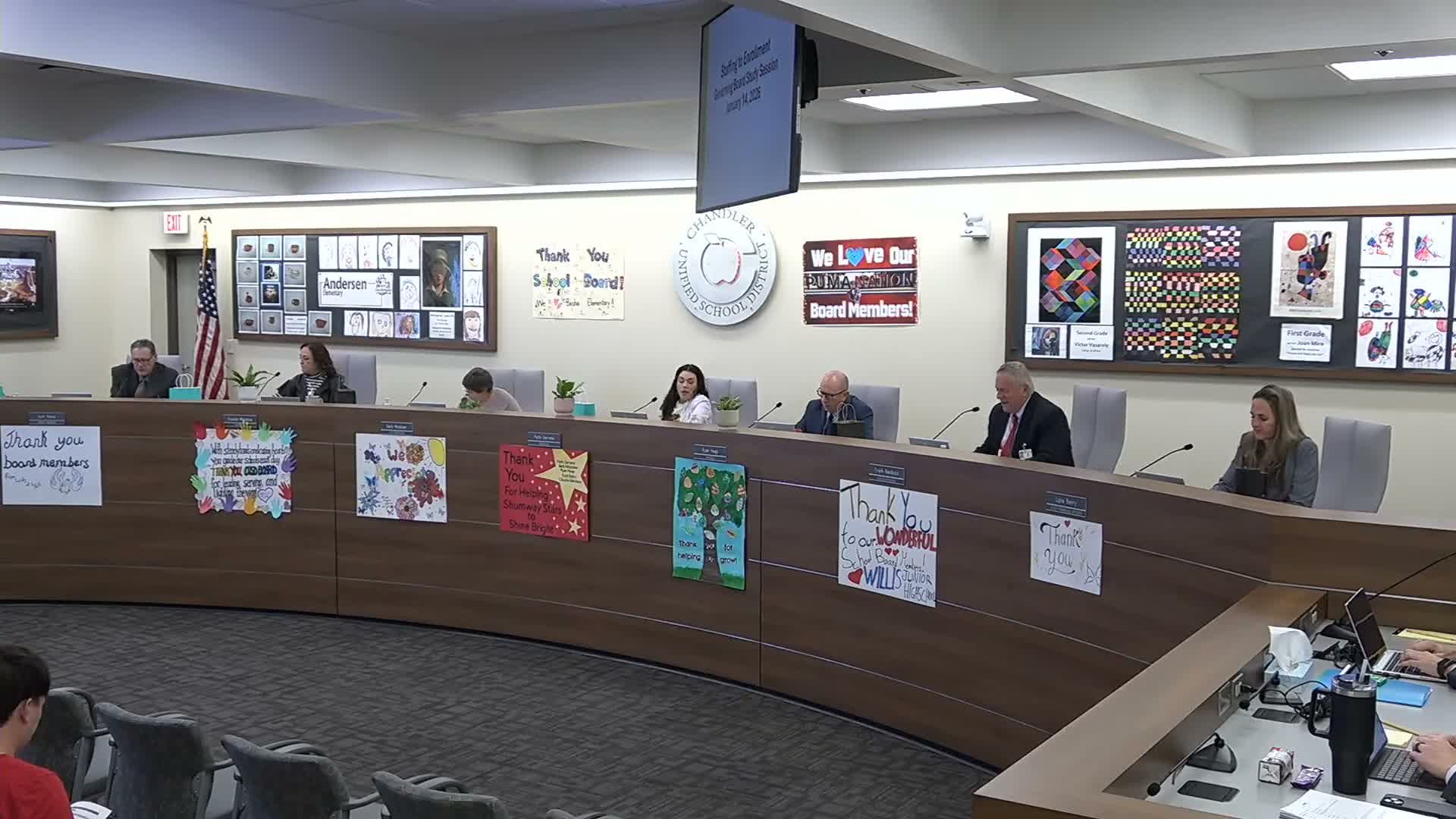
Summary
After a lengthy study session and more than an hour of public comment, the Chandler Unified School District governing board approved most of an administration proposal to cut and reclassify staff to meet a projected $12 million budget shortfall for 2026–27, but voted to pause proposed eliminations of elementary and junior high media and technology specialist positions for further review on Jan. 21.
Chandler — The Chandler Unified School District governing board on Wednesday approved the bulk of an administration plan to reduce roughly $12 million from next year’s operating budget, approving staffing‑to‑enrollment guidelines, FTE reductions and funding shifts while carving out several proposed changes to library/media and technology staffing for additional study.
Superintendent Jeff Narducci and senior staff told the board at a study session that sustained enrollment declines — from a pandemic high of nearly 47,000 students to about 40,500 now — and the expiration of temporary funding streams such as ESSER and results‑based funding have left the district confronting a structural shortfall. Narducci said the administration’s presented approach aims to “absorb impacts and minimize the impacts that will be present” by aligning staffing to enrollment and shifting some positions into other funding sources.
The approved package includes: administrative and department budget reductions, targeted reductions in district‑level certified non‑classroom support (coaches, specialists) and school‑level staffing adjustments in accordance with longstanding district staffing guidelines. Presenters estimated net savings and funding shifts across four priority areas that together approached the $12 million target.
But after several hours of public comment — much of it urging the board not to eliminate certified media specialists, technology teachers and deans — trustees unanimously agreed to amend the motion to remove (table) the proposed eliminations and consolidations of elementary media specialists, elementary technology teachers, elementary media tech teachers and junior‑high media specialists. The board directed the administration to return on Jan. 21 with clearer analyses of impacts, alternatives and options for finding roughly $1.7–$2.0 million that those cuts would have delivered.
“We owe our staff better,” said multiple public commenters who described media specialists and tech teachers as essential to student literacy, extracurricular programs and school climate. Student and parent testimony highlighted impacts to early childhood and special‑education supports. Superintendent Narducci said the administration will bring back detailed impact and implementation information at the follow‑up meeting.
Votes at a glance: the board approved the overall rightsizing plan (as amended) and directed follow‑up on the tabled line items; the amendment to carve out the media/tech items passed by board vote and its substitute motion carried unanimously.
What was approved: staffing‑to‑enrollment guidelines for FY 2026–27, reductions in specified administrative/departmental FTE, funding shifts that move some positions from Maintenance & Operations into federal, state or cash funds, and other elements of the package presented in the Jan. 14 study session.
What’s next: administrators will return on Jan. 21 with the requested impact analyses and “options” the board asked for. The district emphasized that certificated employees on continuing contract will be placed where possible, using involuntary transfer and rehire procedures; HR described an outreach and placement process for affected staff.
The board’s action attempts to balance two competing pressures: the legal and financial requirement to present a balanced budget with the community demand to preserve student‑facing positions tied to literacy and early‑childhood access. The follow‑up meeting will be the next opportunity to see whether alternative savings or phased adjustments can reduce or avoid proposed changes to media and technology staffing.