Get Full Government Meeting Transcripts, Videos, & Alerts Forever!
Get email alerts on the Comp Plan topic
No spam. Unsubscribe anytime.
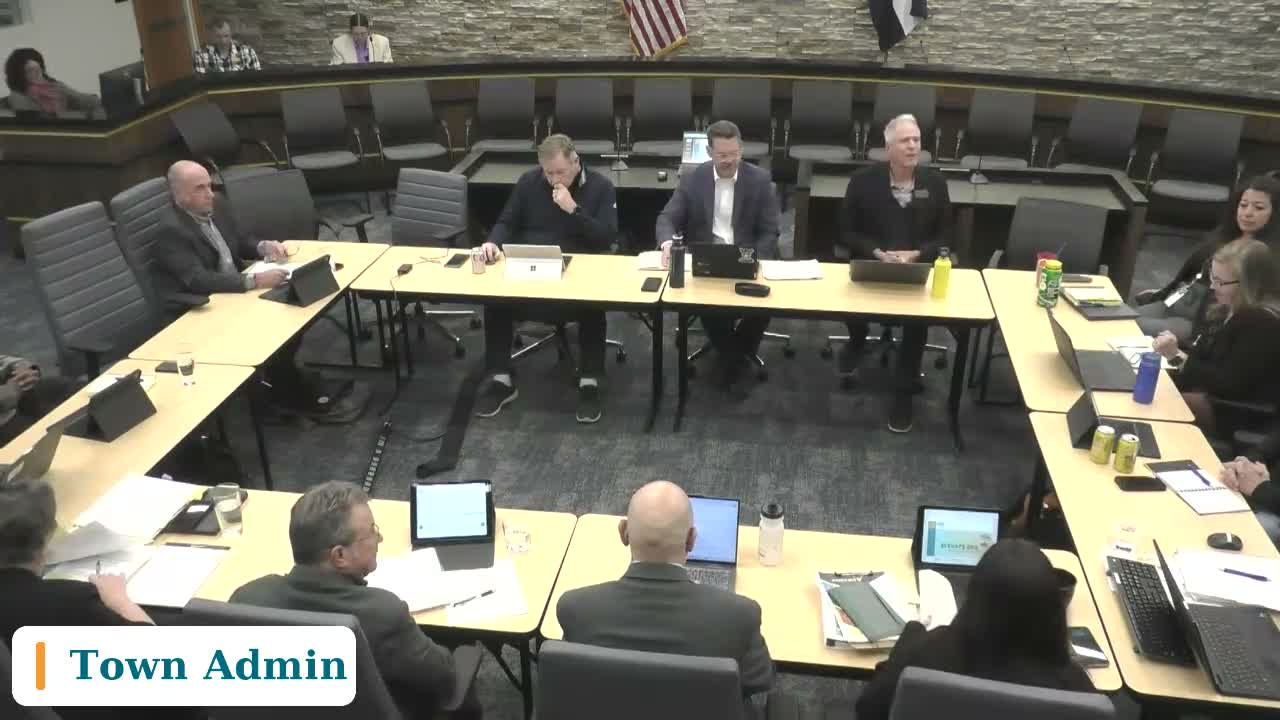
Erie study session weighs comp‑plan density changes and orders more fiscal analysis
Summary
Town staff presented a two‑year comprehensive plan update and fiscal model March 4; councilors proposed adding a higher density band (20–30 du/acre) and asked staff for a refreshed fiscal analysis and clearer mapping before surveying voters on trade‑offs between taxes, services and density.
Erie town staff presented the draft comprehensive plan and an accompanying fiscal model during a March 4 study session, and council members asked for more financial detail before sending new questions to residents.
Planning Director Sarah Narmela said the update began in October 2022 and included extensive outreach, visioning and scenario planning. She described the plan’s role as advisory: "The comprehensive plan is essentially a guiding document for how we will develop over the next 5, 10, 20 years," she said. The draft map and policies were finalized in September 2024 and moved through the planning commission with a unanimous recommendation.
Planning manager Kelly Driscoll walked the council through three scenarios the public reviewed, and a fiscal analysis that staff said shows the preferred land‑use map reduces the average cost per household by 46 percent compared with the town’s existing map. Driscoll said the analysis focuses on property‑tax and sales‑tax generation and general‑fund maintenance; it does not include enterprise fund receipts or external subsidies. Council members repeatedly asked for clearer methodology, per‑capita figures and a breakdown of what maintenance costs were included.
Several council members urged the addition of a fourth numeric density band so the map would be more intuitive. One proposal would create a 20–30 dwelling‑units‑per‑acre “higher density” band to sit above the plan’s current categories; proponents said it would give staff and the public clearer guideposts when assessing rezoning requests.
Council members also raised the mismatch between comp‑plan guidance and the Unified Development Code (UDC) zoning rules and asked staff whether planned or entitled projects already exceed the plan’s numeric bands. Staff said many projects are planned or entitled under PD (planned development) overlays and that the comp plan remains a policy guide; when an applicant seeks zoning changes the council and planning commission still review entitlements against comp‑plan criteria.
Next steps: council asked staff to produce a focused fiscal update, show side‑by‑side comparisons of old vs new density definitions and clarify which areas remain subject to PD overlays before the council drafts any household survey questions. That analysis will determine whether questions about density versus taxes can be meaningfully presented to voters.