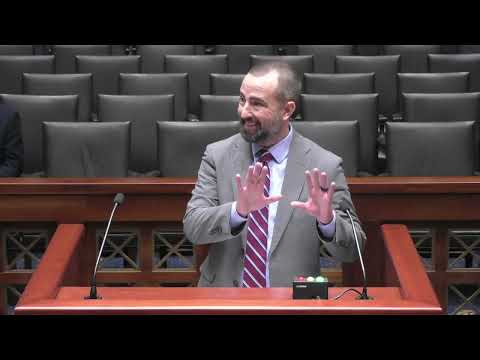
Supreme Court of Texas Hears Argument Over Whether DPS Wrongfully Fired Special Agent Callaway After School Incident
Loading...
Summary
At oral argument, counsel for Mister Callaway told the Supreme Court of Texas that the Texas Department of Public Safety removed him as a special agent after an incident at his daughter's school and relied on supervisors' assumptions about his PTSD rather than medical evaluation; DPS said it acted on intolerable conduct.
The Supreme Court of Texas heard arguments over whether the Texas Department of Public Safety unlawfully terminated special agent Callaway after an incident at his daughter's school.
An attorney identified in the transcript as "Unidentified Speaker 3" told the court, "the Texas Department of Public Safety deprived mister Callaway of his position as a special agent, due to the incident with his daughter at her school and the record is clear on that." Counsel argued statements by supervisors such as Mister Rocco and Mister McGraw about Callaway's emotional control were evidence of discriminatory intent for a jury to weigh.
Why it matters: The case turns on how Chapter 21 of the Texas Labor Code defines when an employee is "qualified" to perform essential job functions and whether an employer may rely on predictions about future risk tied to a medical condition without medical evaluation. Counsel said supervisors' speculative statements about what Callaway "might" do were treated by the court of appeals as direct evidence of discriminatory intent.
At argument, counsel emphasized that Callaway had twice sought Family and Medical Leave Act leave and that the Department of Public Safety was aware of a PTSD diagnosis. Counsel told the justices there is "no evidence from a medical professional" in the record showing Callaway was unfit to do the job and argued the department relied on nonmedical opinions when escalating discipline from a proposed suspension to termination.
DPS' position, represented in the transcript by a different unidentified speaker ("Unidentified Speaker 6"), focused on observed conduct and public-safety obligations. That speaker said, "My responsibility is to the public, and I have seen someone act in a way that is intolerable," arguing supervisors relied on what they actually observed and that public-safety considerations justified their judgment.
The arguments also touched on statutory defenses: the bench and counsel discussed whether Chapter 21 incorporates the ADA's "direct threat" analysis for employers in Texas and whether the employer's subjective belief about future risk is sufficient under the statute. Counsel urged that Chapter 21 requires a more searching analysis when an employer acts in the context of a documented medical condition and noted the DPS fitness-for-duty policy was not produced in discovery.
What the record shows: Counsel said Lieutenant Rocco and Director McGraw were aware of Callaway's PTSD and cited testimony that Callaway had little or no disciplinary history prior to the school incident; counsel described supervisors' post-incident statements as central to the discrimination claim. The transcript records at least one prior disciplinary notation described as related to alleged alcohol consumption at work and another disputed instance involving contact with a witness; counsel said those earlier matters did not demonstrate a pattern that would justify termination without medical assessment.
Where it goes next: The justices did not announce a decision in court. The argument concluded and the court was adjourned. The case will be resolved in a written opinion or later order; no final ruling was issued at the oral argument.