Get Full Government Meeting Transcripts, Videos, & Alerts Forever!
Get email alerts on the Public Safety topic
No spam. Unsubscribe anytime.
Council debates 'lift‑assist' ordinance to charge repeat callers for non‑injury assists
Summary
Council considered an ordinance to charge fees for repeat non‑emergency 'lift‑assist' calls (proposed fees: $50 after the third call, $100 at the fourth, $200 at five or more; $250 for medical facilities). Members and residents raised concerns about impacts on elderly and homebound residents and alternatives such as referrals to aging services.
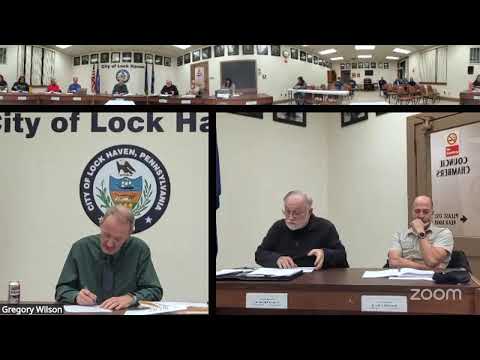
The Lock Haven City Council on Jan. 19 considered an ordinance intended to curb repeated non‑emergency "lift‑assist" calls that occupy fire department resources. Staff described the proposal as a deterrent to repeated non‑injury calls and provided a tiered fee schedule: a $50 fee after a third call in a year, $100 on a fourth call, $200 for five or more calls, and a $250 fee for medical facilities and nursing homes.
Fire/EMS personnel who spoke said repeated lift‑assist calls represent a large share of call volume and can divert resources from emergency responses. One firefighter recounted repeatedly visiting the same residence and said asking family members to assist resolved that specific instance.
Several council members and residents expressed concerns about equity and unintended consequences for elderly or isolated residents who lack family or home‑health supports. One council member said the projected annual cost for an address with very frequent calls could reach thousands of dollars and urged caution. Others suggested alternatives: sending a letter after repeated calls, coordinating with the office on aging, or establishing a cap or a single flat fee rather than escalating amounts.
The transcript shows extended discussion about whether to table the measure, amend dollar amounts, or proceed to a vote. A roll‑call vote on the motion on the floor was recorded with mixed responses in the transcript; council members expressed both support and opposition and several asked staff and professionals for input on service impacts.
Next steps: the council debated tabling, amending, or voting on the ordinance during the meeting. The transcript records the debate and the roll call statements; further drafting and possible amendments were discussed before final adoption (if any) in a subsequent meeting.