
House and Senate government operations review reports-repeal survey; counsel warns nonresponse will be treated as assent to repeal
Get AI-powered insights, summaries, and transcripts
Subscribe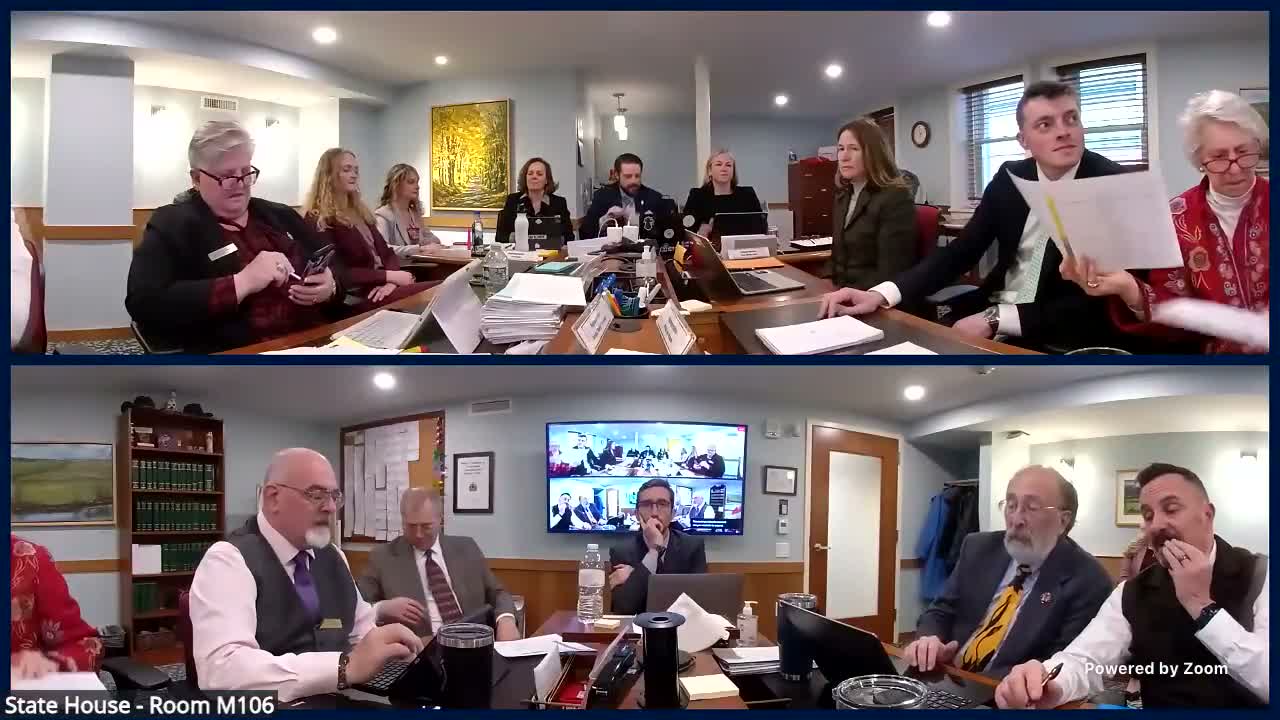
Summary
At a Jan. 20 joint hearing, legislative counsel Tucker Anderson told members that surveys on statutory reports are due Friday and that failure to reply will be treated as a recommendation to repeal; committees discussed retaining, extending or repealing individual reports and agreed to follow up with agencies that did not respond.
BURLINGTON — House Government Operations, joined by Senate Government Operations, held a joint hearing on Jan. 20 to review a cross‑chamber “reports repeal” survey and to decide which statutorily required reports should be repealed, extended or retained. Legislative counsel Tucker Anderson told members that surveys are due Friday and that nonresponse will be treated as a recommendation to repeal the listed reports.
"The failure to respond by the deadline is interpreted by this committee as an indication that the reports should be repealed," Anderson said, summarizing the process and the bill that will follow at the next step in the House before going to the Senate.
Why it matters: the review is a housekeeping step intended to remove obsolete or duplicative reporting requirements from statute and to focus legislative oversight on reports that have active policy value. Members said the process also surfaces gaps in agency capacity and in committee awareness of which reports are being used.
Counsel and members walked through a spreadsheet of about 19 reports assigned to their jurisdiction. Committees split that work across members who read the relevant statutes, contacted agencies and recommended whether each report should be repealed, extended for another biennium or retained permanently.
Several examples discussed at length:
- Genuine Progress Indicator: Brett Waters told the joint panel that the university partner who ran the project had died, no appropriation exists for the work, and the last report was issued in 2018. "There's currently no money appropriated for the project, and the report hasn't been issued since 2018," he said, and recommended repeal.
- Drone usage by law enforcement: The Department of Public Safety told members it is neutral on extending the drone‑use report and noted privacy concerns; several members recommended extending the reporting requirement for further review rather than repealing it outright.
- Corrections reporting and temporary employees: Senator Clarkson urged more scrutiny of a corrections report tied to temporary employees and cited morale and staffing problems in the department, saying the issue "deserves bigger, deeper digging." Counsel noted overlapping statutory reporting already requires annual submission of some temporary‑employee data to another office, and members agreed to follow up with the Department of Corrections for clarification before making a final recommendation.
- EMS advisory commission: Rep. Bueney said the EMS advisory commission is actively developing a five‑year statewide plan and recommended retaining that report because the work is ongoing.
- Privatization/assistant auditor report: Rep. Waters Evans reported the assistant auditor said the report is produced when privatization contracts exist and that his office is willing to continue producing it; the recommendation was to retain it.
How the committee will proceed: Anderson and members emphasized that the Friday deadline is the house committee’s first checkpoint. The chair noted that the draft bill carrying the House’s repeal recommendations will still go through the regular legislative process — committees can accept testimony, amend, extend, or retain reports before any statutory repeal takes effect. Representative Hango and others repeatedly encouraged committees that want to keep particular reports to come forward to offer testimony or to request an extension for another biennium.
Contentious or notable claims: Senator Vahosti raised an allegation relayed by unions that "temporary employees across state government are being misused to avoid providing benefits," arguing that related reporting should not be repealed without investigation. The committee did not resolve that allegation at the hearing and directed staff to follow up with the relevant agencies.
Next steps: the House will draft the repeal bill based on the committee’s compiled recommendations. When the bill reaches the Senate, senators said they will have an opportunity to amend the list; members asked staff to begin follow‑up outreach to agencies that had not responded so those agencies can be heard before final decisions are made.
The hearing concluded with members thanking counsel for compiling the lists and agreeing to continue the review as the bill moves through the House and then back to the Senate.