
High court questions whether TCPA applies to facial challenges and Rule 202 petitions in Weldon
Get AI-powered insights, summaries, and transcripts
Subscribe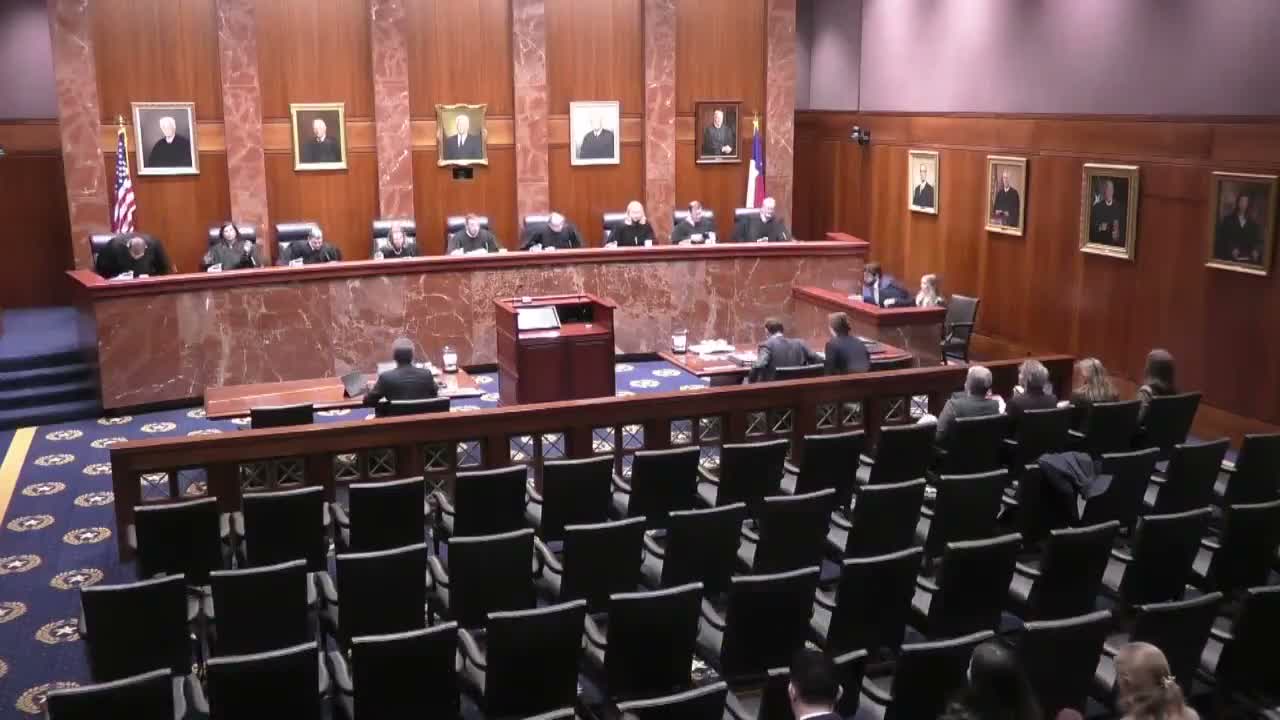
Summary
At oral argument in Weldon, justices pressed parties on whether the Texas Citizens Participation Act (TCPA) applies to pre-enforcement and facial constitutional challenges, how the statute's step framework handles legal (non-fact) claims, and whether fees and mootness issues remain live.
The Texas Supreme Court heard argument in a challenge tied to Rule 202 petitions and the Texas Citizens Participation Act (TCPA), focusing on whether the TCPA's procedural framework applies to a facial constitutional challenge and pre-enforcement suits such as those filed under Rule 202.
Counsel for the petitioner argued that the TCPA's plain text, including its statement of purpose to safeguard petitioning rights and protect meritorious claims, must be read holistically; petitioner maintained that when the statute refers to —clear and specific evidence— it contemplates factual showings at step 2 and that pure legal challenges (facial constitutional claims) do not fit neatly into that evidentiary burden. "Step 1 is the question about is there a protected statutory right at issue? And then step 2 is the question about do you have a meritorious claim," a justice summarized during questioning.
Respondents and argument counsel debated whether a declaratory-judgment, pre-enforcement suit (often used to challenge a statute in advance of enforcement) should be subject to TCPA motions or treated under other statutory remedies; counsel pointed to statutory provisions (27.002, 27.011) and the TCPA's exclusion of state actors as complicating factors. The court discussed case-law touchstones including Walgreens, Lipsky, and other precedents the parties had cited.
Justices also raised practical consequences: whether the suit is moot if petitioners disclaim enforcement intent, whether fee exposure remains an active dispute, and how private enforcement under SB8-style mechanisms interacts with the TCPA. Counsel argued that fees are recoverable only under certain outcomes and that declaratory relief may be the appropriate vehicle for pre-enforcement review.
The court also pressed on evidentiary standards for —clear and specific evidence— in cases that involve primarily legal questions rather than disputed factual records. Counsel conceded that the statutory text is complex and that the court's prior decisions provide guidance but not complete answers for a facial challenge context.
After extended colloquy the court submitted the case. The decision will clarify whether and how the TCPA applies to pre-enforcement constitutional claims and the interplay of statutory remedies, fee exposure, and standing in that context.
Next steps: case taken under submission; no decision date announced.