
UN appeals for $348 million as Gaza aid operations struggle amid winter and access constraints
Get AI-powered insights, summaries, and transcripts
Subscribe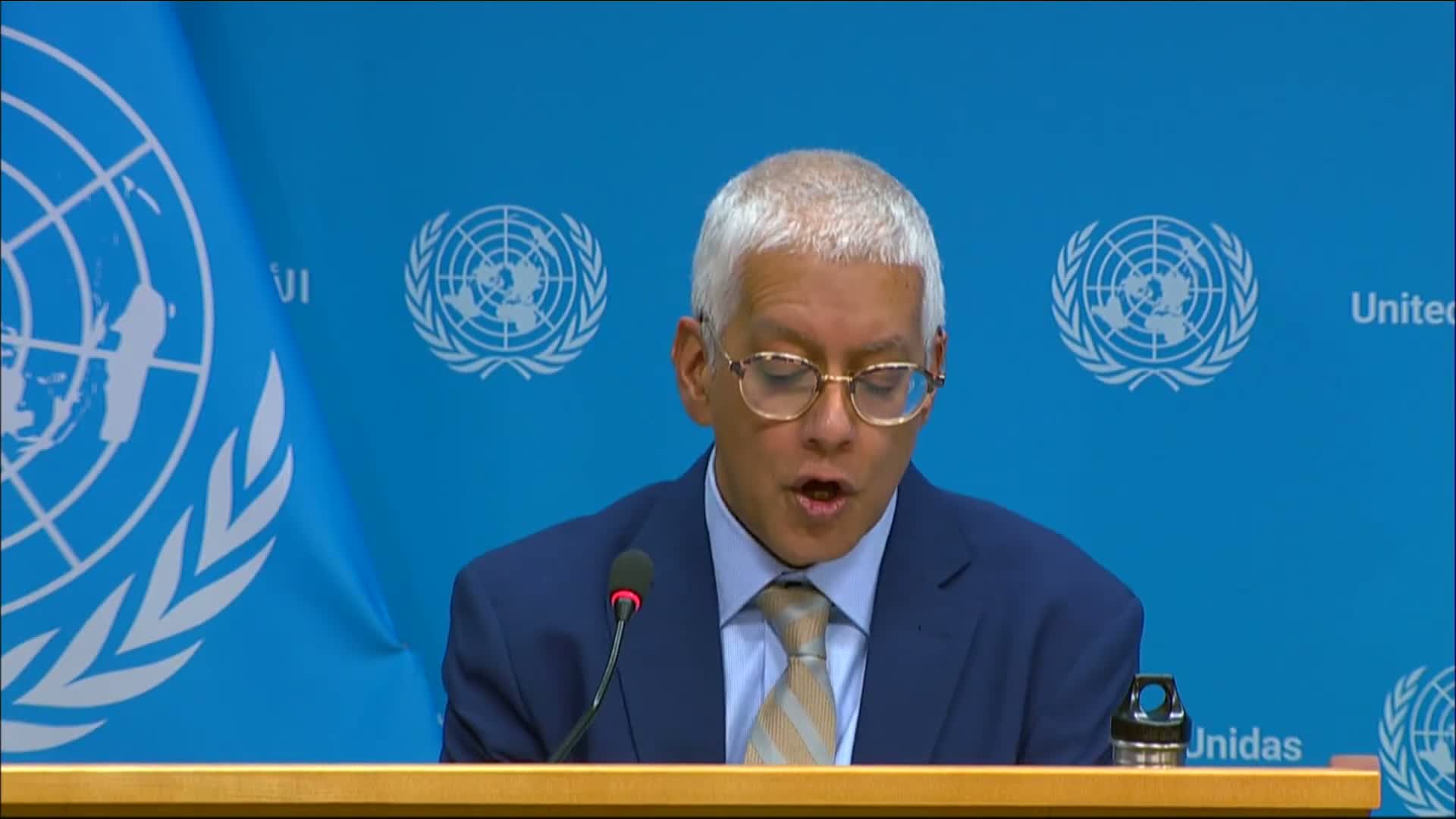
Summary
The UN and partners reported urgent winter needs in Gaza — more than 1,300 tents, 7,000 tarpaulins and damaged shelters — and the UN called for $348,000,000 this year to support more than 1,000,000 people amid limited access and damaged infrastructure.
The United Nations said humanitarian partners have delivered emergency supplies in Gaza but that continuing impediments and winter weather are worsening needs, and it appealed for $348,000,000 to sustain and scale up relief this year.
Spokesperson Farhan, citing OCHA, said "more than 1,300 tents, 7,000 tarpaulins, and thousands of mattresses, blankets, and warm clothes" were distributed across the Gaza Strip, and that storms impacted about 80 displacement sites and damaged or destroyed at least 4,000 family shelters. He added that UN and partners provided emergency food, tents and hygiene supplies to more than 660 families.
On the health front, the UN said it and partners helped set up 140 specialized surgical and physical rehabilitation beds at Nassar Medical Complex in Khan Yunus and five neonatal intensive-care beds at Aouda Hospital in Deir El Bala. The UN also reported nearly 450 temporary learning spaces are operational, accommodating around 40% of children; the transcript phrase for soap distributed was "half 1000000 bars of soap," which appears to be an imprecise rendering in the briefing (see clarifying details).
The spokesperson said the UN is "calling for $348,000,000 this year to support more than 1,000,000 people." He and other briefing participants emphasized the need for sustainable shelter solutions, clearing rubble to make land available, and restoring water and sanitation systems in order to protect civilians from winter exposure.
The UN warned that continued rains may cause further flooding at displacement sites and that access constraints mean it could take time to repair roads, reduce dam levels and reopen routes for assistance.
Farhan closed the topic by reiterating that civilians must be protected, allowed to flee safely and to return when conditions permit.