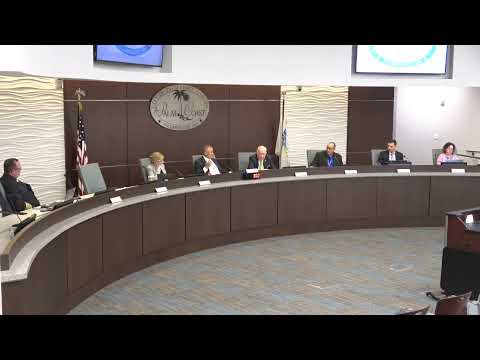
Palm Coast Council moves to make food trucks easier to operate, vows to trim site-plan hurdles
Loading...
Summary
After a broad public turnout, the Palm Coast City Council directed staff to rework a draft food‑truck ordinance to allow accessory operations on more commercial and light‑industrial properties, seek local‑first scheduling, and review permit fees and reservation procedures before planning‑board review.
Palm Coast — The City Council signaled a clear shift on Tuesday toward making it easier for mobile food vendors to operate within city limits, directing staff to rework a draft ordinance after intense public comment from local truck owners.
Community Development planner Michael Hansen told the council the draft implements Florida Statute 509.102 (which preempts municipal bans on mobile food vendors) and would allow food‑truck operations either as principal “food truck parks” or as accessory (ancillary) uses tied to existing properties. Hansen said the ordinance would require technical site‑plan approval for sites outside special events and set safety standards including impervious pads (minimum 20 by 30 feet), a 10‑foot minimum separation between trucks for fire protection, and parking requirements tied to the number of truck pads and dining area.
“State law preempts municipalities from prohibiting food trucks; this ordinance is about where and how they operate safely,” Hansen said.
The public response was robust. Local operators and small‑business owners told the council the draft was overly burdensome and could price vendors out of doing business here. “We pay taxes here, we pay business taxes. We should be prioritized,” said Susan Guarino, owner of Crazy Good Eats, arguing that a reported $2,000 site‑plan cost and months‑long review would be prohibitive for many operators.
Steve Sherman, whose son operates a local truck, pressed staff for more industry input and said many vendors were not contacted earlier in the drafting process. Several speakers proposed simpler short‑term options — for example, permitting trucks in cordoned parking‑lot strips with a rotating schedule rather than requiring large, permanent food‑truck slabs.
Council members responded by narrowing the ordinance’s intent. Vice Mayor Panieri said she supports permitting accessory food‑truck uses on additional commercial zoning categories and in industrial‑1 areas where safety standards are met. “I would be in favor of expanding this at the very least to Industrial 1,” Panieri said during the workshop discussion.
Mayor Michael Norris said the council reached a substantive consensus: staff should rework the draft to allow accessory uses in commercial zoning (COM1/COM2/COM3) and Industrial 1, build a reservation/permit system for park sites, consider local preference for Palm Coast‑based vendors, and ensure permit fees recover costs without unduly burdening operators. Hansen agreed to return with revised language and broader outreach to the food‑truck community.
Staff also provided a near‑term schedule: the revised ordinance will go to the Planning & Land Development Regulation Board (PLDRB) for review (staff projected a Nov. 19 PLDRB date), with a city‑council first reading in mid‑December and a second reading in January if timing proceeds as expected. Hansen told the council he will add explicit references to the state statute in the ordinance to clarify temporary commercial‑kitchen exemptions for restaurants undergoing renovations.
What’s next: staff will rework the draft to reflect council direction, conduct additional outreach with food‑truck operators and property owners, and return to PLDRB and council for formal readings. The council asked staff to return with a cost‑recovery fee analysis and an expedited, lower‑burden pathway for trucks invited by private property owners where safety and parking minimums are met.
The workshop did not adopt the ordinance; it provided direction to staff and scheduled further reviews.