Get Full Government Meeting Transcripts, Videos, & Alerts Forever!
Get email alerts on the 2026 County Budget Public Hearing topic
No spam. Unsubscribe anytime.
Milwaukee County budget hearing focuses on proposed bus cuts, urgent pleas to shore up Birth to 3 and food-access programs
Summary
At a public hearing on Oct. 27, residents urged supervisors to preserve six MCTS routes and to increase funding for Birth to 3 early-intervention services, the Market Match nutrition incentive and hearing-loss early intervention. Speakers also urged the board not to cut detox services and to create stable funding for parks.
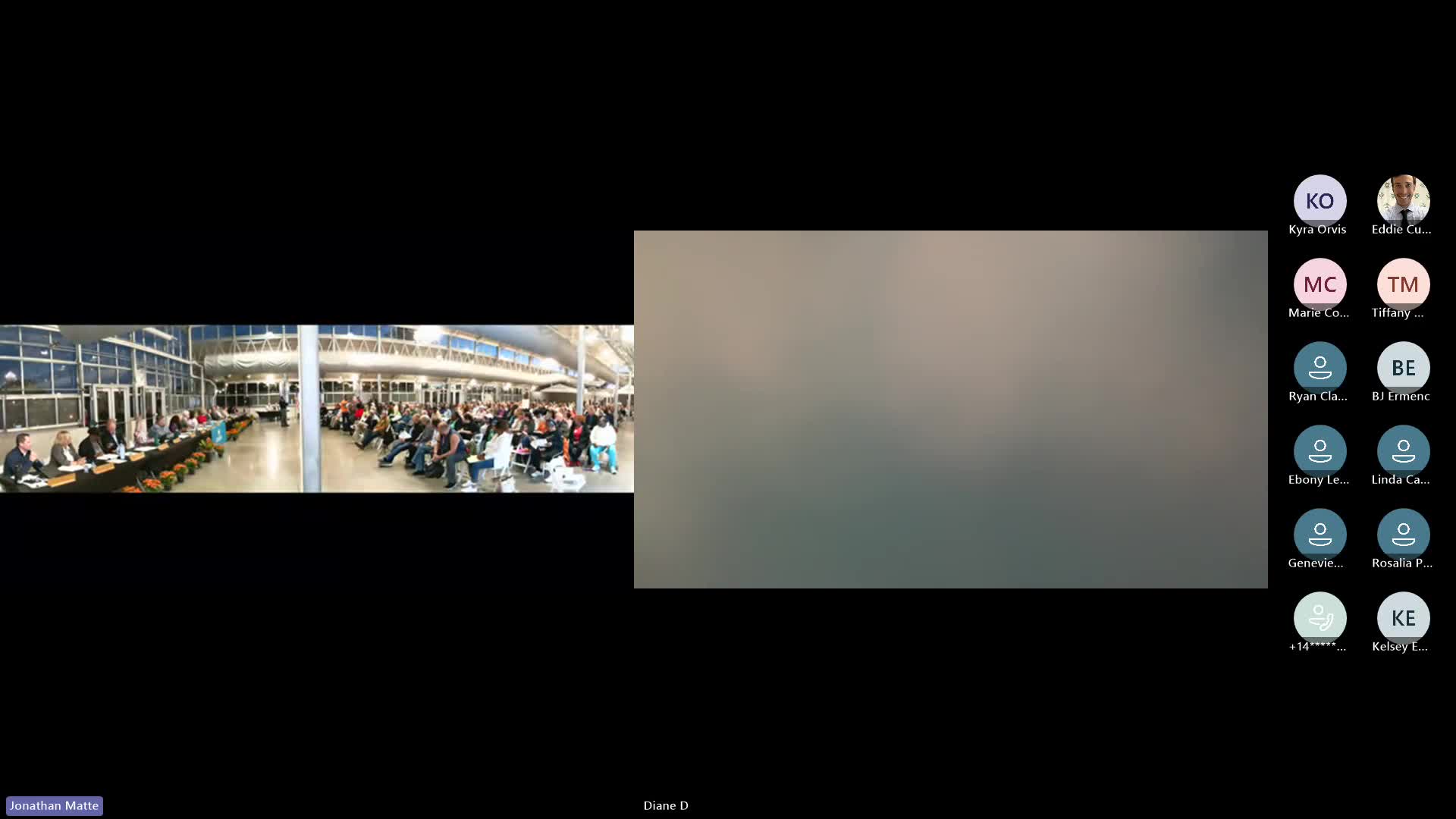
Milwaukee County supervisors heard more than three hours of public testimony on Oct. 27 at Mitchell Park Domes on the county executive’s recommended 2026 budget, with many speakers urging the board to reverse proposed cuts to Milwaukee County Transit System (MCTS) service and to increase funding for early-intervention and food-access programs.
The most urgent appeals centered on a proposal to eliminate six MCTS routes — identified by speakers and MCTS materials as routes 20, 28, 33, 34, 55 and 58 — and to reduce service on several others. Tom Stawicki, a resident and transit advocate who addressed the board, said: “The total elimination of 6 routes and a reduction of service in several others would leave thousands of riders without affordable transportation options.” Transit workers, riders and organizations warned that the cuts would disproportionately harm students, seniors, people with disabilities and workers who rely on buses to get to jobs, medical appointments and school.
Why it matters: Public testimony tied transit service to access to work, school and health care and pressed supervisors to consider alternatives to full route eliminations, including “tripper” peak-hour service and targeted short-term pilots. Speakers also urged that the budget protect same-day paratransit pilots and to address operational and contracting problems raised by Paratransit provider Transdev.
Speakers and specifics
- Tom Stawicki, transit advocate (resident): urged preservation of routes and suggested tripper/peak-hour service as a short-term compromise; cited a roughly $1.7 million estimate discussed by MCTS for limited “tripper” buses on the affected lines.
- Nicola Pfeiffer, an MCTS operator on Route 34, described regular riders who depend on the route and urged retention of service: “Many of these residents are working 2 jobs just to make ends meet. It is very essential that we maintain that route.”
- Tristan McClinton and students from Ronald Reagan International Baccalaureate School said cuts to routes 20 and 55 would force students into longer, less direct commutes and could jeopardize attendance. “Cutting this route would force me to take multiple transfers or walk through neighborhoods that aren’t well lit or pedestrian friendly,” one student said.
- Michael Brown, vice president of ATU Local 998 (union representing bus operators), criticized past MCTS management decisions and said operators and riders should not bear the brunt of management failures: “MCTS put us in a $14,000,000 deficit… some of these cuts should be directly at MCTS management.”
Paratransit and 'same-day' pilot
Speakers representing disability advocacy groups and paratransit users asked the board to maintain or modify the same-day on-demand pilot that provides emergency or short-notice rides for people with disabilities. Becky Rubanton of Independence First said the pilot helped people in urgent situations and criticized learning about proposed eliminations through media rather than task-force engagement. The Wisconsin DOT figure cited at the hearing — that roughly 43% of Milwaukee County residents are non-drivers — was used by multiple witnesses to underline the scale of impact.
Birth to 3 and early-intervention funding
A second major theme at the hearing was funding for Birth to 3 early-intervention services. Several executives and service providers testified that Milwaukee County’s system is approaching a crisis.
- Rebecca Folkman, service coordinator for Penfield Children’s Center, said Milwaukee County has lost providers and that Penfield is “one of three providers remaining.” She and other speakers said the county has seen a 75% reduction in Birth to 3 providers since 2018.
- Leaders of the three remaining providers — Curative Care Network, St. Francis Children’s Center and Penfield Children’s Center — told the board the proposed $450,000 increase in the executive’s recommended budget is an important step but does not close a funding gap they described as roughly $2,000,000–$2,100,000 across providers. As Matt West, a board member and former president of Saint Francis Children’s Center’s board, said: “$2,100,000 is a lot of money. But it’s a drop in the bucket compared to what the county would necessarily have to absorb if these 3 institutions drop out of the program.”
- Several Birth to 3 speakers emphasized that the service is federally mandated and state-entitled, and thus the county cannot refuse eligible families; they said program shortfalls would force costlier services later.
Food access, Market Match and nutrition incentives
Multiple speakers asked the board to fund the Milwaukee Market Match program at $150,000. The Market Match program adds matching dollars to FoodShare (SNAP) transactions at participating farmers markets, allowing families to buy more fresh fruits and vegetables and keeping dollars with local farmers.
- Matt Steinstra of Feeding America East Wisconsin said demand at food pantries has risen sharply and called the proposed $150,000 “one of the best examples of a solution to hunger.”
- Market managers and nonprofit partners described Market Match as producing a local economic multiplier and as important for food security in neighborhoods losing grocery stores and retail options.
Hear Wisconsin and hearing-loss early intervention
Representatives from HEAR Wisconsin told the board that their hearing-loss specific early-intervention services — funded in part with one-time federal ARPA dollars that sunset in 2026 — are the only provider of hearing-loss specific early intervention in the state. Jill Van Callister, president and CEO of HEAR Wisconsin, said the program's county funding of $150,000 would allow babies with hearing loss to receive therapy earlier and enter school ready to learn.
Detox and behavioral health services
Multiple speakers, including current and former clients, urged the board not to cut funding for First Step Recovery Center’s detox services. Ronald Grant, who said he entered treatment at First Step more than 10 years ago, told supervisors: “First Step saved my life. If you pass the budget and take First Step from us, people suffering from mental health and substance abuse won’t have nowhere to go.” Several other speakers described recovery trajectories tied to detox access and asked supervisors to preserve that funding.
Parks funding and a parks district task force
Speakers from Preserve Our Parks and local advocates urged the board to create a time-limited task force to study a dedicated parks funding mechanism (a county parks district or similar revenue source). Patricia Jersic and others said the park system depends on year-to-year budgeting and that deferred maintenance has grown substantially.
Eviction Free Milwaukee (right to counsel)
Speakers representing tenant-rights groups urged restoration or addition of funding for the county’s eviction-prevention, right-to-counsel program, which advocates said has helped more than 14,000 families. Testimony urged supervisors to fund the program at or above last year’s level, arguing the program saves money downstream.
Sheriff’s office and Milwaukee County Jail oversight
Several public commenters criticized the Milwaukee County Sheriff’s Office budget proposals and raised concerns about deaths and conditions at the county jail. Advocates asked the board to scrutinize overtime and capital requests to the sheriff and to direct resources toward mental-health and reentry services instead of expanding custody capacity.
Board process and next steps
Board Chair Marcilia Nicholson and County Clerk George Christiansen opened the hearing and reminded the public that the finance committee will meet again at 9 a.m. on Friday, Oct. 31, to make final recommendations; the full county board is scheduled to meet at 9:30 a.m. on Thursday, Nov. 6 to adopt a 2026 county budget.
Votes at a glance (procedural items taken at the meeting)
- Receipt and placement on file: October listing of summons and complaints — motion made by First Vice Chair Shea; outcome: adopted (voice vote). - Notice of claims: disallowance of one notice of claim — motion made by First Vice Chair Shea; outcome: disallowed (voice vote). - Files referred to standing committees: receive and place on file — motion made by First Vice Chair Shea; outcome: adopted (voice vote). - Correction and approval of journal (09/30/2025): motion made by First Vice Chair Shea; outcome: adopted (voice vote). - County board citations and certificates listing: motion made by First Vice Chair Shea; outcome: adopted (voice vote). - Adjournment: motion by First Vice Chair Shea to adjourn to Thursday, Nov. 6 at 9:30 a.m.; outcome: adopted (voice vote).
What the board will decide next
Finance committee members will consider tonight’s testimony alongside staff recommendations and fiscal constraints during the committee’s Oct. 31 meeting. Supervisors then are scheduled to vote on a final budget Nov. 6. Multiple witnesses urged supervisors to identify alternate savings or revenue sources rather than eliminate transit lines, early-intervention services or detox funding; others pressed for targeted, short-term compromises such as peak-only “tripper” service on routes facing elimination.
Ending
Speakers at the Mitchell Park Domes represented a wide cross-section of county residents — students, seniors, disability advocates, nonprofit leaders, transit operators and business operators — who framed the budget debate around access to daily life: getting to school, work, medical care and groceries. With the finance committee meeting again Oct. 31 and a final board adoption scheduled for Nov. 6, supervisors will decide whether to scale back service and programs or to seek other savings and revenue to maintain them.