Get Full Government Meeting Transcripts, Videos, & Alerts Forever!
Get email alerts on the Cell Tower Leases Testing topic
No spam. Unsubscribe anytime.
Lake Oswego residents press board on Lakeridge cell tower; district hires firm for RF testing
Summary
Residents asked whether lease terms let tower operators add equipment without local approval and flagged payment discrepancies. District staff outlined lease durations, said operators typically hold renewal options, and said it selected Apex to conduct radio‑frequency testing with a report expected in December.
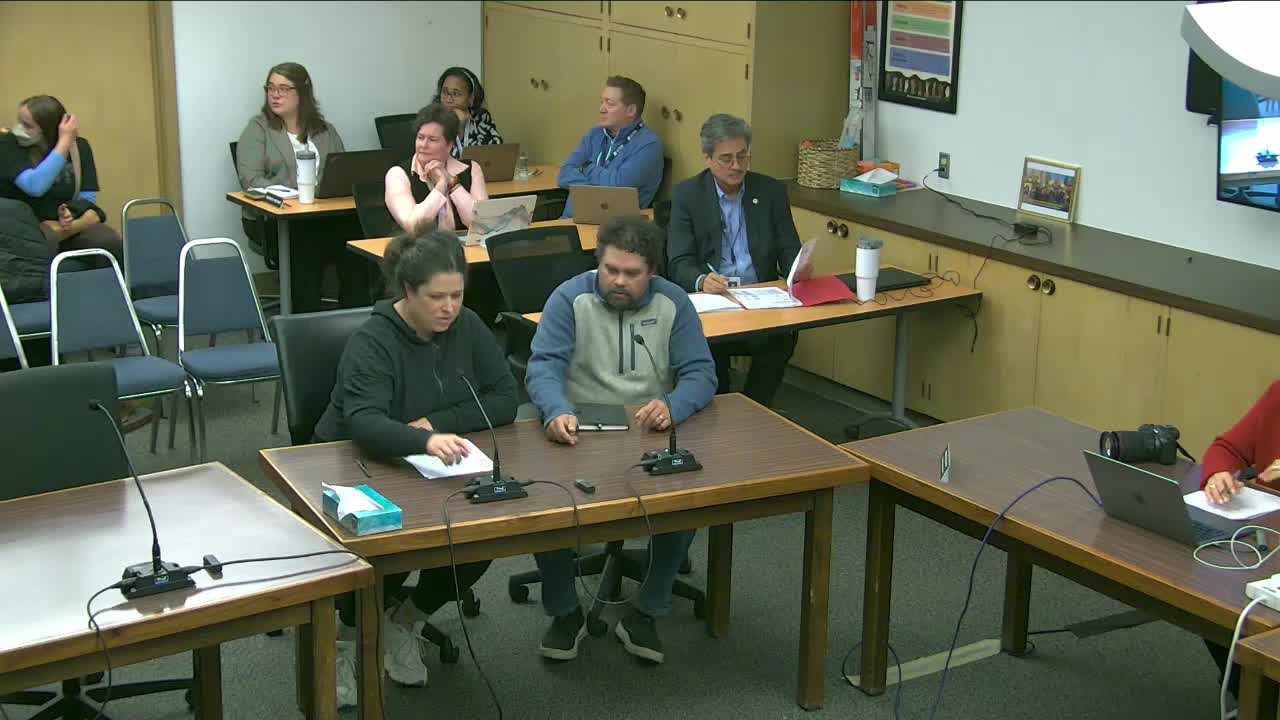
At the Lake Oswego School District board meeting, residents raised questions about a new cell tower at Lakeridge High School and asked whether the district or tower operators can control future equipment upgrades.
Annalie Adams, a nearby resident, told the board she had learned Ziply Fiber planned to connect to the new tower and that Ziply had been working under an old, voided franchise permit that was later stopped. “Once a lease is signed with the tower company such as Crown Castle, does Crown Castle have the ability to continually upgrade, change, or add equipment without seeking new approvals or consent from the school district?” Adams asked.
District staff said the leases give operators broad renewal and equipment rights and that the district’s ability to stop equipment changes is limited by contract. Lake Oswego finance and facilities staff summarized a schedule of seven district leases (covering six physical towers because of colocations) and said many of the leases include operator options to extend in five‑year increments. That means, staff said, current five‑year terms are often followed automatically by a lessee’s decision to continue the arrangement.
“We do not have the opportunity to close it at the end of this term, without violating their contract rights or paying them some form of compensation,” the district said when describing how the current 5‑year terms function.
Adams also flagged a discrepancy in monthly payment amounts she had seen in public records: one number listed $2,719.46 and another $2,415.77. The district said it had followed up and that Crown Castle confirmed the monthly amount for one of its leases as $2,719.46 and that the line item later increased for the current term to $2,796.14.
District staff also told the board Ziply was not working for Crown Castle; rather, Verizon had contracted Ziply to perform fiber work to connect the new site. Staff said the work was represented as occurring in public franchise right‑of‑way rather than on private district land, and that city franchise and easement issues remain the city’s responsibility to resolve.
On testing, the district said it evaluated several firms and selected Apex to perform radio‑frequency (RF) and related environmental testing. Staff said Apex performs a broad array of environmental measures and has equipment and qualified staff to measure RF fields and will prepare an assessment that reviews earlier analyses (including a 2021 study) and new measurement data. The district said it expects Apex’s assessment and recommendations to be presented at a December board meeting.
Board members and staff said the testing scope will include measurements at representative heights and locations and will aim to address concerns about continuous, cumulative exposure near occupied spaces. Staff emphasized they will work with the vendor to specify duration and measurement protocols but also cautioned the district cannot practically test every private residence; they plan to focus on representative sampling near the campus and locations where neighbors raised concerns.
Next steps: district staff will finalize the scope with Apex, collect field measurements, and present the vendor’s report and recommendations to the board in December.