Get Full Government Meeting Transcripts, Videos, & Alerts Forever!
Committee advances bill to cap inside millage growth; advocates push targeted circuit-breaker instead
Summary
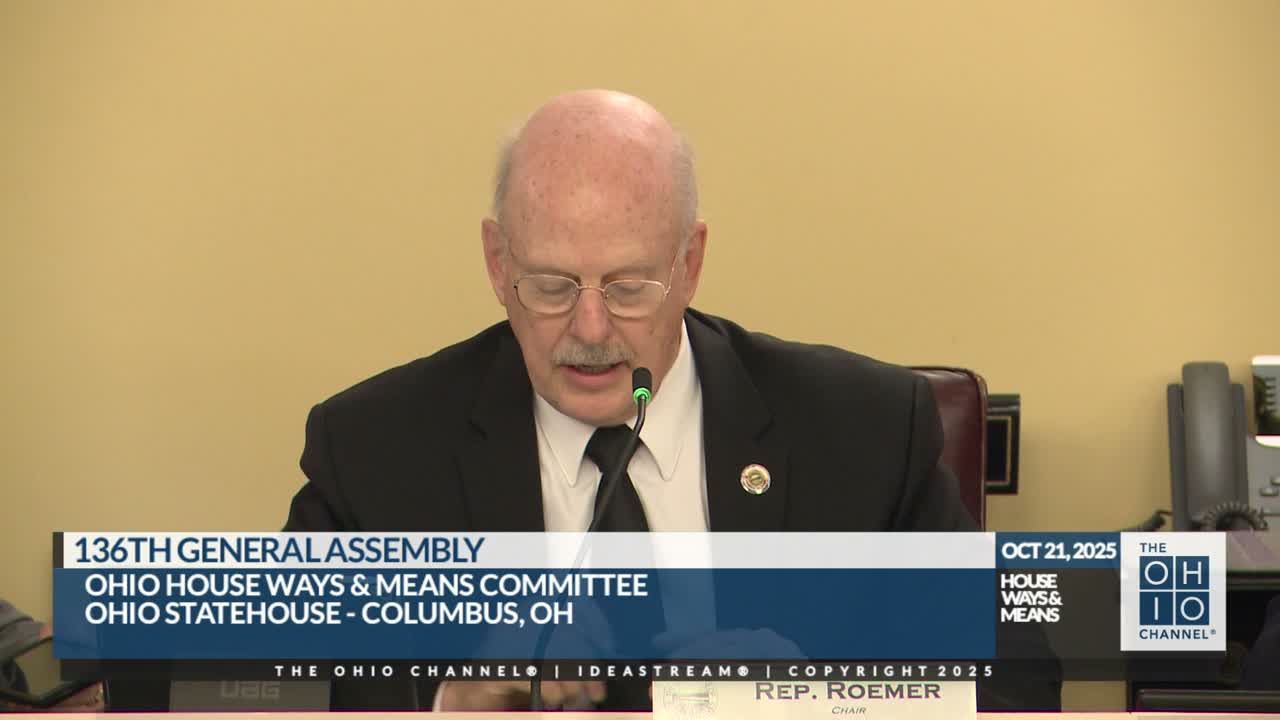
House Bill 335, advanced 11-1 by the Ohio House Ways and Means Committee, would cap growth in inside millage (local non-levy property-tax revenue) using a GDP-deflator-like limit and adds procedural protections for entities; testimony from Policy Matters Ohio urged a state-funded circuit-breaker targeted at taxpayers who need relief.
The Ohio House Ways and Means Committee favorably reported House Bill 335 on an 11-1 vote after accepting amendments that limit growth in inside millage, add oversight by county budget commissions, exclude certain new construction and abatements from the cap and expand options for entities to replace inside millage with other revenue subject to voter approval.
Why it matters: Inside millage—unvoted property-tax revenue available to local governments—amounted to nearly $4 billion statewide in tax year 2024, according to testimony. Committee amendments are intended to constrain automatic growth of that revenue while creating procedural checks when entities want to restore or increase inside millage receipts.
Testimony and key figures Zach Schiller, research director at Policy Matters Ohio, told the committee inside millage totaled nearly $4.0 billion in tax year 2024 and that roughly half of that went to school districts. Schiller said townships received about $457 million from inside millage in 2024 and that statewide inside millage grew from 2.61 (2018 base) to $3.96 billion in 2024 — a 52% increase over that period. He said a substitute version of House Bill 335 would have reduced inside millage by about $230 million annually by tax year 2024 using 2018 as the base.
Schiller urged the General Assembly to consider a targeted, state-funded circuit-breaker program rather than across-the-board caps. "A circuit breaker…says how much, at what point is somebody paying too much in property tax in relation to their income? And at that point, the state will pick up some or all of the rest," Schiller said, describing models used in other states and noting bills already filed in the legislature on that concept.
Major amendments accepted - County-budget-protection language: An amendment drafted to mirror existing county protections prevents one local entity from reducing inside millage and allowing another overlapping entity to claim that revenue without oversight; restoring or increasing inside millage would require approval or action involving the county budget commission.
- New-construction and abatements carve-out: An amendment offered by Representative Troy ensures that the cap on inside millage growth does not exclude revenue from new construction or revenue when tax abatements expire, preserving revenue to serve increased service demand from new development.
- Municipal/school swap option: Another amendment extends earlier municipal swap language to allow school districts to replace lost inside millage with a voter-approved increase in other taxes…
Already have an account? Log in
Subscribe to keep reading
Unlock the rest of this article — and every article on Citizen Portal.
- Unlimited articles
- AI-powered breakdowns of topics, speakers, decisions, and budgets
- Instant alerts when your location has a new meeting
- Follow topics and more locations
- 1,000 AI Insights / month, plus AI Chat