Get Full Government Meeting Transcripts, Videos, & Alerts Forever!
Get email alerts on the Industrial Growth topic
No spam. Unsubscribe anytime.
Residents, advocates press San Patricio County for clarity on industrial growth plan funding, water and health impacts
Summary
Public commentators and some commissioners asked the court to pause or clarify parts of a proposed San Patricio County industrial growth plan, citing water supply, public health, wetlands, PFAS and transparency concerns. The court asked the plan contractor, AECOM, to present details at a future public session.
San Patricio County residents urged the commissioners’ court on Tuesday to slow or clarify the proposed industrial growth plan for the county, citing unanswered questions about who paid for the work, whether local water supplies can support the mapped industrial acreage and potential health impacts from nearby chemical facilities.
The concerns were raised during the public-comment portion of the meeting and during a later, dedicated discussion of the plan. “So I’m here to voice concerns about the San Pat industrial plan,” said Chloe Torres, identifying herself as from Corpus Christi, and asking, “Where are we gonna get the water for all of this development?”
Why it matters: the plan maps more than 100,000 acres as advantageous for industrial use, according to speakers, in a coastal, hurricane‑prone county with existing heavy industry, ongoing questions about regional water supplies and residents who say past industrial siting has been associated with poorer health outcomes in nearby neighborhoods.
Public commenters told the court they want clearer protections and more public engagement before the plan is used to steer large projects. Patrick Nye of Coastal Watch said the plan’s maps lacked storm‑surge and wetlands designations and said local health monitoring is needed: “We just need a little bit of money and hopefully the County Commissioners will help support this… $60,000 will get off phase 1, and that’ll get us to interview a lot of people and get the whole system set up.”
Multiple speakers compared the plan’s possible effects to industrial encroachment around Hillcrest and other neighborhoods in the region. “If this 100,000 plus acres are industrialized, we could lose functionally critical wetlands in a hurricane prone county,” said Maggie Peacock, a Corpus Christi resident who urged the court to limit industrial expansion until community concerns are addressed.
Speakers also flagged chemical‑industry concerns and drinking‑water contaminants. Nye noted recent company operations producing PFAS and urged updated testing: “I’m really concerned about what our drinking water is… there’s no recent analysis since June 2024.” Mark Raspan and others pressed for formal wetlands protections and buffers around Ingleside on the Bay.
Funding and transparency questions drew sustained attention. Sonya Witherspoon said she had filed public‑information requests and had not received all records, and she told the court the plan’s timeline and funding were unclear. “The $299,163 contract with AECOM was finally approved on 04/15/2024,” she said, and asked whether the county has authority to create the zoning designations the plan describes.
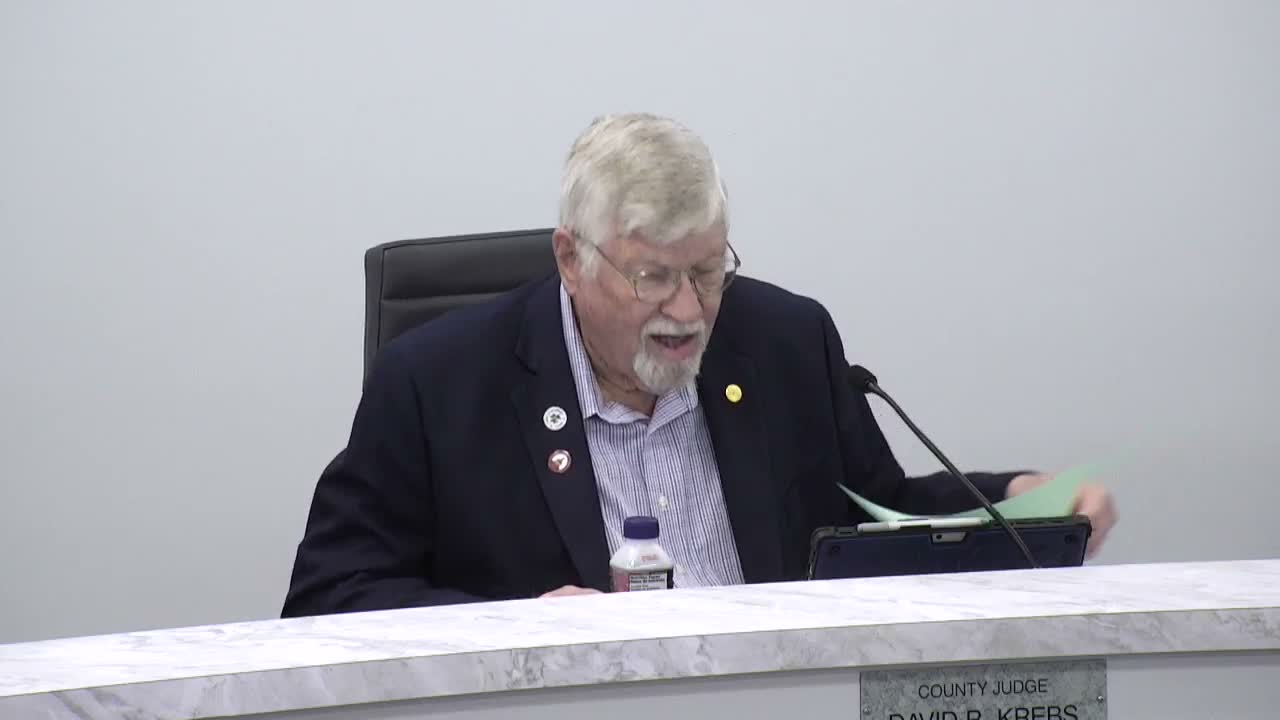
At the meeting the county judge summarized the funding the court has tracked so far, saying the county paid $150,000, the Port of Corpus Christi paid $75,000 and a group of industry partners contributed about $75,000 toward a total reported contract figure of roughly $299,000. The judge said the court will check the transaction history and asked the consultant AECOM to come to a future court meeting to present the plan and answer questions.
Court response and next steps: commissioners recessed briefly for a legal consultation and then moved the San Patricio industrial growth plan discussion up the agenda. The court said it had requested that AECOM present to the commissioners’ court at a future public meeting and that legal staff would evaluate outstanding questions about county authority, abatements and any pending litigation involving tax abatements. No final vote or adoption of the plan occurred during the session.
Community advocates and some local officials asked for a formal public‑participation process built into any next draft of the plan. Jason Hale, who said he supports planning in principle, recommended a multistage approach with an official public meeting, a second draft addressing comment and a second comment period before adoption.
Ending: The court said it will publicize the planned AECOM presentation and allow a question‑and‑answer period; it also said staff will review funding documents and legal issues before any further action on the plan.