Get Full Government Meeting Transcripts, Videos, & Alerts Forever!
Get email alerts on the Transportation Fee topic
No spam. Unsubscribe anytime.
Boulder Council adopts transportation maintenance fee after narrow vote amid calls for more outreach
Summary
After hours of debate, the Boulder City Council adopted Ordinance 8719, establishing a transportation maintenance fee to help fund pavement, bridge and sidewalk maintenance. A motion to postpone the ordinance failed; the final adoption passed 6–3. Supporters said the fee is needed to preserve pavement condition; opponents urged more public outreach
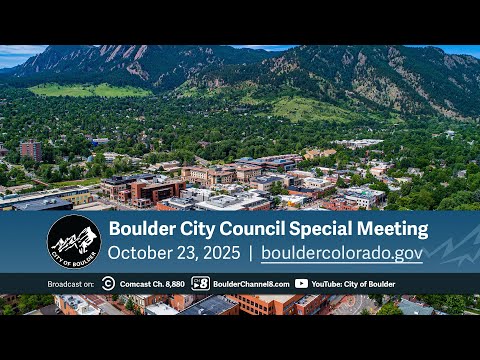
Boulder’s City Council voted to adopt Ordinance 8719 on Oct. 23, 2025, creating a Transportation Maintenance Fee intended to provide a steady revenue stream for pavement, bridge, sidewalk and multi-use-path repairs.
The ordinance passed after a contentious debate about whether the city should delay approval to allow more outreach to businesses and residents who say the fee came as a surprise. Councilmember Matt Benjamin, who said he still supports the fee, moved to table consideration until the first or second quarter of 2026 to allow additional engagement; that motion was defeated. Council then voted to adopt the ordinance, which staff said will fund maintenance that otherwise would be underfunded.
City officials described the fee as a component of the city’s long-term financial strategy. Charlotte Huskey, the city’s budget officer, told council that the 2026 budget currently programs $2.25 million in revenue associated with the fee. “We programmed the fees associated with the transportation maintenance fee into the 2026 budget at 2.25 million,” Huskey said.
Transportation staff explained the maintenance needs the fee targets. “A lot of people who are supportive of this fee…understand that the maintenance of our capital transportation infrastructure is critical to both livability and economic vitality in our city,” said Chris Hagland, principal project manager for Transportation and Mobility. Deputy Director Valerie Watson told council the city’s pavement quality index is “about 74,” and said current typical spending of roughly $5 million per year is insufficient; staff estimated that about $8 million per year would be needed to hold current pavement condition and that a full year’s revenue from the fee would be about $6.4 million.
Opponents and some council members argued the public had not been adequately engaged on the fee’s details. Council members asked whether public engagement would be limited to implementation mechanics (for example, billing frequency and exemptions) or could reopen substantive fee structure questions that might require a new nexus study. Legal counsel advised that changes affecting the fee ceiling could require revisiting the nexus study; she said reductions within the parameters could be possible but certain changes would need legal review.
The roll-call votes recorded at the meeting show the ordinance adopted by a majority vote (final recorded result reported as 6 to 3). Council directed staff to conduct additional engagement about implementation and to report back if substantial changes were needed.
The ordinance amends the Boulder Revised Code to put the Transportation Maintenance Fee in place; staff said collection would not begin immediately and that the enabling ordinance will be followed by an implementation ordinance setting collection details. Council members who voted against the ordinance cited concern about timing and burden on renters and small businesses.
The council’s next steps include the implementation-phase engagement that staff described to the council and potential future ordinance amendments if the engagement reveals changes that require legal or budget adjustments.