Get Full Government Meeting Transcripts, Videos, & Alerts Forever!
Get email alerts on the Municipal Budgeting topic
No spam. Unsubscribe anytime.
Brentwood rec commission backs larger 2026 budget and readies case for full-time director
Summary
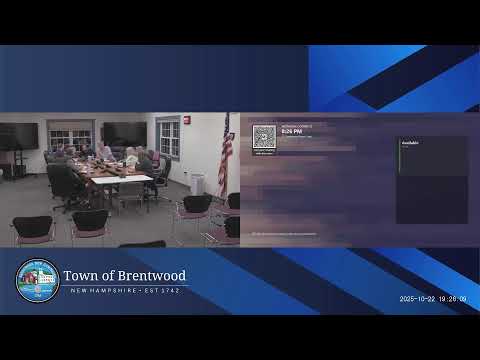
After weeks of internal review and missing auditor reports, the Brentwood Recreation Commission voted to send a higher-budget proposal (Proposal B) to the select board and discussed how to make the case for a full‑time recreation director.
The Brentwood Recreation Commission voted Tuesday to forward Proposal B — which reallocates $1,700 from utilities into land and facilities maintenance and includes an increase for the recreation program coordinator — to the select board for consideration in the 2026 town budget.
The vote followed a lengthy discussion that centered on correcting an undercounted salary line this year, uncertain auditing records, and whether the town should fund a full‑time recreation director rather than the part‑time coordinator approved in a previous warrant article.
Commission members said the recommendation responds to both documented overspending on field and facilities maintenance and growing program demand. "If we're increasing it, I want to make sure we're still not going to exceed reality of the future," one commissioner said during the meeting, summarizing concerns about overspending on land maintenance. The commission chair moved to present Proposal B to the select board and the motion carried by voice vote.
Why it matters: The commission said the department operates a large, multi‑building facility and runs dozens of programs that generate revenue. Commissioners and staff argued the town’s prior vote to add a coordinator reflected resident expectations for expanded programming and stewardship of the recreation property. Staff said the coordinator salary and associated FICA/Medicare and retirement numbers were not reflected correctly in the commission’s original budget materials and that correcting them contributed to the requested increase.
Details and debate: Commission staff described two budget options. Proposal A would cut $1,700 from electric and heating lines to soften the salary increase. Proposal B removes those cuts and reallocates the funds to land maintenance, because the commission typically overspends that line. Commissioners pressed staff to produce historical land‑maintenance spending (three prior years) to substantiate the $7,300 request; staff said that full reconciliation depends on an auditor’s report that remained incomplete the week of the meeting.
Several commissioners and volunteers urged the commission to prepare a concise packet for the select board and budget committee showing (1) historical expenditures for land/facilities maintenance, (2) program revenue (year‑to‑date and historical), and (3) the new salary lines with supporting calculations. One commissioner noted that summer camp, for example, has grown from a few thousand dollars in revenue to roughly $40,000–$50,000 in recent years and said that showing how program revenue offsets town appropriations is central to the argument.
On staffing, staff and several commissioners framed the choice in operational terms: with current programming and facility rental demand, a single part‑time employee would require program cuts or reduced weekend coverage. "We have a massive piece of property. It’s bigger than the library," a commissioner said, arguing a full‑time director is needed to maintain programming, rentals and building upkeep. Another commissioner, who had moved the prior amendment to a part‑time position when the warrant article initially passed, said the amendment was a tactical decision to obtain some help but did not close the door on asking for more staff in future budgets.
What comes next: The commission approved Proposal B as its recommendation to the select board and said staff would prepare a short packet of historical spending and revenue to deliver before the select board meeting on Oct. 28 (or request a one‑week extension if the auditor’s numbers were not ready). Commissioners encouraged staff to bring clear, simple charts showing (a) how much the recreation operation brings in, (b) total expenditures, and (c) how the requested appropriation changes net town cost.
Ending: Commissioners said they would press for clarity and keep the presentation concise for the select board and the budget committee; if the select board and budget committee align, the question will next be decided by voters at town meeting if required.