Get Full Government Meeting Transcripts, Videos, & Alerts Forever!
Get email alerts on the Code Enforcement topic
No spam. Unsubscribe anytime.
Town staff outlines limits, challenges and alternatives for Woodfin code enforcement
Summary
Town staff presented a lengthy overview of municipal code enforcement—authority under N.C. statutes (160A/160D), enforcement categories (land use, minimum housing, sanitation/junk vehicles, noise), procedural steps and non-enforcement alternatives—urging objective criteria and community partnerships to reduce disproportionate impacts on vulnerable,
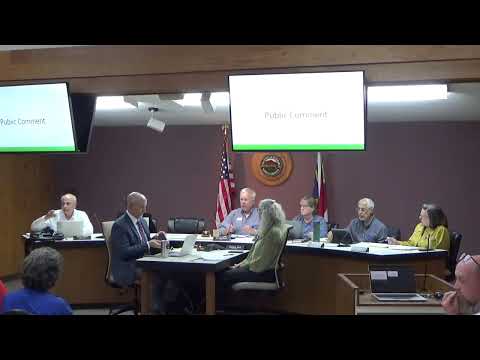
Town staff delivered an extended municipal-code-enforcement briefing Oct. 21, explaining statutory limits and practical challenges and proposing alternatives that lean on education and community partnerships.
The presentation emphasized the statutory basis for municipal enforcement: town authority derives from North Carolina General Statutes (chapters 160A and 160D), which set the framework for land-use regulation, zoning and limits on local powers. Staff said enforcement typically follows a sequence: complaint or observation → inspection and firsthand confirmation → record creation → notice and a time-to-cure → follow-up inspection → citation or legal action if unresolved.
Staff walked the council through the principal enforcement categories: land-use (planning, stormwater, flood, grading), minimum-housing (habitability standards distinct from building-code enforcement handled by Buncombe County), public-nuisance topics (sanitation, junk vehicles, noise). The presenter noted statutory constraints—junk-vehicle definitions that protect vehicle owners if a car has a current plate or can be self-propelled, and high evidentiary burdens to show a public benefit that outweighs an owner's burden to remove a vehicle.
On noise, staff said subjective language in many ordinances creates enforcement difficulties and described trade-offs between objective decibel standards (evidentiary/technical burdens) and practical standards (time windows such as construction hours). For land-use and green-space violations, staff described tools such as holding a certificate of occupancy, bonding vegetation, or requiring after-the-fact permits and higher fees for after-the-fact approvals.
A recurring theme was equity and process: staff warned that enforcement actions for sanitation, junk vehicles and minimum housing disproportionately affect low-income, elderly or disabled residents and urged cautious, non-discriminatory application of rules. Recommended non-enforcement alternatives included education, charity/faith partnerships to provide labor and emergency home-repair programs in collaboration with Mountain Housing Opportunities, and mental-health referrals for hoarding-related cases.
Staff closed by requesting council direction on priorities, and said staff will return with code-update examples that add more objective criteria where appropriate.
What’s next: the town will consider code revisions tied to the broader code-update process, evaluate fee-schedule options (e.g., higher after-the-fact permitting fees), and pursue partnerships and resource mapping to support alternatives to punitive enforcement.