Get Full Government Meeting Transcripts, Videos, & Alerts Forever!
Get email alerts on the Labor‑contracts topic
No spam. Unsubscribe anytime.
Denver council adopts Denver Police Protective Association contract after hours of debate
Summary
Denver City Council voted 9–4 to adopt a three‑year collective bargaining agreement with the Denver Police Protective Association after an extended public and council discussion about budget priorities, accountability and city staffing cuts.
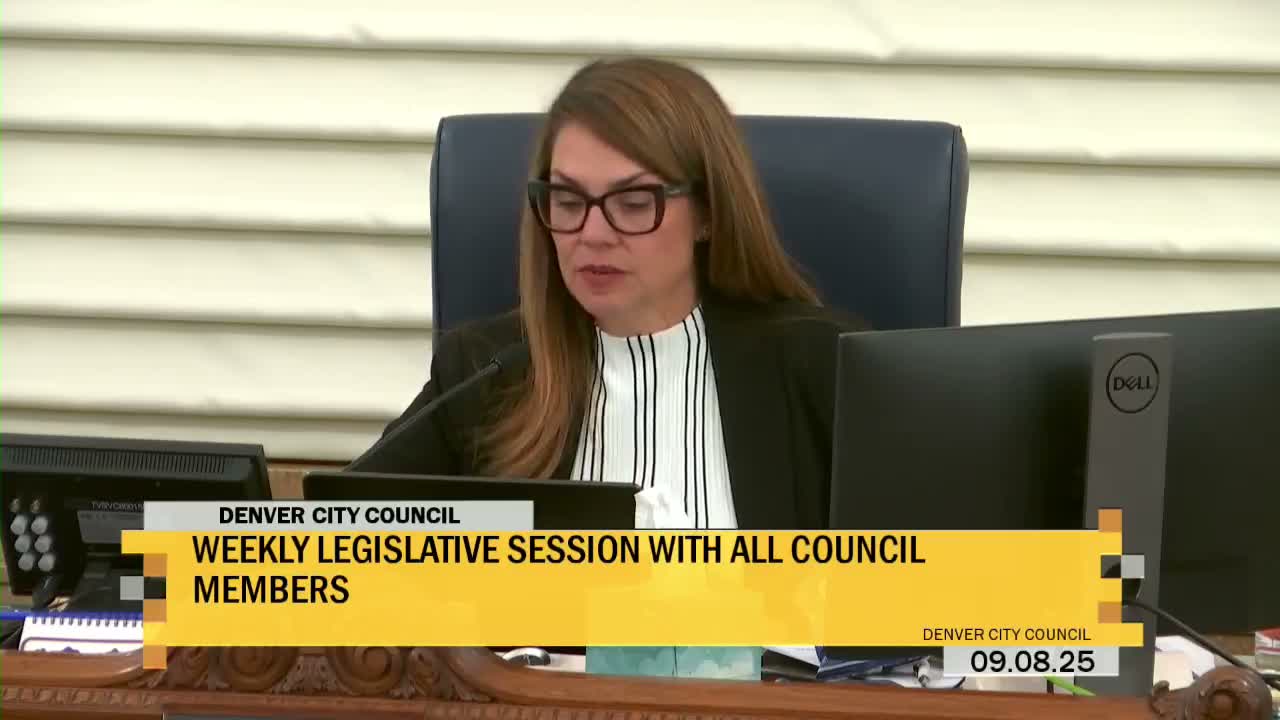
Denver City Council on Monday adopted the three‑year collective bargaining agreement (CBA) between the city and the Denver Police Protective Association (PPA), voting 9–4 to approve the agreement after more than three hours of debate and public comment.
The vote comes as the city faces a projected budget shortfall and recent layoffs in city departments; several council members said those fiscal pressures complicated the choice to approve guaranteed salary increases for police officers over the contract period. Councilmember Candi C. Watson said she supported the contract but emphasized that the CBA “has no bearing on our ability … to hold accountable those who go outside of the law.” Councilmember Amanda Lewis announced a no vote citing recent large settlements and fiscal constraints. Councilmember Sarah Parity and others urged continued oversight on discipline and departmental accountability.
The contract was negotiated in executive session with city attorneys and brought to the council after multiple briefings for council members. Supporters argued a Yes vote preserved the city’s ability to bargain in good faith, prevented arbitration outcomes they considered worse, and provided stability for public safety operations. Opponents argued that guaranteed raises for one department while other city staff were laid off or furloughed was inequitable and risked reducing general‑fund capacity to maintain social services and prevention programs.
Council discussion repeatedly balanced two core concerns: honoring the collective bargaining process and negotiated obligations, and protecting general‑fund flexibility while maintaining investments in non‑police programs that address the root causes of crime. Several council members called for greater transparency in budget projections and for the administration to return with stronger assurances about how the city will fund services and preserve equity across departments.
The roll call vote on council resolution 25‑12‑16 showed nine ayes and four nays. Ayes: Albitres; Flynn; Hines; Cashman; Romero Campbell; Sawyer; Torres; Watson; Sandoval (Council President). Nays: Gilmore; Gonzales Gutierrez; Lewis; Parity. The motion passed and the CBA will take effect under the terms negotiated by the city and the union.
Council members who supported the agreement said they would continue to press for reforms including stronger oversight mechanisms, improved discipline practices and investments in community‑based programs that prevent crime. Members who opposed the agreement urged the administration to return with concrete budget data and alternative proposals to protect services while addressing public safety staffing needs.
The adoption does not change the other ongoing collective bargaining dialogues for the city; council members said they expected similar procedures and briefings as the administration brings agreements before the council in the coming months.