Get Full Government Meeting Transcripts, Videos, & Alerts Forever!
Get email alerts on the Grant Application topic
No spam. Unsubscribe anytime.
Bangor City advisory committee finalizes tiered grant plan, asks city solicitor to weigh in on scoring conflicts
Summary
The Bangor City advisory committee approved a tiered grant framework (suggested awards of $10,000, $25,000 and $50,000) and a proposed Nov. 30 application deadline, but members asked the city solicitor for a written opinion on whether committee members who plan to apply may participate in scoring.
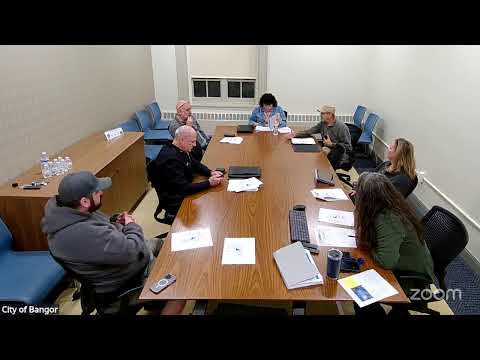
Speaker 1, a committee member, opened the meeting by asking the group to finalize the grant application and asked the full committee to weigh in on the subcommittee’s draft. “What you have in front of you is the collective efforts of Shelley, g Pathway, and Lisonbee with me acting as scribe,” Speaker 1 said as the meeting began.
The subcommittee’s draft sets three award tiers — $10,000, $25,000 and $50,000 — and lists estimated individual award amounts. Committee members discussed whether tiering would allow the city to spread limited funds broadly or whether awards should be concentrated among the highest-scoring proposals. "They're gonna give out approximately 400 k, and they're doing 10,000, 25,000, and 50,000," Speaker 1 said when introducing the draft figures; other members debated whether that breakdown would serve smaller organizations.
Members raised practical questions about application flexibility and total funding. Speaker 2 explained the draft asks applicants whether they could scale a project to accept a smaller award if the full request cannot be granted. Speaker 1 clarified the committee’s available funds through the end of the calendar year, saying, "That is through the end of this calendar year, what we'll have," referring to approximately $650,000 available to allocate.
The committee debated scoring methods. Options discussed included blind scoring, using a rubric that emphasized impact over writing polish, and either ranking all applicants on a single list or scoring applicants by tier so similar-sized requests compete with each other. Several members suggested a United Way-style approach — score every application and fund from highest to lowest until the pot is exhausted — while others warned that skipping a high-dollar applicant to fund several smaller high-impact projects might be preferable in some cases.
A major thread of the discussion centered on the composition and role of a three-person scoring subcommittee. Speaker 4 noted that Allison, Mark and another member planned to do grading; several members objected that a small scoring team would exclude most committee members from meaningful participation. Multiple speakers raised conflict-of-interest concerns because committee members may also apply for grants. "I think the incentives are skewed," Speaker 1 said, describing how scoring other applicants could disadvantage a member who is also an applicant.
Because of those concerns the committee agreed to seek formal legal guidance. Speaker 1 said they would contact the city solicitor and requested a written opinion about whether committee members who plan to apply can participate in scoring. Members expected the solicitor’s input to be available by the next scheduled meeting.
On logistics, committee members reviewed timelines and outreach. The group discussed matching neighboring jurisdictions’ schedules (a nearby county’s deadline of Nov. 15 was noted), but Speaker 1 proposed a Nov. 30 application deadline to allow time for posting and city outreach. The committee agreed to post the application soon — aiming to publish within 7–10 days — and scheduled its next meeting for Oct. 22 to review solicitor guidance and finalize the scoring process.
The meeting ended with a set of next steps: finalize and post the application, have city staff begin outreach, convene the solicitor for written advice on conflicts of interest, and reconvene on Oct. 22 to review progress.