Get Full Government Meeting Transcripts, Videos, & Alerts Forever!
Get email alerts on the Zoning topic
No spam. Unsubscribe anytime.
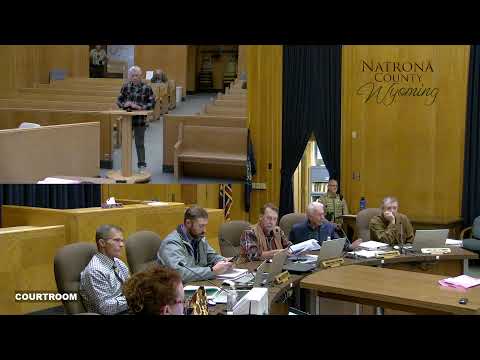
Commissioners review broad zoning text amendments, debate industrial siting and nuclear language
Summary
Planning staff presented proposed amendments to the 2022 zoning resolution including clarifying tables, consolidated wireless communications and PUD sections, new commercial storage classifications, buffering for extractive industries and explicit mention of nuclear manufacturing in heavy industrial zones; commissioners asked for clarification onIS
Planning staff presented an extensive package of proposed amendments to the countyzoning resolution, and commissioners spent more than an hour probing language about industrial siting, local controls and narrowly technical terms such as —off-premise— sign definitions.
Sabrina (planning staff) said the updates are intended to streamline multiple sections that previously forced readers to jump between parts of the code. The proposal would add a third appendix, revise diagrams for clarity, consolidate planned unit development language, remove an underused landscaping provision in favor of buffering/screening rules and add a commercial storage use category (e.g., boat and RV storage). Staff also recommended adjustments to sign rules, changed distance separations for specified uses and revised definitions for breweries, distilleries and wineries.
Two high-attention items drew sustained discussion. First, staff proposed language clarifying that large industrial projects that must go through the state Industrial Siting Division (ISD) would still be subject to county public-notice and certain local review steps, and suggested early pre-application coordination with 19 listed state agencies. Some commissioners urged the item be restated in clear, objective sub-steps (pre-application meeting checklist, which county entities will be consulted and when) so applicants and staff do not leave the standard vague or discretionary. Others pointed out state ISD statutes limit local additions and cautioned against duplicative or inconsistent requirements.
Second, staff proposed adding —nuclear manufacturing— to a heavy-industrial allowance so the code explicitly addressed that technology class. Commissioners asked whether any firm (Radiant) had been contacted; staff said no and that the language was intended only to clarify where such uses would fall if state or federal approvals were later obtained. Commissioners asked for legal review and for staff to seek input from affected agencies before final action.
The board directed planning staff to return with clarified language on ISD coordination and objective criteria for extractive-industry buffers (members asked for enumerated factors such as traffic, environmental and watershed concerns rather than open-ended "may require" wording). No ordinance or resolution was adopted at this meeting; staff proposed returning on Oct. 21 with a refined draft.
Ending: Planning staff will refine draft language and return with a clearer, stepwise application/checklist for large-scale projects and objective criteria for discretionary buffers before the commission considers formal adoption.