Get Full Government Meeting Transcripts, Videos, & Alerts Forever!
Get email alerts on the School Facilities topic
No spam. Unsubscribe anytime.
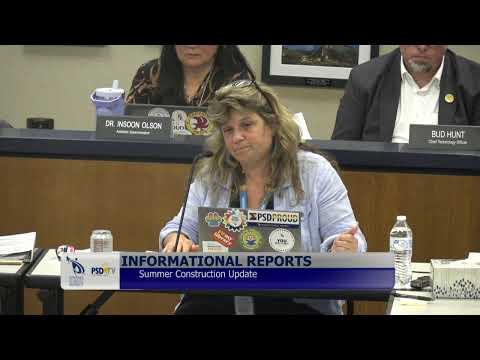
Poudre School District outlines multi‑year plan to add air conditioning, reports summer construction progress
Summary
Superintendent and facilities staff said voter‑approved mill levy funds have started work to retrofit air conditioning at schools, but full coverage will take years; district reported summer installations, portable cooling purchases and upcoming designs for two middle schools.
Poudre School District R‑1 officials told the Board of Education on Aug. 26 that work to install air conditioning across district schools has begun thanks to the 2024 voter‑approved mill levy override, but the full program will take several years and careful phasing.
Superintendent Kelly Kingsley said the levy approved in November 2024 provides funding “to do this work,” and facilities staff reported HVAC, roofing, fire‑alarm and other projects completed over the summer and the start of designs for larger retrofits. Chief Financial Officer Dave Montoya and facilities staff described Beatty and O’Day elementary schools as the first completed cooling installations this summer and said portable cooling units and other mitigation measures were deployed while larger projects move through design and procurement.
The district emphasized a phased approach. Facilities staff said elementary schools were more feasible to retrofit in short summer windows, while larger schools such as middle schools need multi‑year, phased projects. Weber and Lesher middle schools were identified as next in line for design and possible design‑build procurement; district staff said solicitation for a design‑build contract was scheduled to close at the end of the week and an award was expected the week of Sept. 8.
Why it matters: District leaders said 32 PSD school buildings still lack air conditioning. Officials said mitigation — for example, early‑release days used during extreme heat — was necessary for student safety, but that structural retrofits to add tempered mechanical cooling in many older buildings are complex and cannot be completed in a single summer.
What the district reported: Montoya and project managers detailed a long list of summer work funded by the mill‑levy revenues and other district capital funds, including: - Full air‑conditioning installations at Beatty and O’Day elementary schools (teams continuing commissioning work at Beatty after opening). - Purchase and distribution of 500 portable air‑cooling units for rooms without mechanical cooling; staff said more units are being ordered where sites requested them. District staff emphasized these units are mitigation, not a substitute for building HVAC. - HVAC and building‑automation upgrades at Fort Collins High School; fire‑alarm replacements at several schools; roofing work in design and a completed roofing project at PCA; flooring and boiler replacements; playground and program moves including the Advanced Manufacturing Career Tech Center upgrades. - Continued preventive‑maintenance work and a new ticketing system for facilities work orders, which staff said had processed thousands of service requests since April.
Budget, timing and constraints: Montoya and board members discussed three constraints that will shape rollout: budget limits (the annual levy revenue and other capital funds), the contractor market and the limited summer window for most retrofit work. The district said McKinstry’s earlier facilities audit showed large deferred‑maintenance needs — on the order of hundreds of millions — and that air‑conditioning retrofits will be balanced against other safety and capital priorities such as fire alarms and roofs.
District staff gave a broad cost range for retrofits, saying smaller elementary projects can be in the mid‑millions while larger middle‑school projects could be substantially higher; exact figures will be determined during design. Officials also noted that the first years of the debt‑free mill levy are establishing processes, supplier relationships and design templates that should increase pace and efficiency in future years.
Short‑term mitigation and evaluation: The district said it is testing lower‑cost mitigation strategies — window film at selected sites, trial coverings over high skylights and portable coolers — and plans to compare temperature and operational data with baseline days from prior years to evaluate effectiveness. Staff also noted that portable coolers increase electrical load and that the district is monitoring utility impacts and may adjust budgets accordingly.
Looking ahead: Weber and Lesher middle schools were highlighted as the next design priorities. Facilities staff said work will be broken into phases designed to fit feasible summer windows and to limit disruption; large schools will likely require multi‑summer construction schedules. The district also said it will continue communicating schedule and scope to families and staff as designs and solicitations proceed.
Ending: District leaders thanked voters for the mill levy that funded the work and said they will return to the board with phased plans and cost estimates as design work progresses.