Get Full Government Meeting Transcripts, Videos, & Alerts Forever!
Get email alerts on the Subdivision Ordnance topic
No spam. Unsubscribe anytime.
Gaithersburg council introduces change to subdivision rules to let city CIP projects cross lot lines, approves narrower language
Summary
The City Council introduced an amendment to Chapter 20 of the subdivision code to allow capital improvement projects to cross lot lines; after discussion about scope and utilities, the council voted to introduce the ordinance as amended, limiting the exemption to City of Gaithersburg-funded CIP projects.
Gaithersburg’s mayor and city council on Jan. 20 introduced an amendment to Chapter 20 of the city code that would exempt certain government-funded capital improvement projects from a current restriction that prevents building permits for structures that cross lot lines.
Laura Mayfield of the city’s planning department presented the measure, telling the council: "This is introduction of an ordinance to amend chapter 20 of the city's code, which is our subdivision ordinance to exempt government projects from certain building permit restrictions." Mayfield said the change was intended to give the city greater flexibility for design and place-making on public projects and noted staff’s recommendation to set a public hearing for Feb. 17, 2026.
Council members questioned the breadth of the language. Several members asked whether the exemption should be limited to City of Gaithersburg capital improvement projects or extended to other government-funded projects, public‑private partnerships, or entities with franchise rights. Council member Rob raised concerns about inadvertently exempting outside entities and asked how franchisees or utilities would be addressed; members discussed examples including PEPCO and franchise utilities and flagged situations where easements or encumbrances on individual parcels could create complications.
Council member Jamil pressed staff on whether the draft would block city staff from achieving the intended flexibility for relatively small, de minimis art or placemaking projects that may not flow through the formal CIP process. City staff explained the proposed language was focused on CIP projects and that different wording would be needed to include public‑private partnerships or non‑CIP-funded installations.
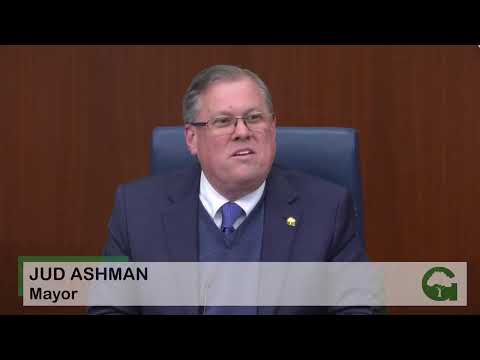
After discussion, Council member Rob moved to amend paragraph 5 so it would read "a capital improvement project approved and funded by the city of Gaithersburg." The motion was seconded and the council voted to introduce the ordinance as amended. Mayor Ashman said the item was "introduced as amended." No final policy was adopted at the meeting; the council set the public hearing for Feb. 17, 2026, and staff said it could return with narrower or alternative language before that hearing.
The introduction clarifies that, as drafted, the exemption applies in the context of building permits and does not eliminate other forms of oversight; staff noted that if no building permit is required for a project, the exemption would not apply. The council’s discussion focused on scope, potential impacts on franchise utilities, and whether to make the language City‑specific or broader for other government entities.