
East Point council presses city manager on event spending after budget review
Get AI-powered insights, summaries, and transcripts
Sign Up Free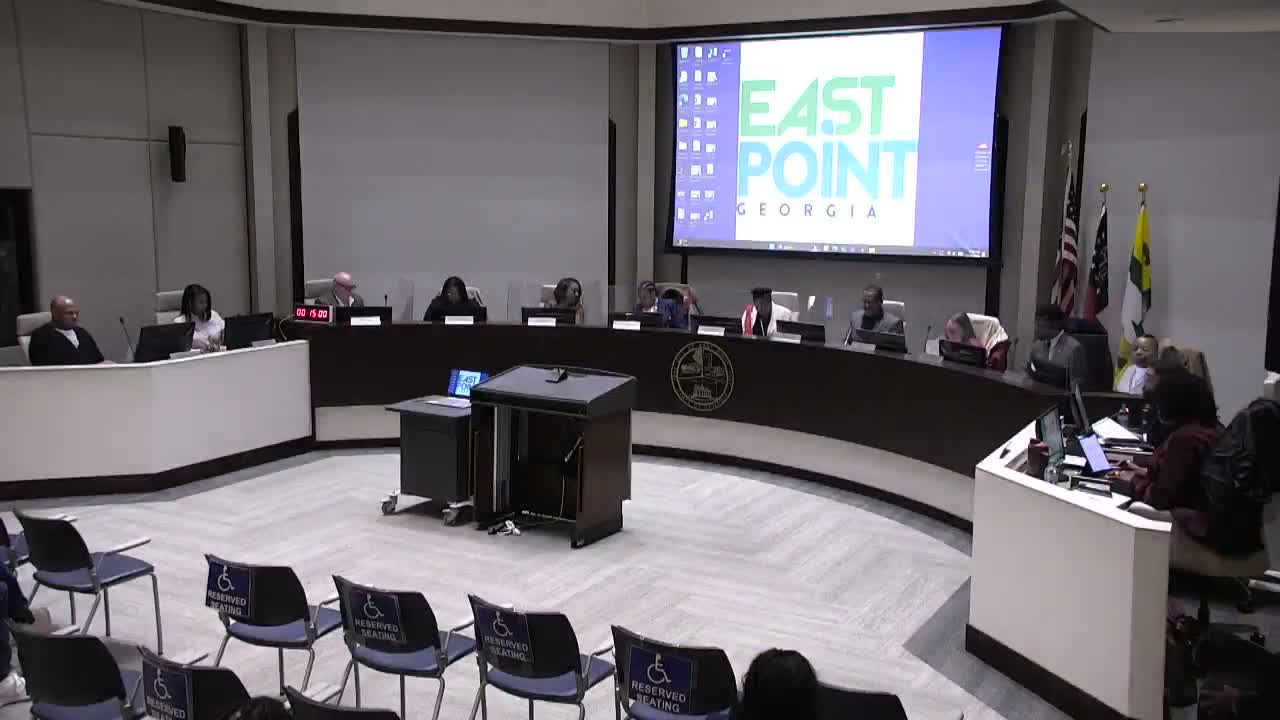
Summary
Council questioned event line-item accounting after staff reported $649,187 spent year-to-date on city events and identified a $92,207 overage for the Wednesday Wind Down series; members probed $49,000 in 'stage' charges, unclear $20,000 credits, and widespread credit-card reconciliation problems.
At its Jan. 20 meeting, the East Point City Council pressed city staff for clearer accounting and stronger controls after the interim finance director reported $649,187 had been spent year-to-date on municipal events and a variance of about 68 percent.
The finance presentation, provided by the interim finance director (name not specified in the transcript), flagged a $92,207 overage for the recurring Wednesday Wind Down series and noted a separate line item labeled “stage” with nearly $49,000 in charges. “The actual spent year to date is $649,187 which takes our variance to 68%,” the interim finance director told council during the presentation.
Council members asked why rental and event expenses were split across several ledger lines and whether some items—such as the stage rental—should instead be charged to specific events to give a truer picture of costs. Councilman Sean Atkins pressed finance staff to explain whether stage charges should have been recorded under Wednesday Wind Down rather than a generic stage line.
The council also focused on the city’s use of credit cards for event purchases. The city manager told the council that credit-card spending often arrives after the fact and can delay reconciliation, creating a de facto ability to spend more before limits are reset. The city manager said staff is exploring purchase-card controls, tighter reconciliation, and restricting credit-card use to travel or approved purchases as a way to reduce overspending.
Council members discussed whether the city manager may reallocate funds within his department to cover overages and whether events that were previously associated with individual council members must be formally “unapproved” by the council before staff can redeploy those dollars. The city attorney said intra-department transfers are allowed for unencumbered balances but that funds associated with council-approved events would require council action to cancel.
The council asked staff for more detailed backup—line-item invoices and clearer descriptions for credits and refunds—and signaled it wants a work-session item and continued oversight of event budgets and procurement policies. The interim finance director said she would provide additional documentation and invoices to the council.
What happens next: council members said they want a clearer, single-source accounting of event spending and suggested changes to procurement and credit-card policies to give the city real-time tools to flag and limit overspending.