Get Full Government Meeting Transcripts, Videos, & Alerts Forever!
Get email alerts on the Urban Renewal Grant Program topic
No spam. Unsubscribe anytime.
Dallas committee tightens urban renewal grant rules, raises scoring minimum to 75
Summary
City staff presented a revised unified urban renewal grant program that adds ADA and technical-assistance eligibility, narrows allowable support letters, raises the funding threshold to 75 points, and clarifies application, inspection and agreement timelines; staff will return a final draft next month for committee recommendation.
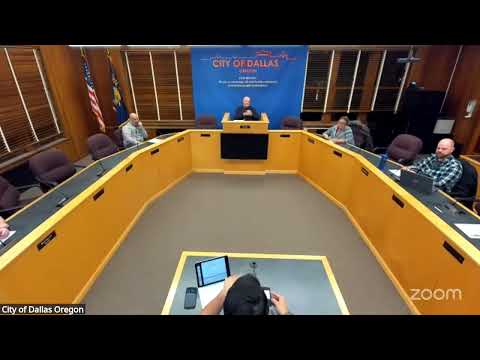
At a meeting of the Dallas Urban Renewal Advisory Committee, city staff presented a revised draft for a unified urban renewal grant program intended to combine prior small-project and construction grant streams into a single packet of guidelines, worksheets and a reworked scoring rubric.
Staff said the packet adds explicit eligible uses for ADA improvements and technical assistance and adds an explicit ineligible use: hiring a grant writer or other technical assistance not related to building design or construction. The draft also clarifies that single-family homes are ineligible unless converted to commercial use, and that multifamily projects may be eligible only if they meet Central Business District zoning requirements (for example, housing on upper floors with commercial ground-floor use).
A central change is a proposed minimum score of 75 points for funding consideration. "The project must reach a minimum of 75 points," staff said, adding that projects scoring below 75 would be returned to applicants with their scores and invited to reapply in a later cycle. Staff said the higher floor is intended to encourage higher-quality applications and that the committee will receive a final draft in February for a recommendation to the agency.
The packet spells out documentation required for a complete application: completion of the city's online application form, funding and expense worksheets, a property owner authorization letter when the applicant is not the owner, and at least one bid from a licensed contractor or design professional to justify project cost and grant requests. Staff said optional letters of support will be limited to up to five letters from neighboring businesses, relevant local nonprofits (for example, the Downtown Association or Chamber) or other community stakeholders, and will be worth two points each.
Staff also proposed procedural guardrails: incomplete applications will have 15 days to submit missing materials; applicants must sign funding agreements within 30 days of award or risk forfeiture of funds; and changes to a project's scope after a funding agreement requires written notice to — and approval by — the grant administrator, with a new agreement executed if necessary.
On scoring, the packet separates technical-assistance and construction applications. Construction scoring retains many prior categories but adds explicit points for ADA accessibility and uses ranges instead of single value buckets (for example, new retail might score between 10 and 40 points depending on pedestrian orientation). Total project investment can earn up to 20 points, with project valuation banding described between $10,000 and $150,000; projects above $150,000 receive the maximum points. Staff also adjusted private matching ranges from the previous 51'to'70% framing to 50'to'70% to reduce confusion.
Committee members asked for added clarity in several scoring areas. Members requested guidance explaining how scorers should choose within ranges (for example, what distinguishes a 10-point retail from a 40-point retail), and staff said a one-page scorer guidance sheet will be prepared alongside a short scoring handbook to reduce subjectivity. Members also suggested awarding supplemental points for obtaining more than one contractor bid and for additional progressive incentives to reward higher private investment.
Staff described outreach plans to publicize the grant window: a press release (often picked up by the Itemizer-Observer), social-media posts, coordination with the Downtown Association, and direct email to businesses enrolled in the Dallas business inventory. Staff reported the registry contains about 945 businesses, with contact information for roughly 40—2% of entries.
The committee provided feedback on historic preservation scoring and equity categories. Staff said work that goes beyond facade improvements would be evaluated under exterior or interior construction categories and that the Landmark Commission handles many historic-grant supports. On equity, staff noted the packet calls out veteran-, minority- and women-owned business certifications that are administered through Business Oregon and said the rubric could be updated if Business Oregon establishes similar certification categories for other disability or ability-based categories.
Next steps: staff will incorporate the committee's feedback, circulate any available renderings and the short scoring guide, and return a final version next month for the committee's recommendation to the Urban Renewal Agency in February or early March.