
North Clackamas details Vocera pilot; board hears benefits and limits, asks about privacy and Wi-Fi coverage
Get AI-powered insights, summaries, and transcripts
Subscribe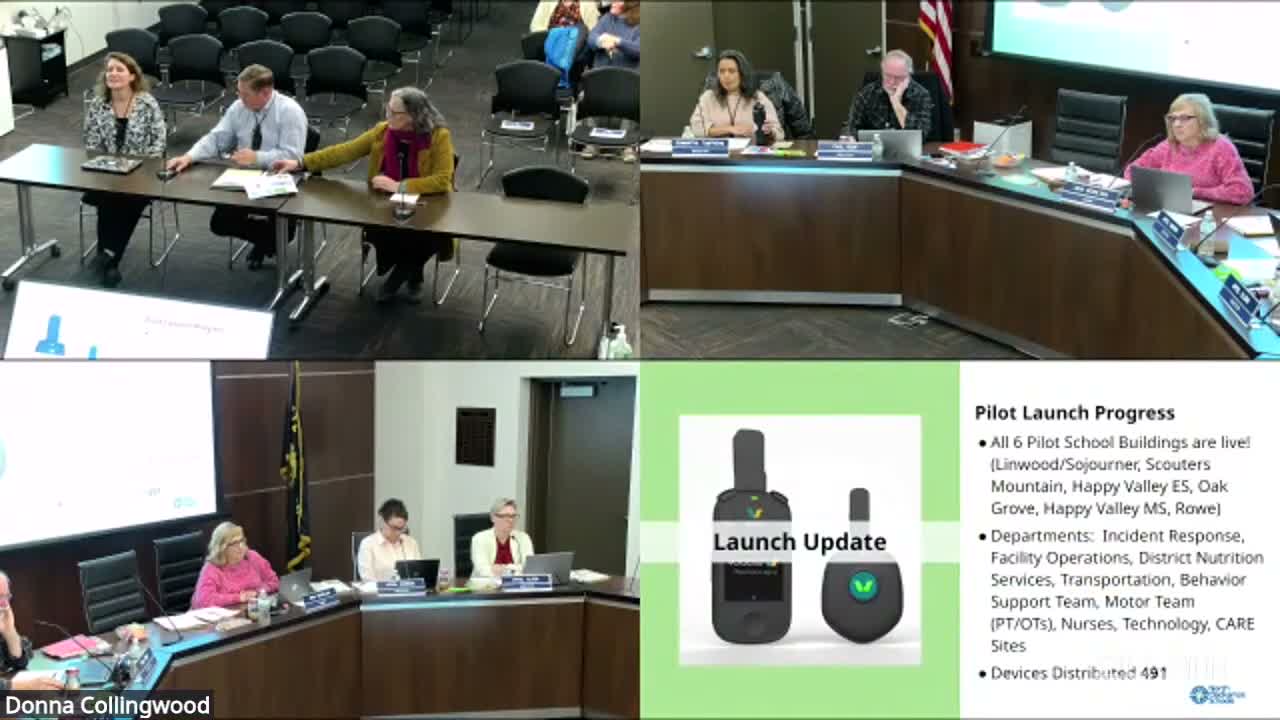
Summary
District staff described a six-school Vocera wireless pilot and plans for full implementation by spring 2027, citing faster emergency notification and increased communication; directors raised questions about exterior Wi-Fi coverage and whether district responders can hear audio when a panic button is triggered.
At the Jan. 15 meeting, Chief of Operations Teresa Nef Webster introduced a Vocera wireless communication pilot update and presenters David Cruz and operations coordinator Jessica Sun outlined results from six pilot schools and several district departments. "We have successfully launched at all 6 of our schools," staff said and reported 491 devices distributed across the pilot (presenters used the number 491 during the presentation).
Staff described three metrics for success: emergency-response use to reduce time to respond, communication efficiency, and safety-consistency. Jessica Sun said daily device activity shows broad staff adoption, with "about almost 2,000 calls" user-to-user each day despite 491 devices in circulation. Staff noted 18 panic broadcasts during training but clarified those were training events, not actual emergencies.
Presenters gave examples of benefits. One teacher called the device helpful in a medical situation: "I just used the device... I was able to stay with them instead of running over to call the phone," the presenter recounted to show how the tool allowed staff to remain with a student while summoning help. District staff also emphasized benefits for special education, custodial and facilities staff who lack regular access to a computer and for protecting student dignity compared with open walkie-talkies.
Board members pressed on limits and privacy. Director Dobson asked whether devices work beyond school property; staff replied that exterior coverage still relies on walkie-talkies and that Wi-Fi expansion outside buildings would likely require a capital or bond project. On whether district responders can listen to live audio when a panic button is triggered, staff answered directly: when the device is triggered "we hear what is going on in that room" so responders can assess whether additional protocols or 911 should be activated. The district described a controlled group of designated district responders (currently about five people) who receive those notifications and live audio for assessment.
Staff outlined a phased rollout, saying full implementation that brings every staff member online is planned for the end of the 2026-27 school year (spring 2027), with ongoing surveys and site checks. No formal board action was taken that night on Vocera.