Get Full Government Meeting Transcripts, Videos, & Alerts Forever!
Get email alerts on the Drone Delivery topic
No spam. Unsubscribe anytime.
Wing and Walmart pitch residential drone deliveries, ask city for permitting guidance
Summary
Wing, Walmart’s drone partner, briefed Woodstock City Council on a proposed residential delivery program centered at Walmart store nests with 18-pad layouts, 2.5-pound payload limits and daytime operations; company asked for local permitting guidance and pledged community outreach and safety measures governed by FAA Part 135 rules.
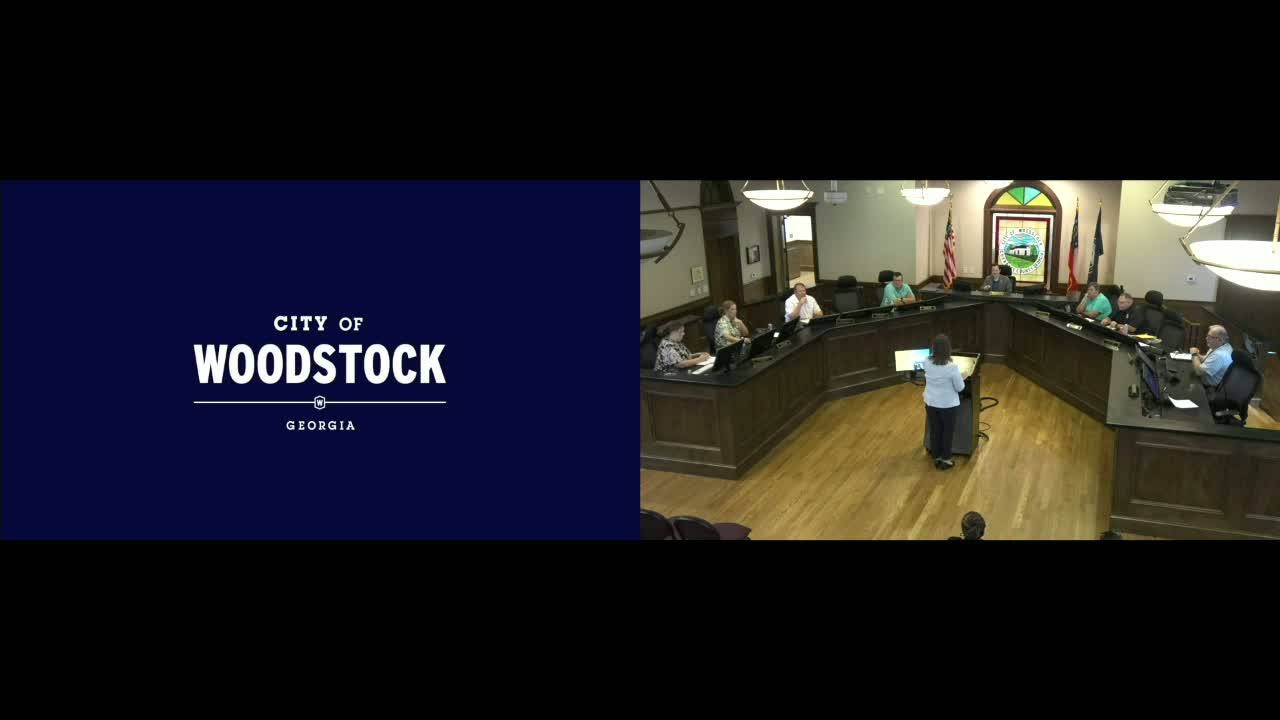
Wing, the drone delivery partner working with Walmart, presented a plan to offer residential drone deliveries to parts of Woodstock on Aug. 18, saying the service would rely on fenced “nests” at Walmart stores, automated autoloaders and FAA-regulated flight operations.
"We're really excited to be expanding our partnership with Walmart from the state of Texas to Georgia," Kathryn Lovett, local policy and community affairs manager for Wing, told the City Council. She said Woodstock could be one of the first Georgia sites for Wing's residential service.
Wing outlined the system's limits and safeguards: the aircraft used in the U.S. operation weighs about 11 pounds, carries a maximum payload of 2.5 pounds, and has a nominal planning radius of up to six miles from a store but is typically limited to roughly a four-mile practical radius because of local airspace restrictions. Flight altitudes cited during the presentation start around 150–200 feet and are kept below the 400‑foot regulatory ceiling.
Tariq Rashid, Wing's director of Part 135 operations, described layered safety features that the company uses: redundant propellers and tethers, onboard optical sensors for depth perception and hazard detection, automated route planning that avoids restricted airspace and known infrastructure such as power lines, and remote monitoring by Part 107-certified pilots. He said image data used for navigation are low-resolution, processed on board and are not transmitted as a live feed during flight.
Council members asked about noise, privacy, local airspace interactions and how the company would site the nest and any Conex storage. Wing representatives said nests are typically an 18-pad setup with battery-powered generators (no diesel), Connex-style storage or a wooden kiosk alternative, and emphasized that community outreach would accompany any site buildout. "We also would look to you all for guidance as well as for your city staff to help us understand what the permitting process would look like for the site," Lovett said.
Mandates from the FAA and local zoning considerations surfaced repeatedly during the discussion: staff noted potential zoning conditions that bar storage trailers, and planning said a site-plan modification or variances may be required depending on how the storage/ kiosk is classified. Councilmembers signaled interest in permitting the operations while reserving final site-review authority and asked staff to report back on which permits or code amendments would be needed.
Wing pointed to Texas operations as precedent: company representatives said some Texas sites handle 200–300 orders a day at select stores and that in Dallas the program is doing roughly 1,000 deliveries per day across multiple stores. Wing also said failure and anomaly rates are low; Tariq Rashid cited about five out-of-nest landings in a recent month with tens of thousands of deliveries, and the company stated it has recorded no third-party residential property damage in U.S. operations.
Next steps: Wing will follow up with the city’s planning staff on site-specific permitting questions and share specifications for kiosk alternatives; staff expects to return recommendations to council based on zoning, site-plan conditions and any required permits.
Sources: presentation and Q&A by Kathryn Lovett and Tariq Rashid (Wing) to Woodstock City Council on Aug. 18, 2025.