Get Full Government Meeting Transcripts, Videos, & Alerts Forever!
Get email alerts on the Opioid Response topic
No spam. Unsubscribe anytime.
Burke County advisory committee endorses three opioid-settlement programs; backs harm-reduction and family recovery pilots
Summary
The Burke County Opioid Advisory Committee voted unanimously to endorse A Caring Alternative, High Country Community Health and SPARK to move forward to contracting for opioid-settlement funds. The meeting focused on establishing SA IOP/SACOT services, expanding low-barrier MAT and outreach, and piloting family-centered treatment recovery; members’
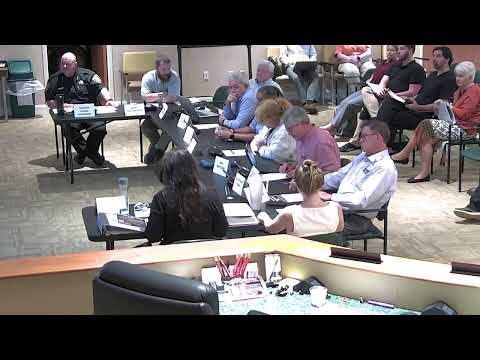
The Burke County Opioid Advisory Committee on Aug. 1 reviewed proposals from providers selected through an RFP process and unanimously endorsed three programs to proceed to contracting with the county and later consideration by the Board of Commissioners.
The committee accepted department staff recommendations to move forward with: A Caring Alternative (proposal to establish Substance Abuse Intensive Outpatient Program, SA IOP, and Substance Abuse Comprehensive Outpatient Treatment, SACOT; requested up to $300,000), High Country Community Health (request shown on slides as $375,000 to expand low‑barrier MAT, outreach, and mobile harm‑reduction services), and SPARK Services and Programs (Family Centered Treatment Recovery pilot, fee‑for‑service model with a requested amount shown as up to $390,000). Committee staff said 11 proposals were received in the RFP window (June 13–July 11); four passed initial review and one (Good Samaritan Clinic) was removed for misalignment, leaving the three finalists.
Why the programs were recommended
County staff said the grants will be administered as performance‑based contracts so payments are tied to delivery of services and outcomes. Staff described three priorities guiding awards: reduce new onset of substance use, enhance pathways to recovery, and maintain reductions in overdose fatalities. The recommended projects were characterized as filling gaps in the county’s continuum: A Caring Alternative to provide partial‑hospitalization‑level care in‑county (the county currently has no provider offering SACOT inside Burke County); High Country to expand street‑based outreach, same/next‑day medication access and integrated supports; and SPARK to provide intensive in‑home family treatment to prevent foster‑care removals and speed reunification.
What each provider proposed
A Caring Alternative (presenters Tekken Brown, chief operations officer, and Renee Brackett, adult services director) described a program that would run SA IOP (three days, three hours per day) and SACOT (Monday–Friday, 20-plus hours per week), include medication‑assisted treatment (MAT), weekly urine drug screens, family counseling and peer support, and aim to launch groups within months. The proposal requested up to $300,000 and would operate on a fee‑for‑service model tied to milestones. The presenters said SA IOP sessions would run Monday, Wednesday and Friday with morning (9 a.m.–noon) and evening (5–8 p.m.) options; SACOT would run weekdays with daytime and evening groups.
High Country Community Health (Alice Salthouse, CEO; Thomas Wilson, interim grants director; Tim Nolan, adult nurse practitioner; and Dr. Tom Meek) outlined a street‑outreach model that provides rapid hepatitis C testing and on‑the‑spot Suboxone initiation, low‑barrier access to MAT, naloxone distribution, and connections to housing and enrollment specialists. High Country described plans to use settlement funds to hire a psychiatric nurse practitioner, a clinical pharmacist, a community resource advocate and to support enrollment specialists (two at 0.5 FTE each). High Country emphasized it already provides mobile outreach in multiple counties and that syringe‑service and other harm‑reduction measures are components of their engagement strategy.
SPARK Services and Programs (Terry Herman, senior vice president; Shanda Woody, mountain region VP) proposed Family Centered Treatment Recovery (FCTR), an intensive, in‑home family treatment model that SPARK said is designed to treat the child and the caregiver together, reduce foster‑care removals and accelerate reunification. SPARK’s proposal included $25,000 in startup costs, contingency management of up to $599 per family per year, a fee‑for‑service rate described as $200 per hour per family, and an initial target of 20 families in the first contract year. SPARK said it is actively pursuing Medicaid billing for FCTR to sustain the model beyond grant support.
Debate over harm reduction and medication distribution
A prominent thread in committee discussion centered on harm‑reduction tools—chiefly syringe services and low‑barrier MAT. One committee member said syringe exchanges could normalize injection drug use and risk increasing the number of users; several providers and clinicians responded that syringe services and naloxone distribution are public‑health measures that reduce transmission of bloodborne disease (hepatitis C, HIV), lower overdose deaths, and provide an essential engagement opportunity to link people into further care. Dr. Tom Meek and Tim Nolan described rapid HCV testing and immediate treatment and said giving sterile syringes is a “carrot” to build trust that can lead to clinicians delivering comprehensive care on subsequent contacts. Committee members asked for and received assurances about medication accountability and diversion prevention; a member proposed adding explicit contract language referencing SAMHSA diversion‑prevention guidance and monthly medication inventory reporting. Providers said they already operate under federal and state reporting rules (HRSA, SAMHSA) and pharmacy oversight and were open to contract terms that address inventory and auditing.
Staffing, metrics and sustainability
High Country listed specific positions the funds would support: a mid‑level behavioral health provider (LCSW or LCAS), a psychiatric nurse practitioner, partial support for an MOUD medical provider, a medical office assistant, a clinical pharmacist, a community resource advocate and two 0.5 FTE enrollment specialists. SPARK described training and certification requirements for FCTR practitioners and said the program’s evidence‑based metrics include rapid face‑to‑face response (within 48 hours of referral), a goal of 80% stabilization or reunification for families served, and measurable reductions in positive drug screens at 90 days. Staff said recommended providers will proceed to contracting and that contracts aim for September finalization and implementation to begin after that; staff also said endorsements will be forwarded to the Board of Commissioners at the next board meeting scheduled for the coming week.
Votes and next steps
The committee made motions to endorse each program to proceed with contracting; each motion was seconded and approved by uplifted hands (members present signified their approval). Staff will proceed with contracting negotiations, incorporate any required contract language on medication accountability as agreed, and present contracts to the Board of Commissioners for final approval. The committee’s next regular meeting was scheduled for Sept. 16; staff also announced an Overdose Awareness Day memorial event on Aug. 30.
What to watch
- Contract details: presenters and committee members flagged a discrepancy between the amount shown on a High Country slide and a draft contract figure; staff said the draft total can be revisited during contracting. - Performance metrics and reporting: contracts will include performance measures and reporting requirements tied to payment; committee members requested explicit diversion‑prevention language and monthly medication inventory/incident reporting. - Access and equity: committee members pressed providers on how programs will reach rural and youth populations and how family‑centered services may reduce foster‑care removals; SPARK and others described referral pathways from DSS, juvenile justice and managed‑care partners.
Key quotes
"This meeting was called as a time for us to be able to hear from the providers that submitted proposals for our very first RFP process," Dr. Katie Samuels said in opening remarks, outlining the timeline and next steps.
"We go to where folks are ... and we meet them there with harm reduction, which is simply a carrot to engage them in care," Tim Nolan of High Country Community Health said, describing mobile outreach.
"We will provide Family Centered Treatment Recovery to training in partnership with the Family Centered Treatment Foundation," SPARK’s presenter said, stressing certification requirements and an evidence‑based approach.
Ending
Committee endorsement does not equal final county funding; each recommended program will enter contracting negotiations with the county and any final agreements will be considered by the Burke County Board of Commissioners. The committee scheduled its next meeting for Sept. 16 and noted local Overdose Awareness Day events on Aug. 30.
Sources: Burke County Opioid Advisory Committee special meeting transcript and provider presentations.