Get Full Government Meeting Transcripts, Videos, & Alerts Forever!
Get email alerts on the Reducing African American Child Deaths topic
No spam. Unsubscribe anytime.
Decade‑long RAACD initiative credited with systems changes; recent data show pandemic‑era upticks in some infant mortality measures
Summary
First 5 Sacramento and its partners presented a decade‑long update on efforts to reduce African American child deaths (RAACD). Community partners and evaluators reported program outcomes — including pregnancy peer support, family resource center services, safe‑sleep education and concrete needs assistance — and discussed recent county data showing
First 5 Sacramento and community partners on Aug. 4 provided an extensive update on more than a decade of work to reduce African American child deaths (RAACD), presenting program results, community practice changes and countywide mortality trends through calendar year 2022.
Linda Fong Samara (First 5 lead for RAACD) and Jadita Gomes (Sierra Health Foundation/Black Child Legacy Campaign) emphasized that the initiative combines data and community voice. Partners said local community‑based organizations and a network of trusted leaders have been key to outreach and service delivery across identified high‑need ZIP codes, and that a “concrete needs” pilot has provided emergency assistance to stabilize families.
Applied Survey Research (ASR) presented program outcomes for FY2021–24. ASR reported that the Black Mothers United (BMU) pregnancy peer‑support program served pregnant people who were largely living in RAACD focal neighborhoods and that pregnancy coaches, doula support and group connections correlated with strong birth‑outcome measures. ASR reported 66 BMU births in the most recent fiscal year and said there were zero newborn deaths at program exit for the fifth consecutive year. A three‑year review (2020–2022) of 241 BMU births showed 1 infant death (a numerical rate of 4.1 deaths per 1,000 births), substantially lower than the countywide African American infant mortality rate of 12 per 1,000 births over the same period, ASR reported.
Safe Sleep Baby trainers reported more than 1,000 caregivers received the one‑hour workshop during the fiscal year and more than 600 cribs were distributed; trainers said follow‑up calls show improved safe‑sleep practices and a statistically significant increase in African American participants who said they “always” sleep their baby on the back at follow‑up.
The “concrete needs” program — a short‑term emergency assistance model run with community partners — provided housing assistance, groceries, transportation, hotel stays and furniture to stabilize families. Presenters said 363 families received stabilization services across four partner sites, with about $787,000 in emergency assistance distributed during the year. Community speakers described services ranging from emergency hotel placements to help obtaining permanent housing, and partners said case managers typically remain engaged with families for months or years as needed to support sustained stability.
Presenters also reported systems‑level changes: safe‑sleep education is now implemented in main birthing hospitals and community partners said the network pivoted quickly during the COVID pandemic to maintain services. The Black Child Legacy Campaign said it will expand to an eighth community site in Rancho Cordova by the end of the year and has intentionally centered community input in a new strategic plan to 2027.
ASR presented countywide mortality trends through 2022 and emphasized the effects of the COVID pandemic years on the data. Countywide, the African American infant mortality rate for 2020–2022 was 12 per 1,000 births—an 11% net increase compared with the earlier baseline period—and the disparity gap increased about 8% over the same comparison. Presenters cautioned that 2020–22 data include pandemic disruptions and that the 2021 numbers in particular appeared anomalous for infant sleep‑related deaths (spiking to 7 African American infant sleep‑related deaths in 2021 before falling to 3 in 2022). The commission and partners said those pandemic years likely contributed to reduced access to community programs and broader social stressors that can affect infant health.
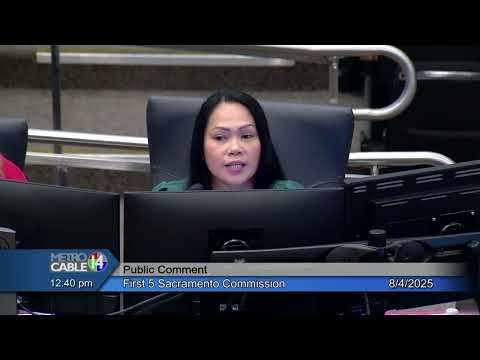
Public comment included several providers and program participants who described how BMU, family resource centers and concrete needs assistance affected their families. Examples included a participant who said the BMU environment made her feel “welcomed and seen for my skin color” (quote presented by ASR during the program outcomes slides) and a family who said wraparound supports helped them transition to permanent housing after an emergency hospitalization.
Why it matters: The multi‑pronged approach—peer pregnancy support, culturally specific family resource center services, safe‑sleep education and emergency concrete assistance—aims to reduce preventable infant and child deaths while also addressing broader equity and systems barriers. Presenters said early data show positive program outcomes for participants, but countywide trends demonstrate the influence of the COVID era and the need to sustain community and systems investments.
What commissioners asked or directed: Commissioners urged staff to continue centering immigrant, targeted populations and health‑system partnerships in the implementation plan and recommended that staff use the community advisory groups, SAC Family Connect and managed care plan partnerships when prioritizing strategies.
What happened next: Staff will incorporate community input into RAACD’s forthcoming strategic plan and continue to report program outcomes and updated child death review data as it becomes available.