Get Full Government Meeting Transcripts, Videos, & Alerts Forever!
Get email alerts on the Council Votes topic
No spam. Unsubscribe anytime.
Council at a glance: agenda, zoning fixes, Hazlett contract and other actions
Summary
At its July 15, 2025 meeting East Lansing City Council approved routine business, zoning and code corrections, a Michigan Department of Transportation cost‑sharing contract for Hazlett Road rehabilitation, and guidelines for a downtown street‑closure program. The council also asked the city attorney for legal guidance on a special‑use permit for a
East Lansing City Council met Tuesday, July 15, 2025, and took a set of votes including approval of routine items, amendments to the zoning and sign code, approval of a cost‑sharing agreement with MDOT for Hazlett Road rehabilitation, and adoption of guidelines for a business street‑closure program.
Why it matters: The package of approvals includes infrastructure spending (Hazlett Road), regulatory clarity (zoning/sign code corrections and fence height changes for community facilities), and a set of local programs that affect downtown businesses and neighborhood traffic. Council also paused formal action on a contested special‑use item pending legal review, signaling additional follow‑up is likely.
What council voted on (high‑level)
- Approve meeting agenda: Motion moved (Meadows), second (Altman); passed unanimously. This opened the meeting and set the order of business.
- Excuse Mayor Pro Tem: Motion made and seconded; passed unanimously.
- Approval of minutes: Motion to approve minutes of June meetings; passed.
- Consent agenda (as amended): Council approved the consent agenda but moved item 3.13 (Transportation Commission bylaws) to the business agenda for additional review; motion moved by Council Member Meadows and seconded by Council Member Altman; passed unanimously. The consent agenda included appointments, contracts, grant ratifications and traffic control order (TCO 497) to install a multiway stop at Kensington Road and Chesterfield Parkway.
- Ordinance amendments (zoning and signs, Ord. 15‑43): Council approved technical corrections and clarifications to the zoning and sign chapters of the city code following Planning Commission review and Building Board of Appeals input; motion and second recorded, passed (Council Member Watson briefly absent during vote).
- Rezoning referral (Ord. 15‑54): Council referred a proposed rezoning of four vacant DDA parcels on Evergreen Avenue from RM‑32 (multi‑family) to B‑3 (City Center commercial) to the Planning Commission for public hearing and recommendation; motion passed unanimously.
- Fence height in Community Facilities (Ord. 15‑50): Council approved an ordinance allowing a two‑foot increase in permitted fence height in the C (Community Facilities) zoning district, to enable sound mitigation fencing (for example at pickleball courts); motion moved and seconded; passed unanimously by roll call.
- Comprehensive plan authority (Policy Resolution 2025‑5): Council adopted a resolution affirming the Planning Commission’s authority to adopt the city’s 2024–2025 comprehensive plan update (rather than the council asserting final review), and the resolution passed unanimously.
- Hazlett Road MDOT cost‑sharing contract: Council approved a resolution authorizing the city manager to enter the MDOT cost‑sharing contract for rehabilitation of Hazlett Road between Saginaw Highway and Park Lake Road and authorized a local contingency. Motion moved by Council Member Altman; roll‑call vote was 3–1 (Mayor Brookover voted no). The local share and contingency figures were discussed by staff and are included in the budget amendments.
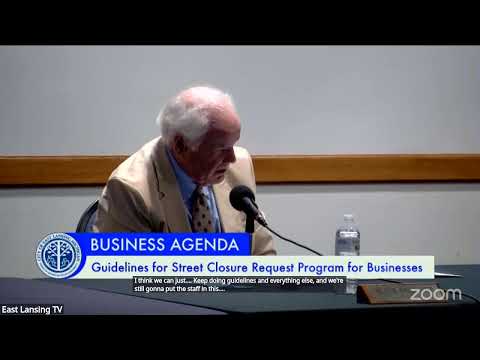
- Street closure request program guidelines for businesses: Council adopted program guidelines recommended by the Downtown Management Board establishing how the city will adjudicate and administer street‑closure requests by downtown businesses. Motion passed 3–1 (Mayor Brookover opposed). The program remains a pilot in practice; the Downtown Management Board covers many of the operational costs while applicants pay a $350 application fee.
- Deferred item: Council later moved to defer consideration of Transportation Commission bylaws (consent item 3.13) to the August meeting and asked the city attorney to review those bylaws; motion to defer passed unanimously.
What council did not decide tonight
- Special‑use permit for the Land Shark (101 E. Grand River): Council held a public hearing and took public comment but did not decide the permit at this meeting. Council asked the city attorney for a written legal opinion about the separate authorities of building/fire code occupancy and council’s authority over alcohol‑service special uses; council suggested the hearing could be continued at a future meeting pending that advice.
- Vacating the platted alley between 533 and 535 Ardsen/Artisan Road: Council held a public hearing. Adjacent property owners requested more time to finalize a private easement before the city vacates the right‑of‑way; staff and the city attorney advised the parties to coordinate with attorneys and return in August.
Votes (summary of recorded roll calls where given)
- Hazard contract (MDOT cost share): passed 3–1 (Altman yes, Meadows yes, Watson yes, Mayor Brookover no).
- Street closure guidelines: passed 3–1 (Altman yes, Meadows yes, Watson yes, Mayor Brookover no).
- Remaining recorded items passed unanimously among members present.
Bottom line: Council approved a set of infrastructure and code‑clarifying measures and created a timeline for follow‑up on two items that require legal or interparty resolution — the Land Shark special‑use matter and an alley vacation adjacent to private property. The Hazlett Road agreement moves the city closer to executing a federally funded rehabilitation project, while the street‑closure guidelines formalize a pilot that the Downtown Management Board has been operating.