Get Full Government Meeting Transcripts, Videos, & Alerts Forever!
Get email alerts on the Police Audit topic
No spam. Unsubscribe anytime.
Commander Walsh tells commission audits of department devices returned hits but no Q4/early‑2017 cases were judged biased
Summary
Commander Peter Walsh presented the department's quarterly audits of CLETS, department email and department-issued cell-phone texts; he said automated keyword searches returned hits (e.g., 27 CLETS hits in Q4 2016, 74 in Q1 2017; 161 email hits in Q1 2017) but investigators found none to be potentially biased and that the word list is an investigatory tool not released publicly.
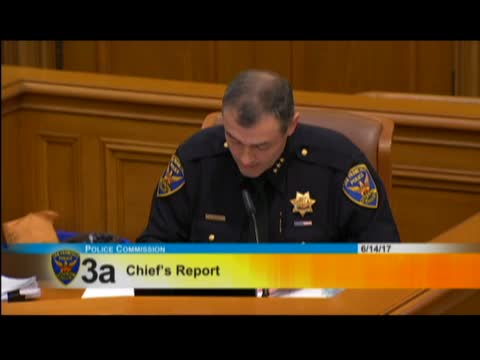
Commander Peter Walsh briefed the San Francisco Police Commission on June 14 about quarterly audits of department-owned electronic systems that the department has implemented following a Department of Justice recommendation. "These audits are limited to devices that the department owns and not to personal devices that belong to officers," Walsh said, adding the audits capture messages sent to department devices.
Walsh summarized results for two period groups. For the fourth quarter of 2016, he said Level 2/CLETS returned 27 hits and the department determined none were potentially biased; department email returned 16 hits (none determined potentially biased); and text-message audits of department-issued phones returned 10 hits (none determined potentially biased). For the first quarter of 2017, Walsh said Level 2 returned 74 hits and department email returned 161 hits; again, he said none of those were deemed potentially biased after review.
Walsh explained how the automated process produces false positives—newsletters, street names and other benign uses of words on the investigative list can trigger hits—and said investigators examine context before deciding whether a hit requires an investigation. He told commissioners the word list is an investigatory tool the department does not release publicly and that staff consult the city attorney on handling records requests.
Commissioners pressed for examples and for more detail on how auditors differentiate benign hits from potentially biased usage; Walsh said the department can demonstrate the system to commissioners and provide anonymized examples but has denied public-records requests for the list because it is an investigative technique. He also explained the department’s limits regarding personal devices: staff need a warrant or consent to search a personal phone, although messages that were transmitted to department devices may be captured.