Get Full Government Meeting Transcripts, Videos, & Alerts Forever!
Get email alerts on the Assault Kits topic
No spam. Unsubscribe anytime.
SFPD captains report assault-kit testing progress: 38 CODIS uploads, 14 hits; notifications underway
Summary
Captains from the Forensic Services Division and Special Victims Unit told the San Francisco Police Commission that, for the July'Dec 2016 extraction period, 42 DNA profiles were developed, 38 were uploaded to CODIS and 14 hits returned; staff reported attempts to notify survivors and an average lab turnaround of 53 days.
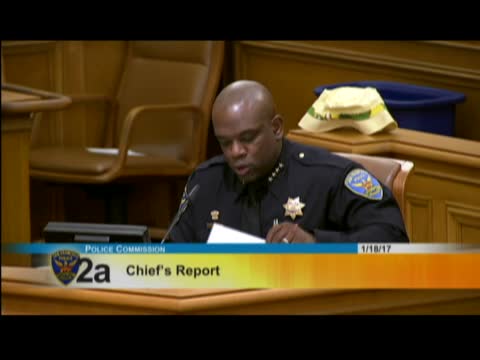
Captains from the San Francisco Police Department's Forensic Services Division and Special Victims Unit reported to the Police Commission on Jan. 18 on the department's sexual-assault-kit extraction and notification work for the July 1'Dec. 31, 2016 period.
"We received a total of 128 cases in our initial database review," Captain Oonabayeli Bailey said, then clarified that 15 cases were outside SFPD jurisdiction, leaving 113 cases for this review period. "Of the 113 cases thus far, 42 profiles were developed, 38 were uploaded, and we have 14 hits," she said.
Captain Gregory Marr, the crime-lab commanding officer, described why analysis can take weeks. "These kits can contain many different items'a swab or more than 100 items to be examined. Each item must go through screening, presumptive testing and extractions. Then the data go through statistical analysis before a CODIS upload," Marr said, adding that the lab reported an average turnaround time of 53 days and met its 120-day uploading target for the period.
Bailey outlined the notification outcomes for CODIS hits: staff successfully notified nine survivors, have three cases where attempts are ongoing, and in two instances survivors explicitly requested no contact. She said some survivors declined police involvement at the outset; the team respects those requests.
Commissioners pressed officials on why a CODIS hit does not necessarily lead to an arrest. Bailey and Marr said prosecution depends on survivor willingness, prosecutors'assessment of the evidence and the specifics of each investigation. "Sometimes the survivor doesn't want to go forward with the case," Bailey said; Marr added that prosecutorial review and evidentiary standards also influence whether charges follow a hit.
The captains committed to provide updated spreadsheets and said they had addressed internal transfer delays between the property clerk and the crime lab through retraining and procedural changes.
Next steps: the captains said they will continue notification attempts where appropriate, update the commission with corrected spreadsheets on request, and monitor lab turnaround times as processes are refined.