Get Full Government Meeting Transcripts, Videos, & Alerts Forever!
Get email alerts on the Parking Meters topic
No spam. Unsubscribe anytime.
Port seeks harbor-code changes to allow meters in Mission Bay; residents and businesses voice concerns
Summary
Port staff proposed harbor code amendments to allow parking meters on improved Port streets in Mission Bay and align with SFMTA; staff estimated $244,000 installation costs and projected $31,000/month revenue but said parking management, not revenue, was the primary goal. Residents and business owners asked for targeted hours, monitoring and special provisions for employees.
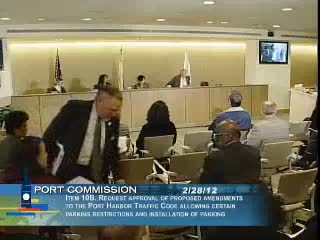
Port staff proposed amendments to the Port Harbor Traffic Code to allow parking meters on improved port streets within Mission Bay and to align port meter operation with SFMTA's SFpark market-rate approach.
David Beaupreu of Planning and Development told commissioners the proposed installation would cost roughly $244,000 and operate under an MOU with SFMTA at about $12,000 per month to maintain enforcement; projected revenue was about $31,000 per month with an anticipated return to the port after roughly 16 months following a three-month ramp-up. Beaupreu emphasized that the primary driver for meters is parking and transportation management rather than revenue generation.
During public comment, Mission Bay resident Corinne Woods supported meter deployment for management but urged retention of two-hour limits where sidewalks are incomplete, questioned the utility of running meters until 11 p.m. outside ballpark events, and asked for monitoring of retail impacts. Topher Delaney, a local business owner, said meters would harm employees who park all day and advocated keeping time-limited parking rather than meters. Commissioners asked staff to coordinate closely with SFMTA, explained SFpark's market-based rationale (no time limits but variable rates to ensure turnover), and requested a follow-up report after meter deployment to monitor neighborhood impacts.
Staff said meters would not be installed where sidewalks are not in place, that some streets will retain two-hour limits until improvements are completed, and that smartphone payment and smart-card options will be available. The item was presented so the commission could consider ordinance changes; staff will return with implementation details and monitoring provisions.